
Free to use under the Unsplash License
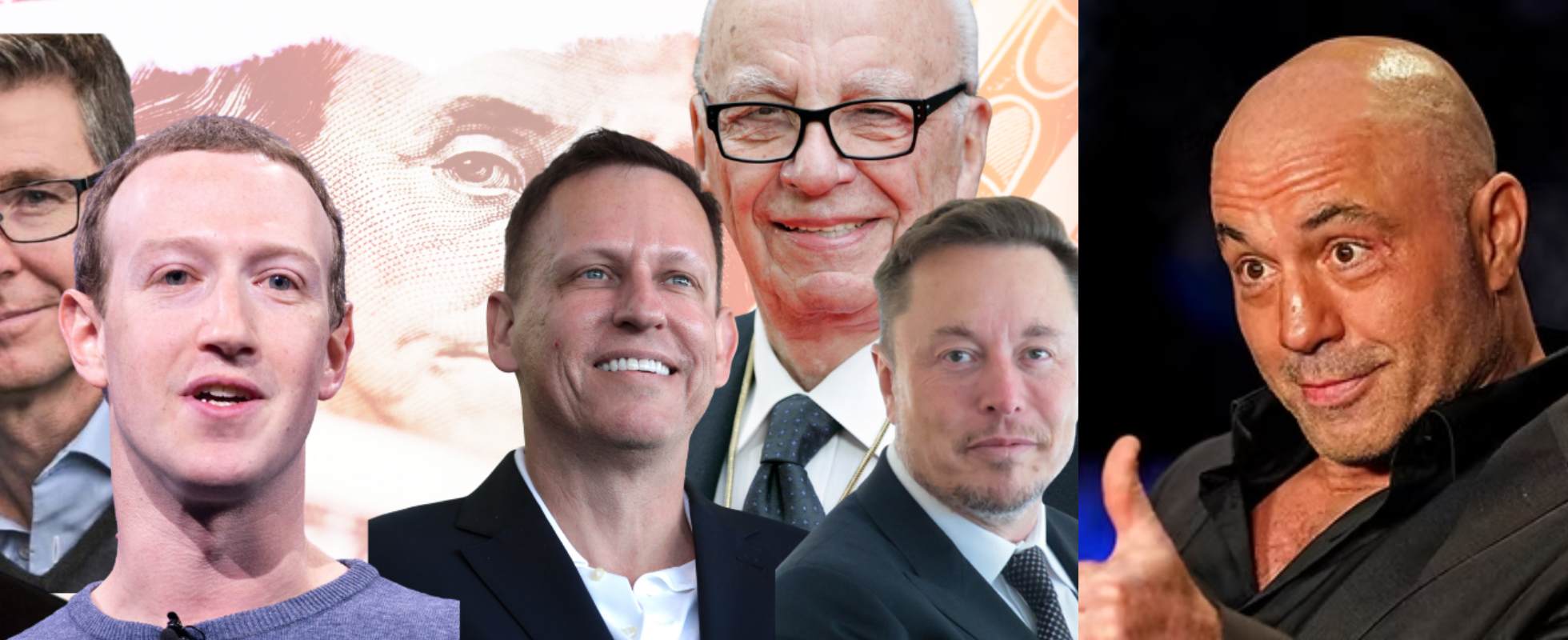
Joe Rogan has always marketed himself as the everyman’s podcaster, the freethinking outsider who questions power and speaks truth to authority. That image is now completely gone.
In a recent episode of the Joe Rogan Experience featuring billionaire venture capitalist Marc Andreessen, Rogan spent the better part of the conversation acting as an unpaid spokesperson for one of the wealthiest men in tech.
The episode opened, while the intro music was still playing, with Andreessen pitching an AI-powered surveillance system called Flock, which just happens to be one of his own portfolio companies. Flock uses municipal cameras, traffic cameras, license plate readers, and drones to track vehicles and people in real time and is already deployed across dozens of American cities.
Andreessen used a recent cri me spree in Austin to argue that the city made a mistake turning the technology off and that it could have prevented the whole thing. Rogan, rather than pushing back in any meaningful way, sat there nodding along.
When Rogan did briefly raise concerns about mass surveillance, Andreessen brushed them aside by suggesting the biggest risk was a corrupt politician using it for a personal vendetta. That was it. No mention of how data collected on private citizens can be subpoenaed and used against them in completely unrelated legal matters. No mention of how AI models are trained and what data gets scraped in the process. Rogan let it slide without a single follow-up.
When Jaime pulled up research showing that over 88% of alerts from a similar technology resulted in police finding no evidence of g*n cri me at all, Rogan responded by saying, “That doesn’t mean the gunsh*ts didn’t go off.” That is exactly the kind of reasoning you end up with when you are too busy protecting your guest’s feelings to actually engage with the evidence in front of you.
Things got worse when the conversation turned to wealth inequality. Andreessen made the argument that European countries with stronger social safety nets are actually poorer and less successful than the United States. That is simply not supported by data on income distribution or quality of life outcomes across developed economies. Rogan nodded along anyway.
Then came the moment that really exposed how far Rogan has drifted. He looked a billionaire venture capitalist in the eye and said, “You really can just work 20 hours a day and achieve something spectacular.”
Andreessen became a billionaire by co-founding a company in the 1990s, cashing out, and then spending years investing other people’s money into startups and taking a cut when they paid off. His wealth comes from owning things, not from outworking everyone else.
What makes this particularly hard to watch is that just six months ago, Tom Segura was making more grounded and coherent arguments about wealth inequality on the same podcast, and Rogan actually agreed with him. The moment a billionaire sat down across from him, he reversed course entirely.
Rogan is no longer asking hard questions. He is providing cover for the people who least need it.


