
Free to use under the Unsplash License
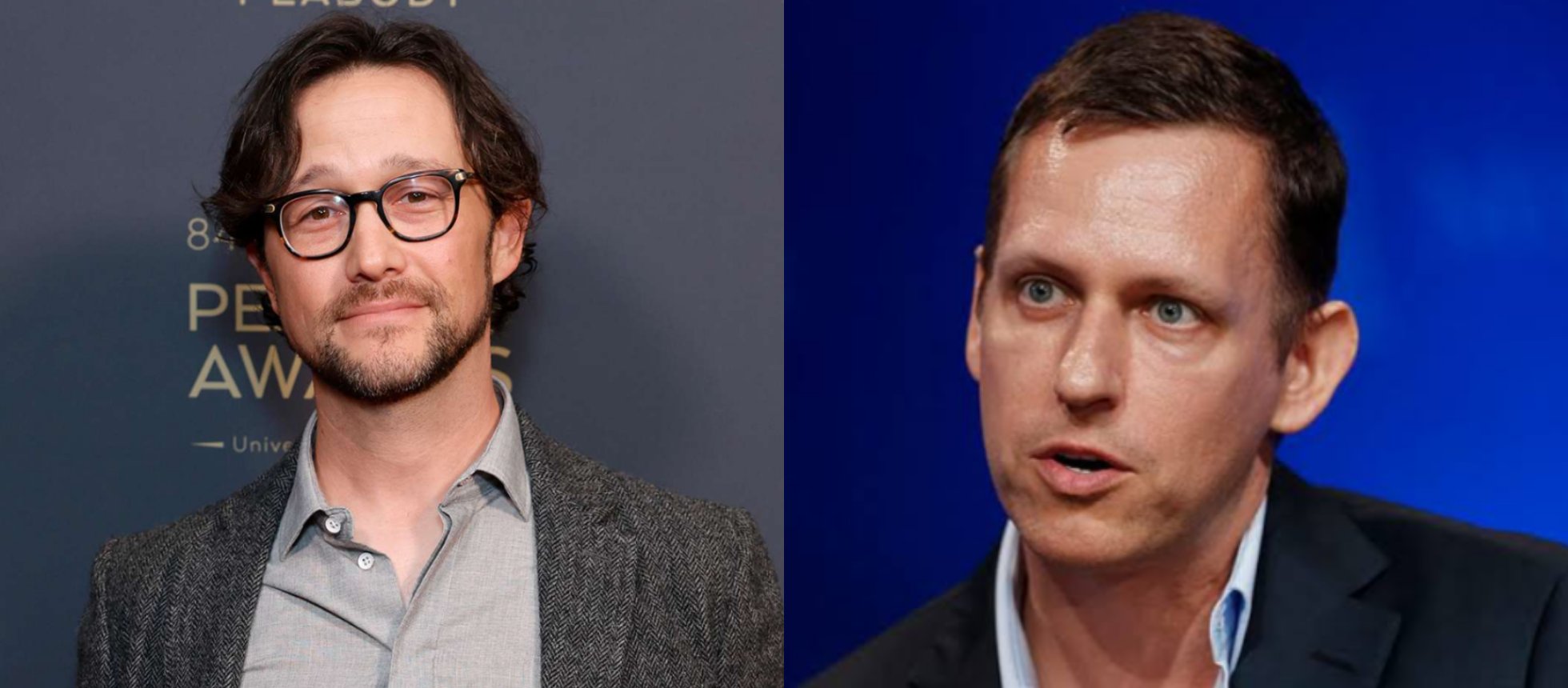
When Joseph Gordon-Levitt stood before cameras on Capitol Hill advocating passionately for legislation that would strip tech giants of one of their most valuable legal shields, it read like the kind of celebrity activism that generates a news cycle and then fades. Then came the revelation that the actor had been quietly attending Peter Thiel‘s invitation-only Dialog conference, and suddenly his tech policy interests looked considerably more layered.
Gordon-Levitt joined Senators Dick Durbin and Lindsey Graham at a press conference pushing for the Section 230 Sunset Act, a piece of legislation that would eliminate the three-decade-old federal law protecting social media platforms from legal liability for the content they host. The actor, a father of three, made no attempt to hide the personal stakes he felt in the outcome.
“I’m here to talk about the Section 230 Sunset Act,” Gordon-Levitt said. “If you don’t know and you’re watching, Section 230, what it does is basically says that a platform on the internet can’t be held liable for the content that it hosts.”
He went further, framing the issue not as a legal technicality but as a moral failure by the companies that benefit from the law’s protection.
“The harm that was done to these kids online might have been prevented if certain big tech companies knew that they could be sued, but under Section 230, they cannot be,” he explained. “So these amoral companies, they just keep allowing these awful things to happen on their platform and they don’t do anything about it because they will always prioritize profits over the public good, even when it comes to kids.”
The press conference carried considerable emotional weight. Parents who had lost children to dangers amplified by social media platforms stood alongside the lawmakers and the actor. Bridget Noring described losing her son Devon to poisoning after he connected with dealers through Snapchat. Brandon Guffey recounted how his 17-year-old son Gavin took his own life after being extorted online. Kristen Bride shared the story of her son Carson, who passed away following severe cyberbullying.
Gordon-Levitt acknowledged that Section 230 had a reasonable origin when Congress passed it in 1996, but argued the internet it was written for bears little resemblance to what exists today.
“Back then message boards and other websites with user-generated content, they really were more like telephone carriers. They were neutral platforms. But that’s not how things work anymore,” he said. “Today, the internet is dominated by a small handful of these gigantic businesses that are not at all neutral, but instead algorithmically amplify whatever gets the most attention and maximizes ad revenue.”
Former House Majority Leader Dick Gephardt, who had personally voted for Section 230 nearly 30 years ago, lent historical gravity to the argument.
“They may have been a dumb pipe 30 years ago, but they aren’t now. They’re the most intelligent pipe in human history,” Gephardt said. “The platforms enjoy this protection that no other business enterprise in this country enjoys.”
Gordon-Levitt closed with a rallying call: “I want to see this thing pass 100 to zero. There should be nobody voting to give any more impunity to these tech companies. Nobody. It’s time for a change. Let’s make it happen.”
It was a compelling display of civic engagement from an unexpected corner of Hollywood. Then came the Dialog conference news.
Self-proclaimed hacker Maia Arson Crimew released a leaked list of 113 alleged members of Dialog, the secretive, invitation-only forum co-founded by billionaire Peter Thiel and Auren Hoffman. The conference gathers a curated mix of CEOs, politicians, and intellectuals for small, moderated conversations held in strict confidentiality about the future of technology.
Gordon-Levitt’s name appeared on the list alongside figures including Elon Musk, Jared Kushner, Senator Ted Cruz, Senator Cory Booker, Josh Brolin, Scooter Braun, YouTube’s Neal Mohan, and The New York Times’ Ezra Klein, among others.
For anyone following Gordon-Levitt’s Capitol Hill advocacy, the pairing raised immediate questions. Thiel is one of the more ideologically polarizing figures in Silicon Valley, a libertarian megadonor whose worldview sits at a significant remove from the kind of platform accountability legislation Gordon-Levitt was championing in front of Congress.
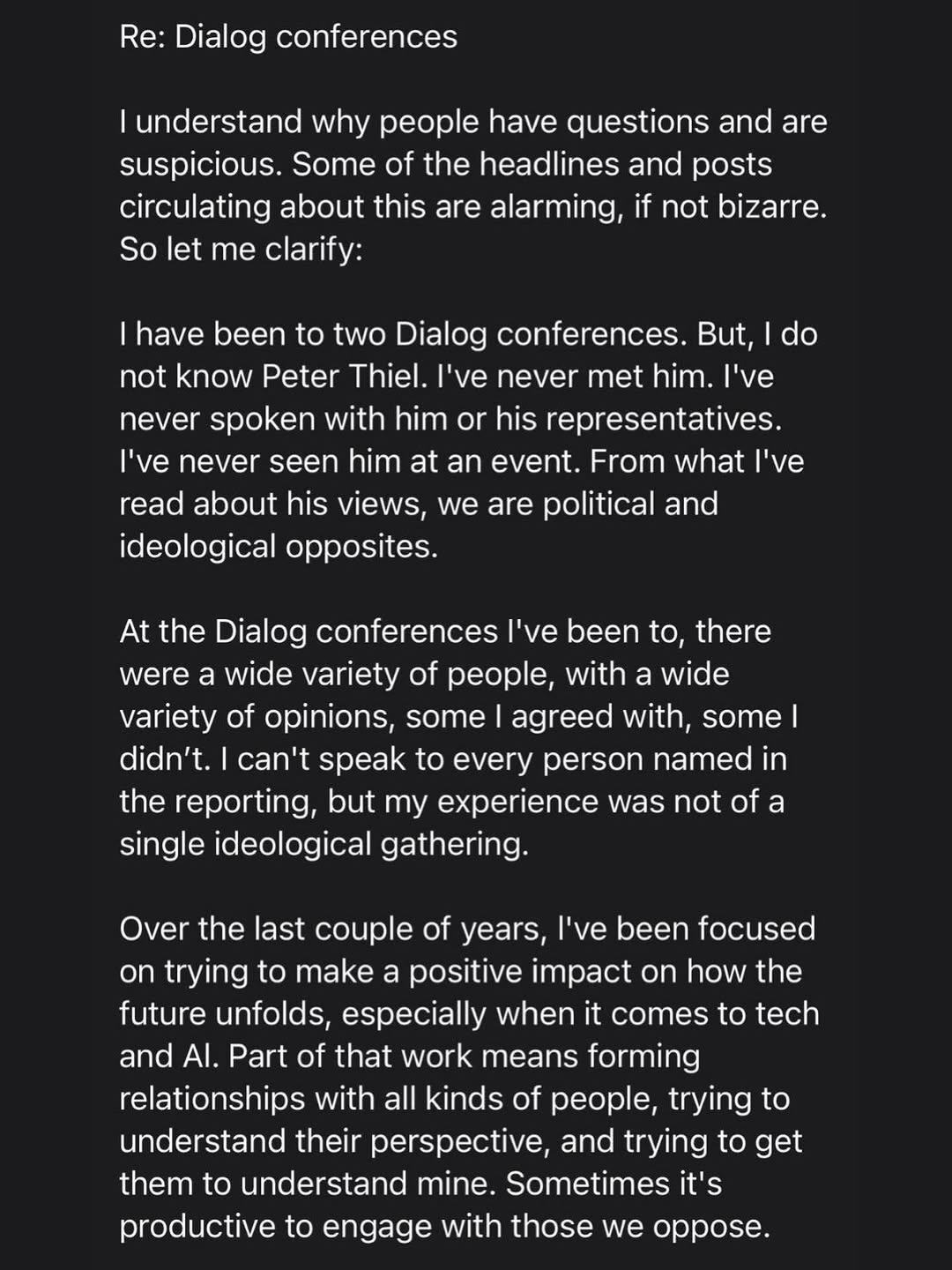
The actor moved quickly to address the controversy, posting a detailed statement to Instagram.
“I understand why people have questions and are suspicious,” he wrote. “Some of the headlines and posts circulating about this are alarming, if not strange. So let me clarify: I have been to two Dialog conferences. But, I do not know Peter Thiel. I’ve never met him. I’ve never spoken with him or his representatives. I’ve never seen him at an event. From what I’ve read about his views, we are political and ideological opposites.”
He pushed back against the idea that attending the conference amounted to any endorsement of its founder’s worldview.
“At the Dialog conferences I’ve been to, there were a wide variety of people, with a wide variety of opinions, some I agreed with, some I didn’t. I can’t speak to every person named in the reporting, but my experience was not of a single ideological gathering.”
Then came the portion of his statement that connects most directly to his Section 230 work.
“Over the last couple of years, I’ve been focused on trying to make a positive impact on how the future unfolds, especially when it comes to tech and AI. Part of that work means forming relationships with all kinds of people, trying to understand their perspective, and trying to get them to understand mine. Sometimes it’s productive to engage with those we oppose.”
That framing recontextualizes the Capitol Hill moment considerably. Gordon-Levitt, who co-founded the online community HitRecord and has spent years engaged with questions about technology and creativity, is not simply a concerned parent who wandered into tech policy.
By his own account, he has been deliberately cultivating relationships across ideological lines within the tech world, attending elite invitation-only gatherings while simultaneously pushing Congress to rein in the industry’s legal immunities. Whether one reads that as strategic or contradictory likely depends on how much credit one extends to the idea of working from within.
Gordon-Levitt was not alone in needing to explain himself. Actress Sophia Bush also appeared on the leaked Dialog list and issued her own clarification. Bush said she had accepted nearly every conference invitation she received in recent years in order to promote “Another Body,” a documentary about deepfake p**nography, and to advocate for the DEFIANCE Act, which criminalizes non-consensual deepfake imagery.
“You can imagine my surprise to learn that a conference I was invited to as a guest who could counter the ‘it’s-all-progress’ narrative of this seeming runaway AI race was founded by someone you could not pay me to be in a room with, let alone charge me money to be in a room with!?” she wrote. “To be clear, that individual was not present, was never brought up during my experience there at all, and as I’ve since learned he has not been involved whatsoever in approximately 15 years.”
Bush added that she wished she had researched the event beforehand but concluded she probably would have attended anyway.
“I do wish I would have researched the event beforehand, but even if I had, I probably still would have gone because I firmly believe that having women standing up for women, and ringing alarm bells about our common and dangerous experiences with emerging technology, in rooms like these is of paramount importance,” she explained. “I want to ensure people are made to have that conversation. I want them to see us and to demand that they protect us. By the time I left the event early I felt I had been heard, and I felt like I’d listened too.”
On Threads, Bush separately clarified that she “didn’t know he had ever been involved until this week.”
Josh Brolin’s representative offered a more terse take on his client’s situation, telling that Brolin “would like to know what the f**k he got himself into.”


