
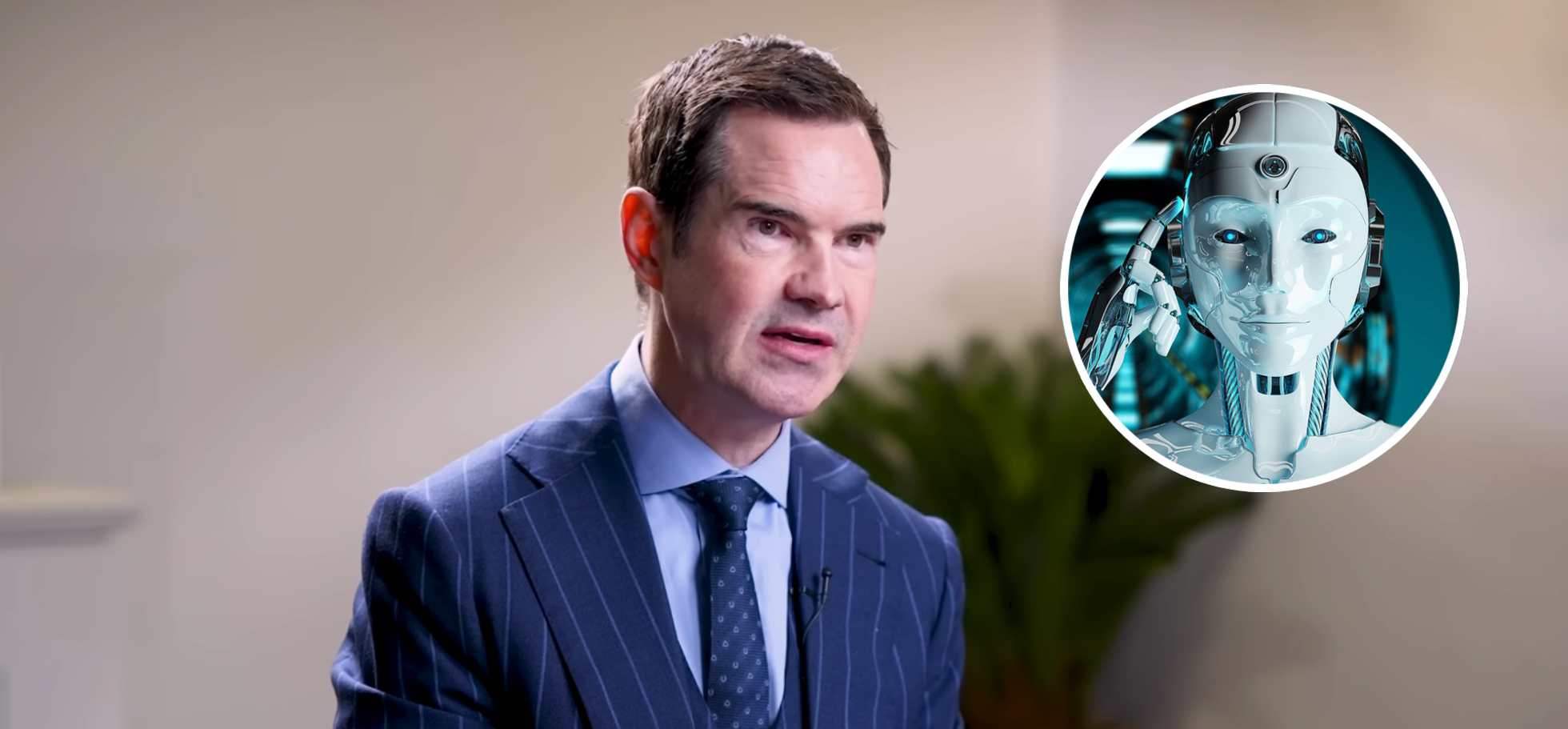
Comedian Jimmy Carr recently appeared on Triggernometry to discuss what he believes are the real threats posed by artificial intelligence, and they’re not what most people think.
“People are worried about the wrong thing with AI,” Carr stated plainly. “People are worried about losing their job, but I think you’re worried about the wrong thing. And there’s two other things you could really worry about.”
The first concern Carr raised centers on government surveillance and control. “The cost of running an authoritarian regime like the Stasi has come down by 10 orders of magnitude in the last 3 years,” he explained. “You used to when you if you had to run the Stasi, if you’re in East Germany back in the day, that was 20% of GDP on spying on people and keeping an eye out. That’s now you got a bunch of cameras, you’ve got AI, everyone’s got a phone on them and we’re tracking everything at all times.”
Carr expressed particular worry about digital identification systems. “Digital ID is terrifying. There’s lots of lessons from history about digital ID that we should take very seriously because even if the good guys are in charge when it comes in, well, at what point does the world turn and people vote for a bad guy and then they have the power?”
He provided a historical example to illustrate his point: “More Jews perished in the Netherlands than in France. You know why? Better records. Holland kept better records, so they knew where everyone was. That’s terrifying.”
Regarding employment concerns, Carr acknowledged anxiety about job displacement but suggested people focus on adaptability rather than fear. “You might be worried about your job, but you’ve got transferable skills. And if you’ve got critical thinking and you’re a smart person, jobs for life is gone. But you’ll find something else to do.”
The comedian’s second major concern involves the potential for unprecedented scientific advancement. “This is Peter Thiel’s point, but minus the screens from any room, we’re living in the 1970s, right? So nothing’s happened in physics since ’72. String theory has not got us anywhere. But if you take the compute power of AI and point it at physics now everything else in science is stamp collecting.”
Carr suggested this could lead to two vastly different outcomes. “We could have a world of plenty where there’s no, you know, if we increase productivity by 50 times and there’s human flourishing, fantastic. I hope that’s the world we live in. But it could go another way.”
Throughout the conversation, Carr emphasized the importance of maintaining liberal democratic values in an era of rapid technological change. “We live in liberal democracies and we’re very lucky to. But our leaders, how long will they resist that temptation?” he questioned, referring to the appeal of using AI-powered surveillance systems.
He framed the challenge in stark terms: “Safety and freedom. Where do you want to be on that line? You need a little bit of both.”
Carr’s message ultimately calls for vigilance about civil liberties rather than employment statistics. “Civilization is a clearing in the forest. We need to stand very firm against any authoritarian regime whether it comes from the left or the right whether it comes from a good place or a bad place. We have to resist that.”
While acknowledging that “the vast vast vast majority of people have absolutely no idea what’s coming,” Carr urged listeners to consider the broader implications of AI beyond personal economic concerns, focusing instead on the technology’s potential to either liberate or oppress humanity on an unprecedented scale.


