
Free to use under the Unsplash License
In a laboratory at Harbin Institute of Technology this past September, Wei Lianfeng stood before a panel of industry experts to defend his doctoral work. But there was no hundred-page thesis on the table.
Instead, the engineer-turned-doctoral candidate presented the vacuum laser welding equipment he had designed and manufactured, along with documentation of the processes he had developed. When the defense concluded, Wei became the university’s first PhD student to earn his degree based entirely on practical results rather than academic writing.
Since 2022, China has been implementing a nationwide pilot program that fundamentally reimagines how engineering doctorates are earned. Backed by the Ministry of Education and eight other government agencies, the initiative specifically targets fields where theoretical knowledge alone proves insufficient, from semiconductors to quantum computing.
According to SCMP, the program aims to address what officials describe as engineering “bottleneck” problems as technological competition with the United States intensifies. For Wei and students like him, being a scientist in contemporary China no longer centers primarily on publishing in prestigious journals. The emphasis has shifted toward building functional solutions to concrete problems, particularly those affecting national technological capabilities.
To evaluate whether Wei’s practical work met doctoral standards, HIT assembled a panel composed of experts from industry rather than relying solely on academic faculty. This approach acknowledges that conventional peer review, while valuable for theoretical contributions, may not adequately assess whether an engineering innovation actually works in real-world applications.
The policy change arrives at a moment when traditional doctoral assessment faces increasing scrutiny worldwide. Academic credentials have long carried inherent authority, with the PhD representing mastery of research methodology and contribution to human knowledge. Yet recent controversies have highlighted how quality control in doctoral programs sometimes falls short of these ideals.
The fitness industry recently witnessed one such controversy when exercise science researcher Solomon Nelson published a detailed review of a 12-year-old doctoral dissertation by Dr. Mike Israetel. His analysis identified statistical impossibilities and methodological concerns in a thesis retrieved from an official university repository.
When defenders of the thesis author initially claimed Nelson had reviewed an incorrect draft rather than the final version, Israetel later confirmed the repository document was indeed accurate. The incident revealed that the officially archived dissertation contained errors that had gone unaddressed for over a decade.
Such cases raise questions about what a PhD actually certifies. Traditional doctoral programs require candidates to demonstrate research competency through written dissertations that undergo committee review.
In theory, this process ensures graduates possess both subject expertise and methodological rigor. In practice, quality varies dramatically. Some programs maintain exacting standards while others, whether through institutional pressures or inadequate oversight, allow seriously flawed work to pass.
Rather than assessing whether a candidate can write convincingly about research, China’s program judges whether they can produce something that functions. For fields where practical application matters more than theoretical contribution, this distinction proves meaningful.
The program covers strategically important areas where China seeks technological self-sufficiency. US-led restrictions on advanced technology exports have made domestic innovation capacity a national priority. In semiconductors, quantum computing, and related fields, China cannot rely on imported knowledge and must develop its own expertise. Training doctoral students to solve concrete engineering problems rather than primarily produce academic papers aligns education with these strategic needs.
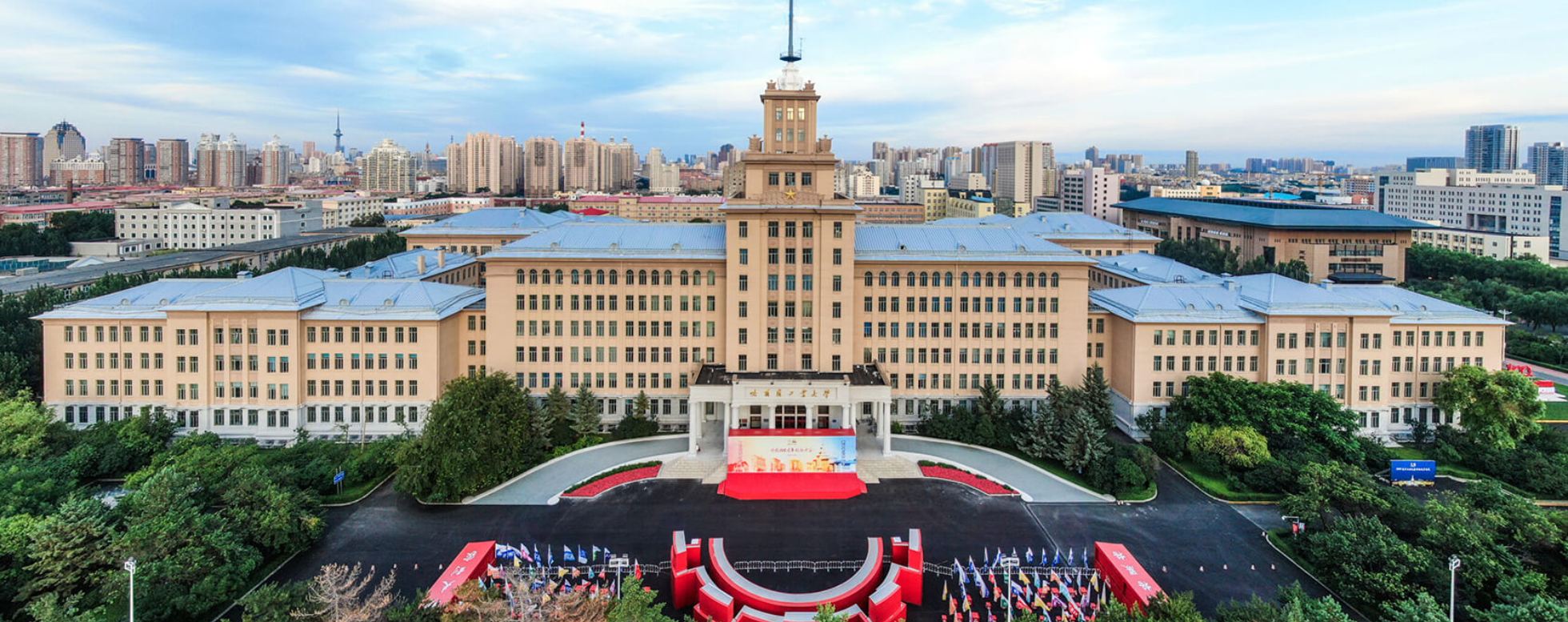
The Harbin Institute of Technology, one of China’s premier defense-related universities, was selected to pilot the program precisely because its research directly serves national security objectives. The university’s engineering programs focus on aerospace, robotics, and advanced manufacturing where practical capability matters more than citation counts.
By inviting industry experts to evaluate Wei’s defense, HIT acknowledged that academic faculty may not possess the knowledge needed to judge whether an engineering innovation actually works. University professors excel at assessing theoretical contributions and research methodology. But determining whether a new manufacturing process will function reliably in production often requires practical experience that academics lack.


