
Free to use under the Unsplash License
Martial arts legend Jackie Chan has become known in Chinese business circles as the “brand terminator.” This reputation was reinforced on February 13th when Guangdong Chigo Air Conditioning Co. Limited filed for bankruptcy liquidation.
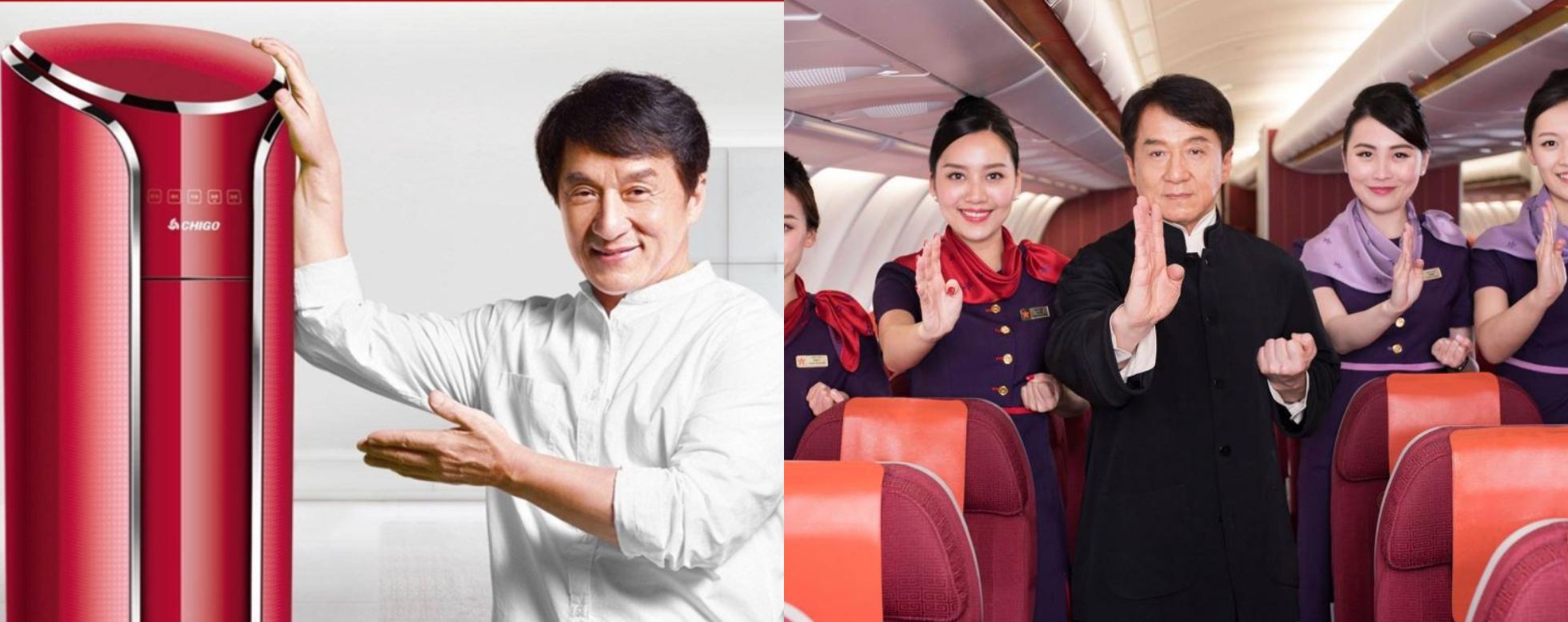
Founded in 1994, Chigo once competed alongside giants like Gree, Midea, and Haier, earning recognition as one of China’s “four little dragons” in the air conditioning industry. In 2014, at the peak of its success, Chigo made what may have been its most consequential decision: hiring Jackie Chan as brand ambassador. The company aimed to challenge Gree, which had previously worked with Chan.
The results were catastrophic. Financial reports show that while Chigo had risen to third place in market share by 2010, its fortunes reversed after Chan came aboard. By 2018, the company reported losses of 480 million yuan. In 2019, losses expanded to 1.4 billion yuan, ultimately leading to delisting and now bankruptcy.
Meanwhile, Gree, which had been struggling during its association with Chan, managed to survive and continue operations after Chigo took over the endorsement contract.
This pattern repeats across Chan’s endorsement portfolio with remarkable consistency. BaWang anti-hair loss shampoo, featured in Chan’s memorable advertisement, saw sales briefly lead the market.
However, in 2010, Hong Kong’s Next Magazine revealed the product contained diethanolamine, a component listed as carcinogenic by the United States. Though the company filed lawsuits, the brand never recovered, and sales plummeted.
Aido VCD is another example. When its founder secured Chan’s endorsement in 1996 for 4.5 million yuan, the advertising slogan “Aido VCD, good kung fu” went viral across China. Within just three to four years, however, the company faced financial crisis. Eventually, the brand vanished from the market.
The Xiao Bawang learning machine, a nostalgic memory for many Chinese born in the 1980s and 1990s, followed a similar trajectory. Chan’s endorsement drove a surge in sales, but the company failed to innovate and went out of business in 2020. Even Dragonair, one of the busiest airlines flying between mainland China and Hong Kong, ceased operations shortly after partnering with the action star.
The list continues: a Volkswagen Caddy Combi model sold fewer than 1,000 units, Evergrande Spring product faced company collapse and founder arrest in 2014, and more.
Beyond business failures, Chan’s personal conduct has increasingly drawn criticism. In October of last year, video footage showing the 71-year-old actor appearing to inappropriately touch Hong Kong singer Joey Yung sparked massive online backlash.
However, his alignment with the Chinese Communist Party has generated the most significant public disdain. In 2009, Chan stated: “It’s better not to have freedom. I’m really confused now. Too much freedom makes things like Hong Kong today very chaotic. Taiwan is the same. I’ve slowly realized that we Chinese need to be governed.”
In May 2020, after the controversial Hong Kong National Security Law passed, Chan rallied over 2,000 entertainers to support it, declaring himself a “flag bearer for the CCP.”
The consequences have become undeniable. Chan’s 2024 film “A Legend,” with a total investment of approximately 350 million yuan, earned less than 80 million yuan in mainland China after 24 days of screening – a loss of over 300 million yuan.
In June 2025, “The Karate Kid: The Legend Continues,” with a budget of $45 million, earned only 69,000 Hong Kong dollars in its first two days in Hong Kong, with Chinese pre-sale tickets reaching merely 820,000 yuan.


