
Free to use under the Unsplash License
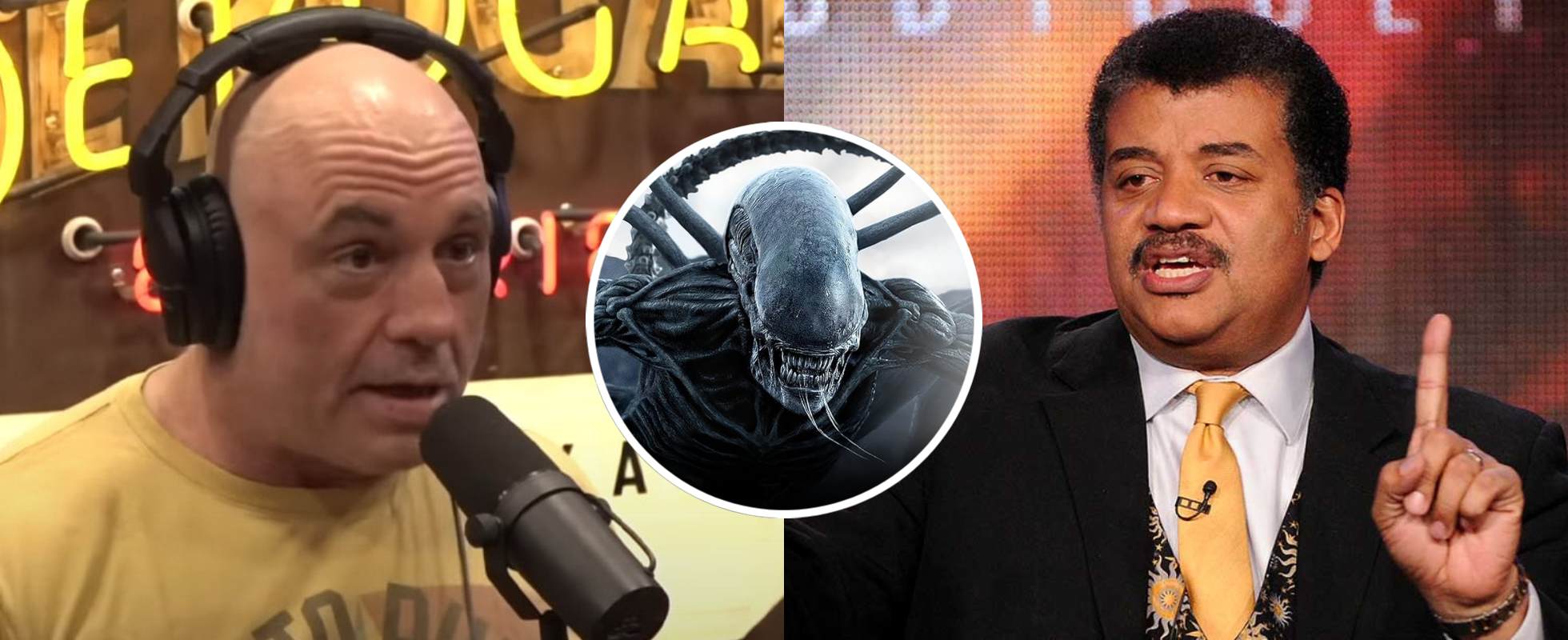
When filmmaker Dan Farah appeared on The Joe Rogan Experience to discuss his documentary “The Age of Disclosure,” he made bold claims about UFO disclosure under Donald Trump‘s administration. The film features officials like Marco Rubio and Jay Stratton, alleging that presidents have been kept in the dark about crash retrieval programs managed by defense contractors.
However, astrophysicist Neil deGrasse Tyson has serious doubts about these extraordinary claims. During his recent appearance on Piers Morgan Uncensored, Tyson dismantled the credibility of whistleblower testimonies and government conspiracy theories that documentaries like “The Age of Disclosure” rely upon.
His skepticism centers on what he calls “aliens of our ignorance,” a phenomenon where humans attribute unexplained events to supernatural forces.
Tyson stated: “In my book, I’ve just introduced a new term, aliens of our ignorance. So there’s something you don’t quite understand. Aliens. There it is. And it becomes a very convenient way to account for mysteries.”
Tyson’s primary challenge to the documentary’s premise is straightforward: if insiders and whistleblowers are freely discussing these alleged programs on camera, then there is no coverup.
“There’s a no end train of people talking about aliens,” Tyson noted. “If they’re talking about it and they’re insiders and they’re whistleblowers, then who cares what the President says? They’re the ones who I’m going to listen to. The President, if there is a cover up, is going to be in on the cover up.”
This logic directly contradicts Farah’s documentary narrative. If thousands of people are allegedly involved in these programs, Tyson argues that keeping such secrets would be impossible.
He referenced Benjamin Franklin’s observation that “three people can keep a secret if two of them are de ad.” The notion that a massive government bureaucracy could maintain perfect operational security while simultaneously being characterized as inefficient is, to Tyson, fundamentally contradictory.
The astrophysicist also challenged the documentary’s reliance on unverified testimony rather than physical evidence. In our current era where billions upload millions of hours of video daily to the internet, the absence of detailed alien imagery is telling.
“Every one of us has a smartphone on our hip capable of high resolution photos and videos,” Tyson pointed out. “None of them have detailed images of aliens.”
He posed a practical scenario that undermines the documentary’s claims: if the government were stockpiling alien technology or biological specimens, a single janitor with a smartphone could become the most famous person on Earth by leaking one photograph.
Tyson further questioned why politicians, rather than scientists, are positioned as authorities on potential extraterrestrial discoveries in these documentaries. “I don’t see why people credit politicians with having deep insights into scientific discoveries of the universe,” he stated.
When asked about President Obama’s comments suggesting aliens are real, Tyson interpreted this as acknowledgment that alien life likely exists somewhere in the universe, not confirmation of government contact or coverup.
The scientist emphasized that while he supports investigating unexplained phenomena, declaring something is alien simply because it’s unidentified is intellectually dishonest. “You can’t look at something that’s anomalous, say you don’t know what it is, and then declare that you know what it is,” Tyson explained. This reasoning directly challenges documentaries that present unidentified aerial phenomena as proof of extraterrestrial visitation.
Tyson’s most compelling argument against the documentary’s narrative is that any legitimate alien discovery would come from the scientific community, not government officials or defense contractors. With thousands of telescopes monitoring the skies globally, scientists would be the first to detect and confirm extraterrestrial life. If such a discovery occurred, Tyson said his response would be clear: take the alien to the nearest science conference, not the White House.
His critique of “The Age of Disclosure” and similar content is not a rejection of the possibility of extraterrestrial life, but rather a rejection of treating speculation and unverified testimony as equivalent to scientific proof.


