

A LinkedIn creator with 60 million monthly views is facing sharp criticism after posting a video series comparing the habits of billionaires, millionaires, and everyday people, with many viewers calling the content out of touch with financial reality.
The series, titled “Billionaire, Millionaire, and Normal People,” presents lifestyle comparisons across three wealth tiers, suggesting that frugal habits like meal prepping, skipping restaurants, and avoiding Starbucks are what separate the wealthy from everyone else.

Much of the advice echoes a familiar idea in personal finance: the so-called “latte factor.” Popularized by financial author David Bach and often supported by radio host and finance personality Dave Ramsey, the concept suggests that small daily expenses, like coffee, takeout, or subscriptions, quietly drain wealth that could otherwise be invested.
Critics of the billionaire comparison videos argue that framing wealth gaps around everyday spending habits ignores the enormous structural differences that shape how wealth is actually created and compounded. Even if someone eliminated small discretionary expenses entirely, the math rarely translates into the kind of wealth seen among the ultra-rich.
The billionaire profile in the series drew particular frustration. The fictional billionaire character claims to eat simple, air-fried meals and only visits restaurants for special occasions. One commentator pushed back firmly: “Billionaires are always at restaurants. Billionaires are taking private jets to restaurants.” He argued that framing billionaire wealth around personal frugality ignores how wealth actually compounds at that scale. “They have an infinite money glitch. It’s impossible to lose their wealth.”
The scale of the gap becomes clearer when looking at how investment wealth is distributed. According to Federal Reserve data, roughly 93% of U.S. households’ stock market wealth is owned by the top 10% of households.
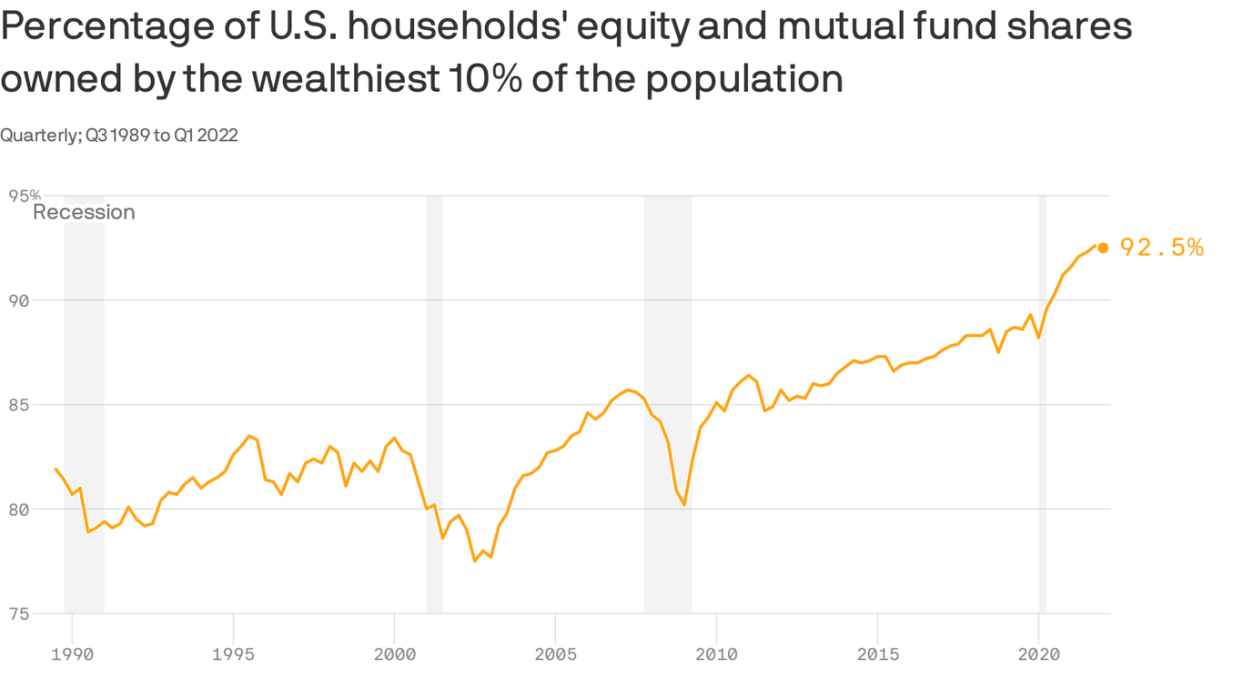
While a record share of Americans now technically own stocks through retirement accounts or mutual funds, the majority of those holdings are relatively small. As a result, when markets surge, as they have over the past decade ,most of the gains flow to those who already hold large portfolios.
On a recent episode of the All-In Podcast, Harvard professor and Kennedy School founding dean Graham Allison warned that the widening gap between wealthy households and everyone else could become politically destabilizing. If the top 10% or 20% are capturing the vast majority of economic gains, he argued, it creates what he called “a political invitation for a populist.”


