
Free to use under the Unsplash License
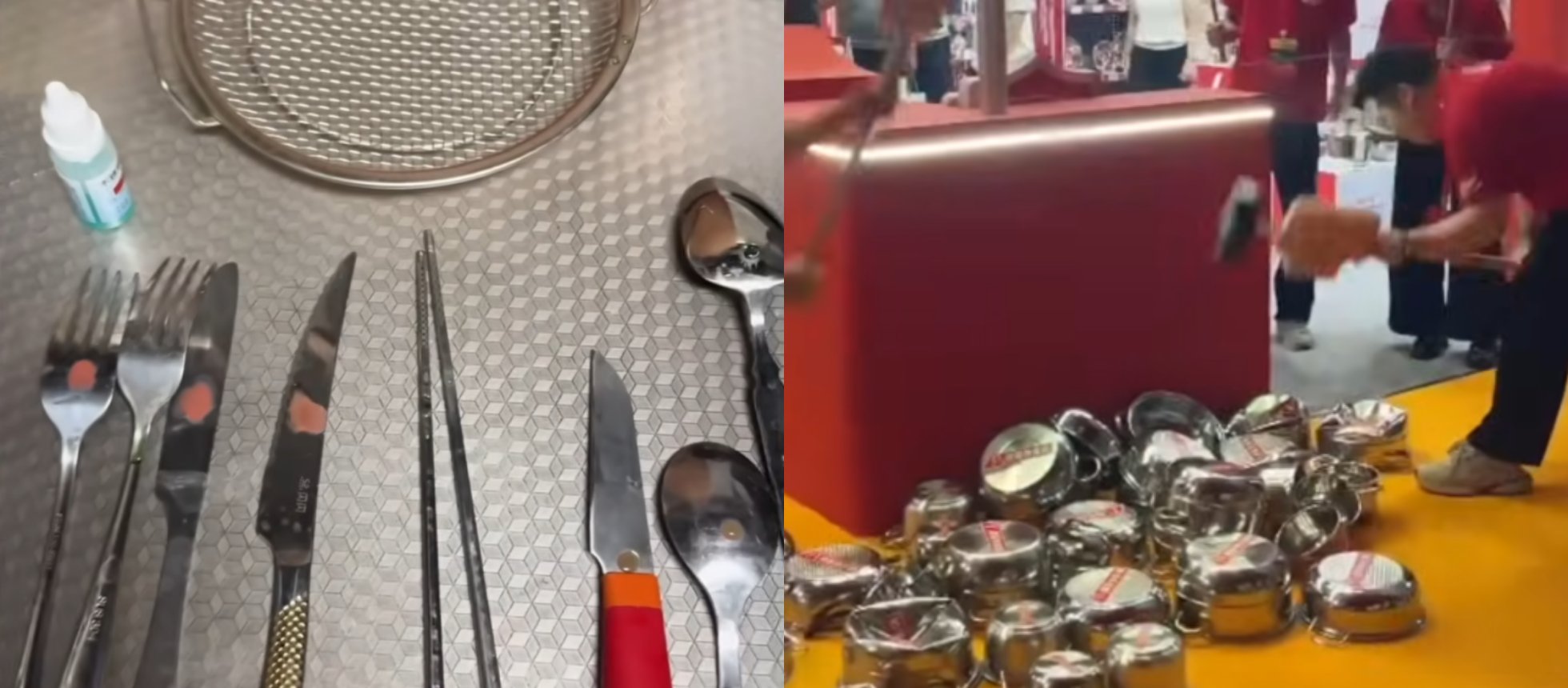
A disturbing trend has emerged across Chinese social media, with thousands of consumers testing their stainless steel kitchenware at home using heavy metal testing liquids. When applied to pots, spoons, bowls, and plates, many of these testing liquids quickly turn red, confirming dangerously high manganese content. Real food-grade 304 and 316 stainless steel shows no such reaction.
The alarm was widely raised following a poisoning incident at a stray dog rescue center. In 2025, the center purchased a commercial stainless steel cooking pot online to prepare meals for animals. After approximately 50 days of use, dogs began showing abnormal symptoms. By late January to February 2026, nearly 88 dogs displayed signs of lethargy, liver and kidney damage, and kidney failure, with two having already perished and many others poisoned.
After months of investigation covering ingredients, water sources, and surveillance footage, the source was traced to the pot itself. A sample was cut and sent for testing, revealing the pot was made of low-quality stainless steel, possibly recycled from industrial waste.
Heavy metal content was found to be hundreds to thousands of times above standard, with nickel, chromium, mercury, arsenic, and even radioactive substances present, causing chronic poisoning. The rescue center received no apology or compensation from the manufacturer and was forced to relocate with nearly 100 dogs.
Following that exposure, online influencers began purchasing and testing top-selling stainless steel products. The results were widespread. One product labeled as 316 stainless steel had sold 149,000 units but tested as 201 high manganese steel with a manganese content of 10.3. Another with 41,000 units sold showed a manganese content of 930 and carried no steel grade stamp at all. A third listing with 105,000 units sold and no material label was found to contain high manganese steel with a manganese content of 10.61.
As one tester put it: “If I had to pick the most counterfeit product category, I choose stainless steel bowls. This is the market where bad products have driven out the good ones the most thoroughly. Genuine high-quality items are actually harder to sell.”
The fraud is enabled by significant price differences between materials. A ton of 201 steel costs around 7,000 to 8,000 yen, while 304 steel runs approximately 14,000 per ton and 316 steel costs around 22,000 per ton. A single 0.11 lb (50g) 304 stainless steel spoon, including labor and transportation, should cost under four yen, yet sellers regularly market cheaper substitutes at two to three times that price.
Consumer frustration has reached a breaking point. One netizen commented, “Chinese people only cheat other Chinese.” Others have turned to foreign brands, with one user noting, “These foreign brands, stainless steel can be trusted because so many people are watching these big brands for counterfeits. If they mislabel something, they’ll be caught.”
Long-term exposure to heavy metals from low-quality cookware carries serious health risks, including liver and kidney damage, nervous system impairment, infertility, and increased cancer risk. The problem extends far beyond household kitchens, with these products widely found in factory cafeterias, schools, restaurants, and food stalls, quietly affecting consumers across the country.


