
Free to use under the Unsplash License
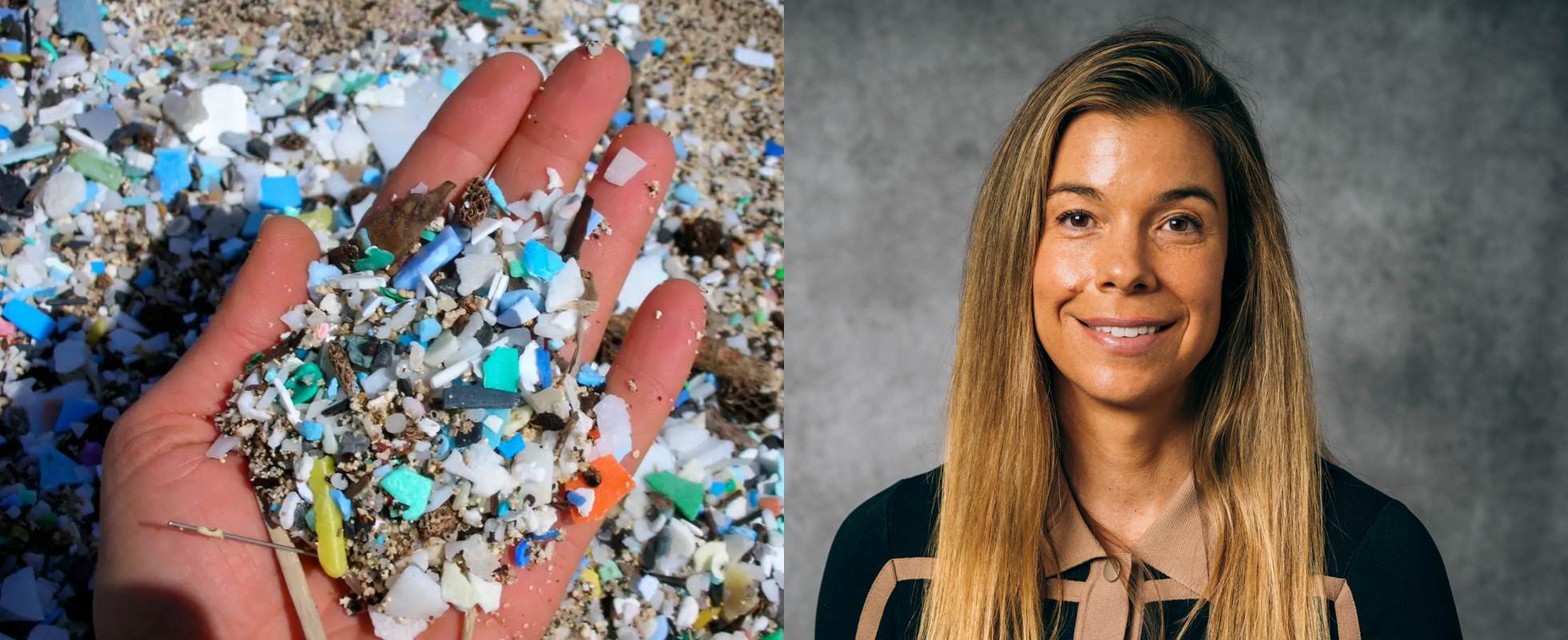
Dr. Rhonda Patrick recently appeared on The Jordan Harbinger Show, delivered some of the most underreported findings on microplastic exposure circulating in current research, and much of it centers on sources most people never consider.
The first surprise: glass water bottles may not be the safe alternative people assume. Patrick explained that a French study comparing microplastic levels in plastic bottles, glass bottles, and aluminum cans found that glass bottles had the highest particle count.
The reason was the painted lids. “The lid that they’re putting on the glass bottle has like paint and stuff on it. And the paint is made of plastic. There’s plastic polymers that make up the paint. And so when they’re in these facilities and they’re putting the caps on the bottles, some of that’s kind of coming off, you know, friction.”
However, she still recommends glass, because the particles from painted lids are larger and therefore less likely to be absorbed through the gut.
Aluminum cans carry a similar misconception. “Spin Drift, which is lined with plastic lining, people don’t realize that. They think aluminum cans are safer because they’re not plastic. They don’t realize that those cans are lined with plastic to prevent the soda water or whatever from corroding the aluminum.”
Tea bags are another overlooked vector. “Tea bags have microplastics in them. All tea bags. There was a study that came out comparing all the different types and they have hundreds to thousands of them per milliliter drop.” Patrick says she no longer drinks tea in bags when out. Loose leaf is her only option.
Chewing gum is a source most people never suspect. “Gum base is made from plastic polymers. It didn’t start that way. Around World War II, that’s when the gum base shifted from this plant tree sappy kind of stuff to these plastic polymers.” She now uses brands like True Gum and Simply Gum, which are marketed as plastic-free.
Hot drinks in paper to-go cups present a compounding risk. “Those paper cups are also lined with plastic. We know that heat causes microplastic breakdown and plastic chemical breakdown by like it increases by like 50-fold. So you’re really taking in a lot more microplastics if you’re drinking hot tea or hot coffee out of a to-go coffee mug.”
The only chain she mentioned that does not use plastic-lined cups is Blue Bottle Coffee, which uses polylactic acid from sugar cane.
According the Patrick, the most alarming finding involves the brain. A study out of Brazil found that “the brain seemed to accumulate microplastics almost 10 times more than other organs.” More concerning, “higher levels of microplastics in the brain were correlated with Alzheimer’s disease. People that had Alzheimer’s disease had up to 10 times more microplastics in their brains than people that did not.”
On what you can actually do, Patrick points to soluble fiber, which “creates this viscous mucous thing around the microplastics and even the smaller nanoplastics and prevents your gut from absorbing them.” A water filter, specifically reverse osmosis, remains her top practical recommendation.


