
Free to use under the Unsplash License
The International Olympic Committee announced on Thursday that transgender women will no longer be eligible to compete in women’s events at the Olympic Games, effective with the 2028 Los Angeles Games.
Sources state that the ruling was formalized after an IOC executive board meeting in Geneva. It establishes that participation in any female category event will be limited exclusively to biological females, verified through a mandatory gene test conducted once during an athlete’s career.
“Eligibility for any female category event at the Olympic Games or any other IOC event, including individual and team sports, is now limited to biological females,” the IOC said in its official statement.
The test screens for the SRY gene, a segment of DNA typically found on the Y chromosome that initiates male s*x development in utero and indicates the presence of t*stes/t*sticles. The IOC noted that a saliva swab, cheek swab, or blood sample can be used to conduct the screening and that it is already being used by governing bodies in track and field, skiing, and boxing.
The expert group that reviewed available testing methods agreed this approach is “the most accurate and least intrusive method currently available.”
The 10-page policy document published alongside the announcement goes beyond transgender athletes, also placing restrictions on female athletes with medical conditions known as differences in s*x development, or DSD.
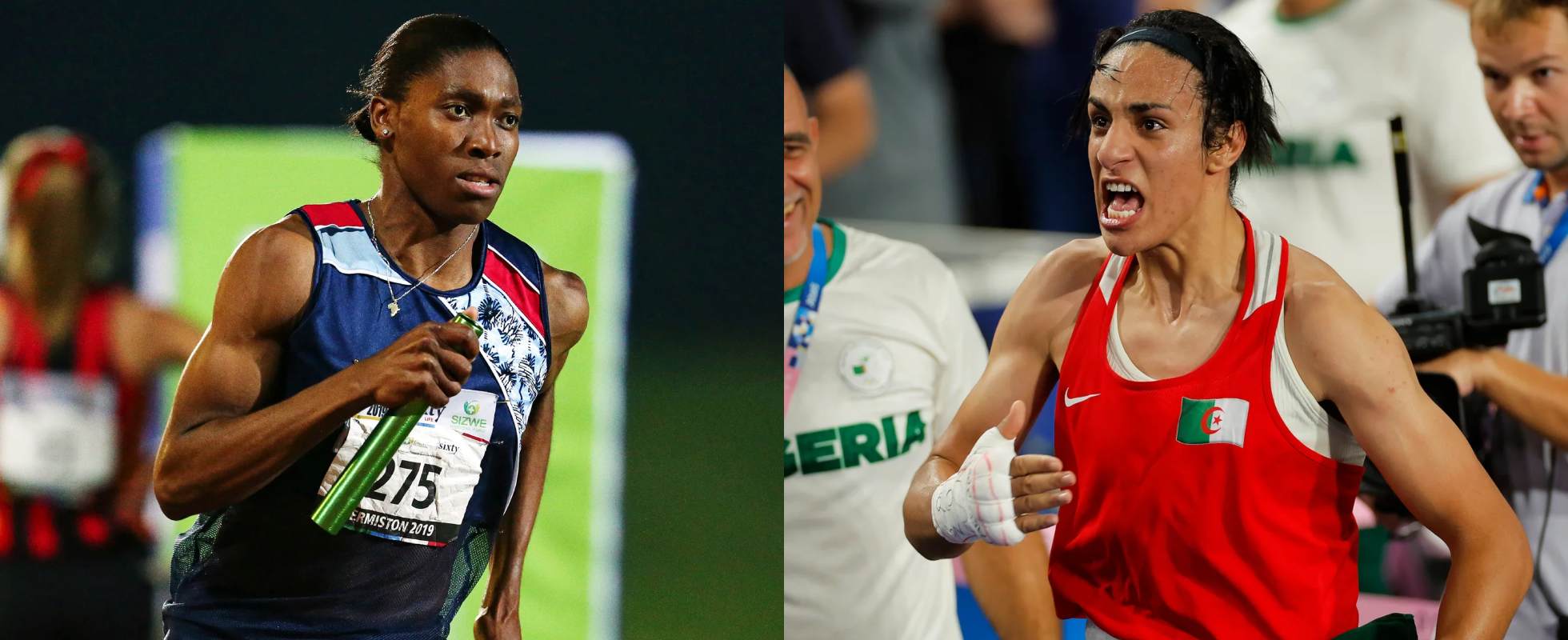
Among those affected is two-time Olympic champion Caster Semenya of South Africa, who was assigned female at birth but has testosterone levels above the typical female range. Semenya recently won a partial victory at the European Court of Human Rights in her long-running legal challenge to track and field’s eligibility rules, though that ruling did not overturn the restrictions.
IOC President Kirsty Coventry, a two-time Olympic gold medalist in swimming and the first woman to lead the organization in its 132-year history, called the policy a matter of competitive integrity rather than a political response to outside pressure.
“At the Olympic Games, even the smallest margins can be the difference between victory and defeat,” Coventry said in a statement. “So, it is absolutely clear that it would not be fair for biological males to compete in the female category.”
She addressed speculation that the policy was influenced by U.S. President Donald Trump’s executive order titled “Keeping Men Out of Women’s Sports,” signed in February 2025, which threatened to withhold federal funding from organizations that allowed transgender athletes in women’s sports and pledged to deny visas to certain athletes seeking to participate in the L.A. Games.
“This was a priority for me way before President Trump came into his second term,” Coventry said at an online news conference. “There’s not been any pressure on us to deliver anything from anybody outside of the Olympic Movement.”
The White House, however, described the IOC’s announcement as a direct outcome of the president’s order. “The IOC aligning their policy with President Trump’s executive order ahead of the 2028 LA Games is common sense and long overdue,” White House spokesman Davis Ingle said.
The scientific foundation of the policy centers on the physical development that occurs during male puberty. The IOC’s research document notes that males experience three significant testosterone peaks: in utero, during the mini-puberty of infancy, and beginning in adolescent puberty through adulthood.
The IOC concluded that these developmental stages provide performance advantages in sports requiring strength, power, and endurance, and that those advantages persist even after medical transition.
The document cited a male performance advantage over biological women of 10 to 12 percent in most running and swimming events, at least 20 percent in most throwing and jumping events, and potentially greater than 100 percent in explosive power events including contact sports.
The policy applies to all Olympic and IOC-sanctioned events, both individual and team sports. However, it is not retroactive and does not extend to grassroots or recreational programs. The IOC noted this distinction carefully, given that its own Olympic Charter identifies access to sport as a human right.
In practice, the number of transgender women competing at the Olympic level is believed to be very small. No athlete who had transitioned from male to female competed at the 2024 Paris Summer Games.
New Zealand weightlifter Laurel Hubbard did compete at the Tokyo Olympics in 2021, though she did not place on the podium. Three major governing bodies, track and field, swimming, and cycling, had already established their own bans on transgender women who had undergone male puberty prior to the Paris Games.
The new policy is widely expected to face legal challenges at the Court of Arbitration for Sport in Lausanne, Switzerland, where prior eligibility disputes involving athletes including Semenya and India’s Dutee Chand have been heard. Any appeal could unfold over much of the 28 months remaining before the L.A. Games open.
The announcement also carries relevance for two boxers at the center of a gender eligibility controversy that dominated headlines during the Paris Games. Lin Yu-ting of Taiwan, one of the two women’s boxing gold medalists whose eligibility was questioned, has since passed her gene test and been cleared to compete under the World Boxing governing body’s rules.
The other gold medalist, Imane Khelif of Algeria, told CNN last month she intends to take a gene test in order to be eligible for Los Angeles. Khelif is reportedly preparing for a professional bout in Paris next month.


