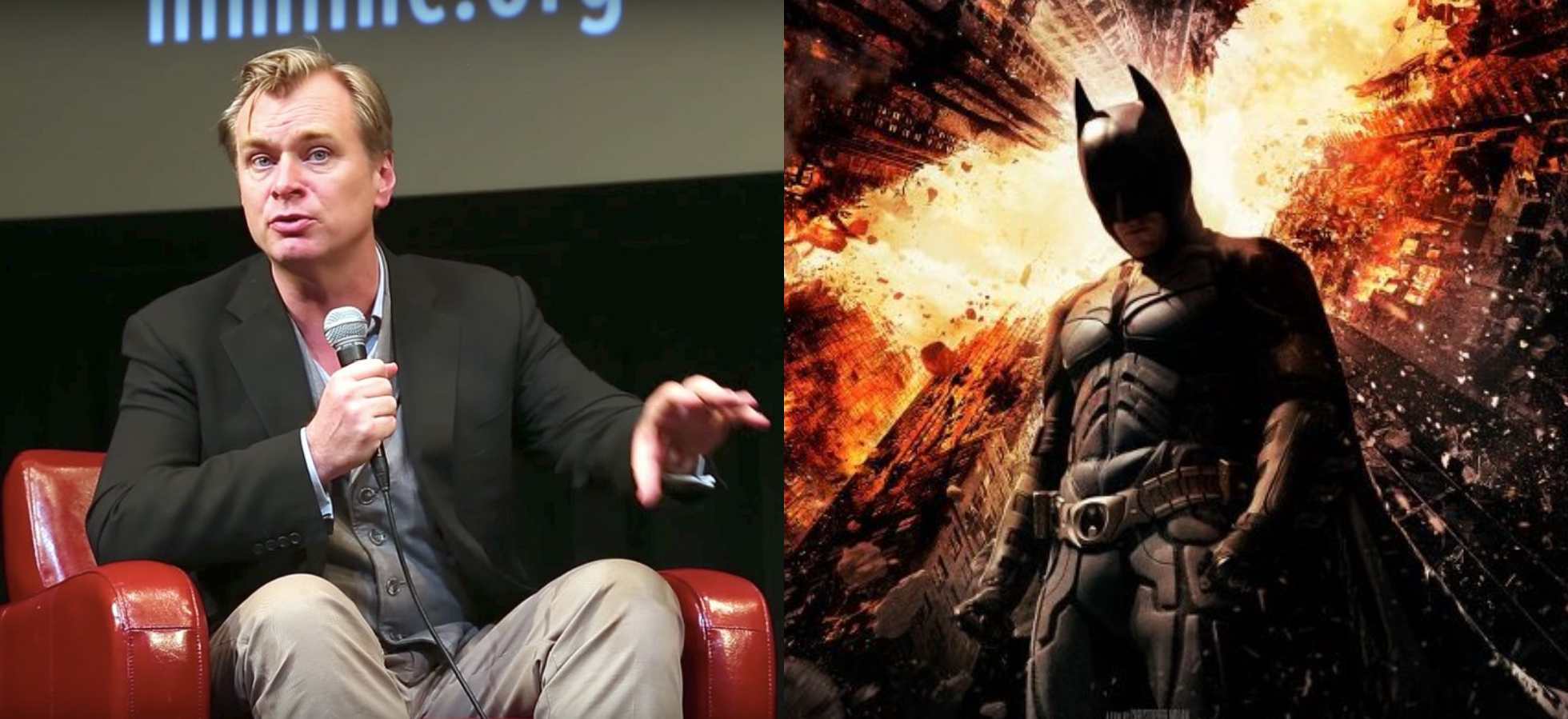
When Christopher Nolan set out to make The Dark Knight Rises, the final installment in his Batman trilogy, he envisioned an epic conclusion that would explore themes of revolution, demagoguery, and the fragility of civilization.
What he didn’t anticipate was the intense political scrutiny that would follow, with critics and commentators from both ends of the political spectrum claiming the film as their own.
Released in 2012, an election year that saw Barack Obama seeking reelection against Mitt Romney, The Dark Knight Rises found itself at the center of an unexpected culture war. Conservative radio host Rush Limbaugh claimed the name of Batman’s adversary, Bane, was a reference to Romney’s former company, Bain Capital.
Right-wing writer Christian Toto argued it was impossible to read the film except as a celebration of the Occupy Wall Street movement, noting that “Bane’s henchmen literally attack Wall Street, savagely beat the rich and promise the good people of Gotham that ‘tomorrow, you claim what is rightfully yours.'”
According to Tom Shone’s The Nolan Variations, the director remains genuinely puzzled by these interpretations. “Of all of my films, The Dark Knight Rises is the one that’s been pushed and pulled in the weirdest number of directions,” Nolan explains. “I think you have to go out of your way to look at the film and attribute to it right-wing characteristics. If anything, it’s specifically left-wing.”
Nolan continued: “When people listen to Bane and say, ‘He sounds like Donald Trump’ or that Donald Trump sounds like him, well, it’s about a demagogue. He’s the bad guy. What was I afraid of when I made The Dark Knight Rises? I was afraid of demagoguery. Turns out I was right to be afraid.”
The confusion stems partly from the film’s deliberate ambiguity. Written as the 2008 financial collapse began to rumble and shot as the Occupy Wall Street movement gathered strength, The Dark Knight Rises presents a vision of a modern American city torn apart by class warfare stoked by a Robespierre-on-steroids villain. Nolan drew heavily on Charles Dickens’s ‘A Tale of Two Cities and Sergei Eisenstein’s ‘October’ for inspiration, creating a story about revolutionary justice and the irony that a revolution in the name of freedom can result in tyranny.
For Nolan, the political readings miss the point entirely. “The film was not supposed to be political,” he insists. “It’s not intended to be; it’s about primal fears.” He explains that he was exploring demagoguery itself—the danger posed by charismatic figures who manipulate populist sentiment for destructive ends. “At the time we were writing, there really was this sense of false calm; everybody thinks everything’s okay, we got through the financial crisis, but there are underlying things brewing that could lead to difficult places.”
The director takes particular issue with readings that cast the film as pro-establishment or conservative. Bruce Wayne, after all, must literally lose everything—his wealth, his physical prowess, his home—before he can triumph. “Bruce literally has to lose everything and become bankrupt before he can triumph,” Nolan points out. The film contains pointed criticisms of how “the moneyed classes parade their philanthropy,” with Wayne himself expressing self-loathing about the superficiality of elite charity culture.
What Nolan finds most frustrating is the assumption that exploring themes means endorsing them. “You can’t use narrative to tell people what to think. It never works. People just react against it,” he argues. “You have to be purer about it. You have to be truer to the principles of narrative and telling a story, and that means risking misinterpretation.”
Ultimately, Nolan views the competing political interpretations as a kind of validation. “I feel very good about what we did in the Dark Knight trilogy, because it has been equally claimed by the Right and by the Left in terms of conversation, and that feels like we win.”
As Nolan sees it, The Dark Knight Rises isn’t right-wing or left-wing. It’s a film about what happens when society’s structures fail, when demagogues rise, and when good people must decide whether compromised order is better than revolutionary chaos.