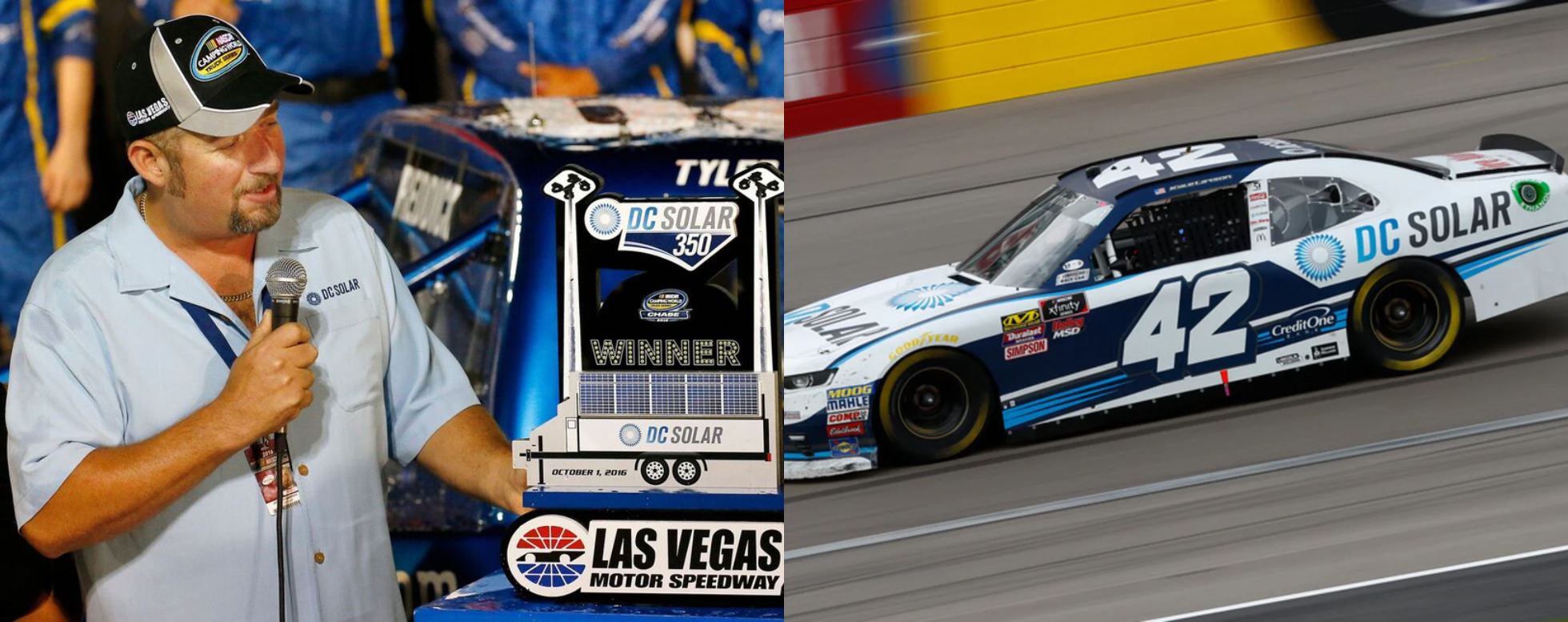
Jeff Carpoff had a dream: to see his company name emblazoned on a NASCAR vehicle. In 2016, that fantasy became reality when DC Solar, his mobile solar technology business, entered the racing world as a sponsor.
What followed was a carefully orchestrated performance that fooled investors, business partners, and even the drivers who represented his brand.
DC Solar positioned itself as a leader in mobile solar technology, manufacturing generator trailers that could provide clean power at construction sites and events. The company’s entry into NASCAR seemed like a natural extension of bringing sustainable energy to mainstream America.
Jeff Carpoff claimed to care about the environment, but those who worked closely with him saw a different reality. Steve Beal, DC Solar’s filmmaker for five years, and John Miranda, the company’s communications director, witnessed firsthand how the NASCAR sponsorship became Carpoff’s true obsession.
The relationship began through an unexpected connection. Chris Janini, father of driver Brennan Poole’s girlfriend, introduced Carpoff to the young racer. Suddenly, DC Solar was sponsoring a full-time Xfinity Series team.
The 24-year-old Poole became the perfect spokesman, genuinely passionate about environmental causes and eager to connect clean energy with motorsports. He spoke authentically about global warming and his personal commitment to protecting the planet through outdoor activities like surfing and camping.
But Carpoff struggled to deliver the same message. During filming sessions, he needed constant coaching on basic talking points about renewable energy and noise reduction. When asked where he envisioned DC Solar in five to ten years, a fundamental question any CEO should answer easily, Carpoff deflected.
“I don’t know,” he admitted on camera. “If it keeps going like this, who knows, right?”
The NASCAR expansion accelerated rapidly. DC Solar became the primary sponsor for races, deployed hundreds of generators at speedways, and eventually moved from Saturday’s Xfinity Series to Sunday’s premier Cup Series.
Carpoff modeled DC Solar’s new Benicia, California facility directly after Chip Ganassi Racing’s immaculate North Carolina headquarters, complete with piano-finished floors installed by the same contractor. He drove a Zamboni around his shop floor, living out his motorsports fantasy while claiming to build a clean energy empire.
However, federal investigators revealed that DC Solar manufactured approximately 6,000 mobile generator trailers but claimed to have sold over 17,000. The company operated a classic Ponzi scheme, selling the same equipment repeatedly on paper to different investors.
The NASCAR sponsorships, facility upgrades, and lifestyle were funded not by legitimate business success but by defrauding investors and exploiting tax credits meant to encourage renewable energy adoption.
As one insider reflected, the American taxpayer ultimately financed Carpoff’s racing dreams. The FBI seized unprecedented footage documenting the operation, and federal prosecutors pursued what they called the largest criminal fraud case in their district’s history.
Brennan Poole, the young driver who genuinely believed in connecting sustainability with racing, was cast aside when Carpoff no longer needed an environmental spokesman.
The CEO wanted bigger names, bigger races, and a bigger fantasy. He never cared about solar power or saving the planet. NASCAR was his calling, and he constructed an elaborate fraud to fund his passion