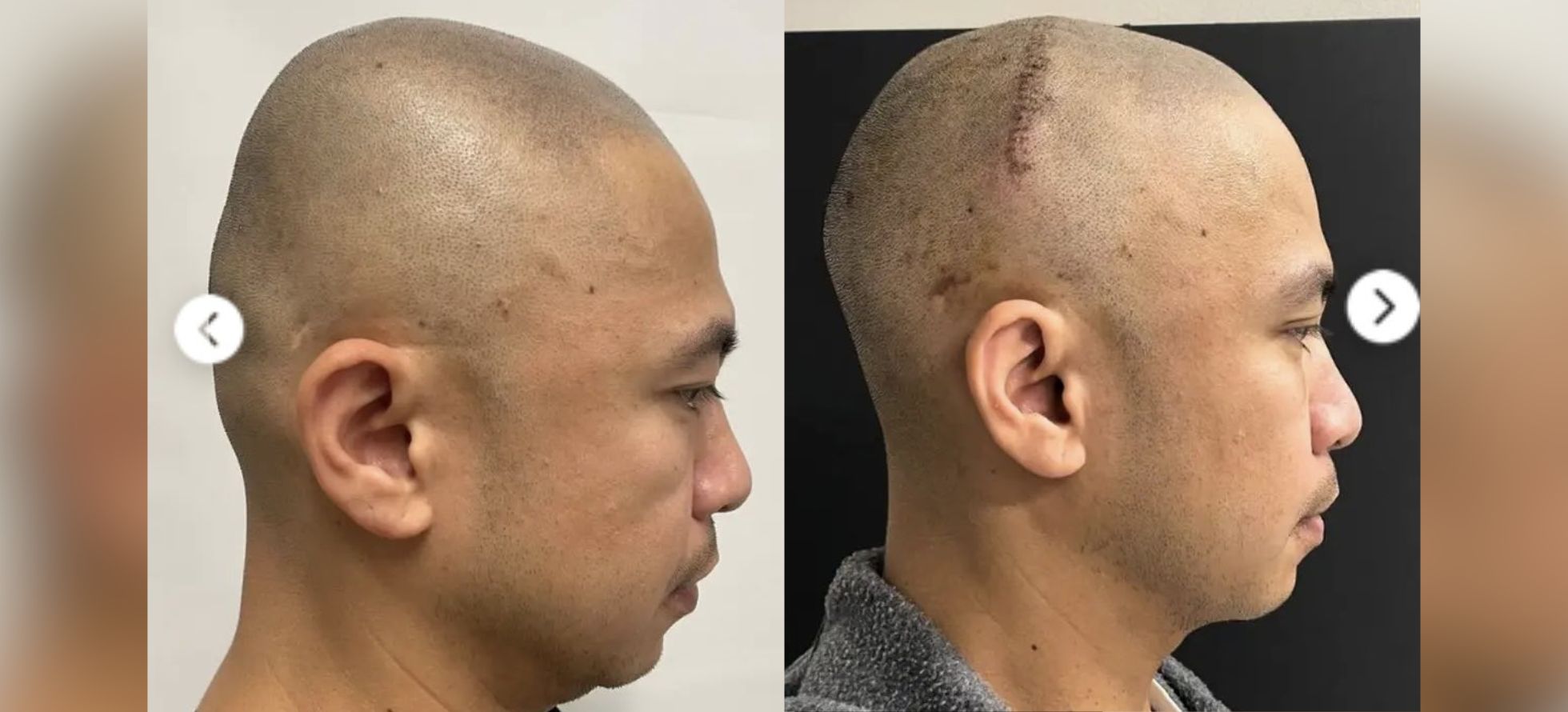
A growing number of young people in Japan are going under the surgical knife to reshape one of the human body’s most protected structures: the skull itself.
The procedure, which involves shaving down the occipital bone at the back of the head by as much as 6 millimeters, has been circulating on Japanese social media, drawing a flood of reactions ranging from disbelief to genuine medical concern.
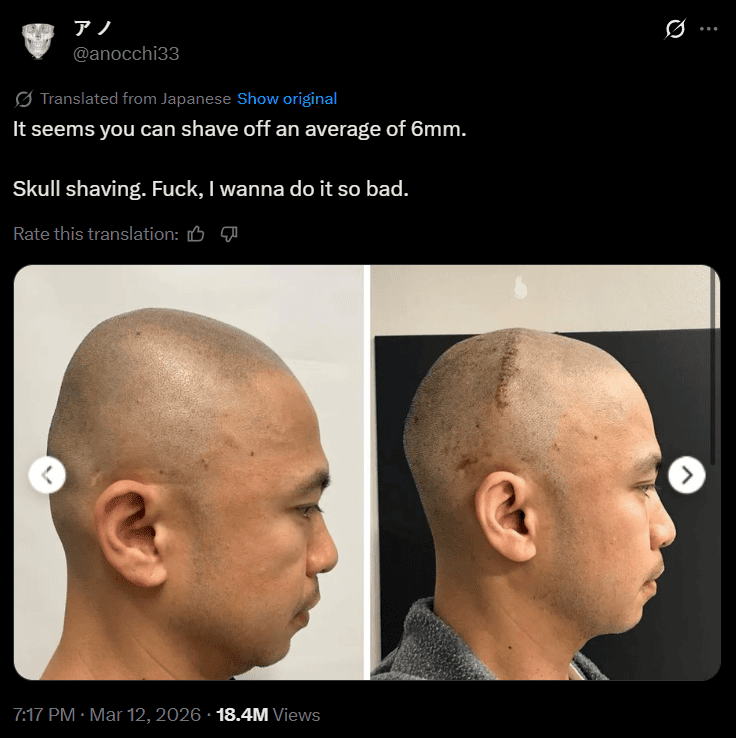
The trend sits within the looksmaxxing movement, a subculture built around optimizing physical appearance through a range of methods, both non-invasive and surgical. While looksmaxxers in other parts of the world have focused on jawline contouring, orbital rim augmentation, and cheekbone work, this latest development pushes the concept into territory that many observers are finding difficult to accept.
Photographs shared online show a notable transformation in the cranial profile. The slope of the crown becomes more gradual while the rear of the head takes on a steeper angle, producing a silhouette that some in the community consider more aesthetically balanced.
The procedure has prompted comparisons to trepanation, the ancient practice of boring holes into the skull, historically used for medical and ritualistic purposes.
Medical skepticism has surfaced throughout the comment sections. A key question being raised is whether removing bone at that depth compromises structural integrity. “Wouldn’t thinning the skull increase the risk of skull fracture and cerebral contusion?” asked one user.
Another questioned whether 6mm of shaving is even sufficient to produce the reshaping shown without crossing into genuinely dangerous territory, writing: “I feel like the brain would be exposed normally.”
There are also concerns about whether the surrounding tissue, including blood vessels and the brain itself, can tolerate the vibration and physical disruption involved. One commenter acknowledged that surgery becomes unavoidable when injury or illness demands it, but noted that elective removal of this scale is another matter altogether.
The question of long-term outcome has also entered the conversation. One person raised the possibility that bone regeneration could eventually undo the results, asking whether the shaved bone might grow back and return to its original shape within a few years.
Medical literature does support the idea that bone undergoes remodeling over time, particularly in younger patients, though the extent to which the occipital bone might regenerate specifically after this kind of elective shaving remains a genuinely open question.
Some responses reflected concern not about the physical outcome, but about the circumstances that might lead someone to seek the procedure in the first place. One commenter wrote that, based on the photographs alone, a visit to a mental health professional might have been more appropriate than a surgical one.
Others focused on more practical realities. Surgical incisions through the scalp tend to leave scarring where hair follicles are destroyed, meaning regrowth along the incision line is unlikely.
“Hair won’t grow from the scar,” one observer noted flatly. A counterpoint came from someone who suggested the transformation would be invisible once hair grows back to a normal length, making the visible evidence largely a non-issue day-to-day.
The fascination with reshaping the skull is not confined to Japan. Across Chinese social media, beauty influencers have been promoting similar modifications built around the idea of achieving a so-called “high skull” and protruding “elf ears.”
What began as simple hairstyling tricks quickly escalated into cosmetic interventions, including injectable fillers and even surgical alterations. In one widely discussed case, a beauty influencer reportedly received around 50 syringes of hyaluronic acid injected into her scalp in pursuit of the look, later documenting how large patches of her hair began falling out as restricted blood flow caused follicles to go dormant.
Running parallel to this is the “elf ear” trend, where injections or cartilage implants are used to make the ears protrude outward in order to create the illusion of a smaller face. Medical professionals have warned that such procedures carry risks ranging from disrupted blood supply and permanent baldness to potential neurological complications.