
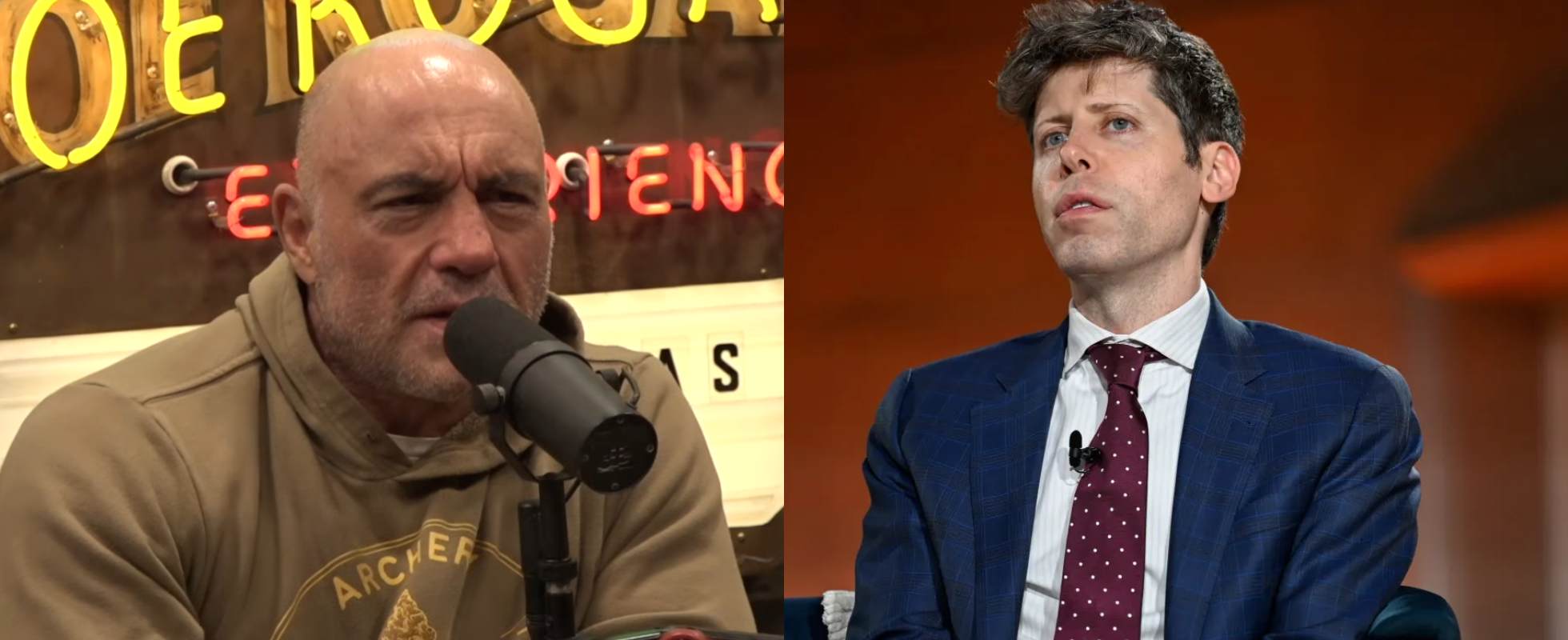
On a recent episode of JRE, host Joe Rogan sat down with author Michael Pollan to discuss consciousness across the spectrum of life, from plants to machines.
Pollan, known for his work exploring human consciousness and psychedelics, approached the topic of AI with skepticism, particularly when it came to the idea that machines could ever become truly sentient. Rogan then argued that consciousness might not be limited to biological life.
Rogan suggested that if consciousness is a fundamental property of the universe, there may be no reason it must remain confined to living organisms.
“Well, if the universe is experiencing itself subjectively through consciousness, why does it have to be only biological consciousness?” Rogan asked. “It doesn’t have to be.”
Building on that idea, Rogan floated a theory he has discussed before: that the human brain might function more like a receiver than the source of consciousness itself. If that were the case, he argued, advanced technology could potentially serve a similar role.
“If there is a technology that is invented that essentially does all the things that a human body does physically and also interacts with consciousness,” Rogan said, “if we are using the mind as essentially an antenna to tune into consciousness, other things we could make an antenna.”
The conversation also drifted into speculation about extraterrestrial intelligence. Pollan suggested that if humans were ever visited by aliens, their form of consciousness might not even be biological anymore.
Pollan agreed and stated: “It’s also likely that if we are ever visited by aliens, they will have some kind of consciousness and it may not be meat-based.”
Rogan replied: “Well, it may be at one point in time it was. They realize that there are biological limitations in terms of the ability to evolve that can be far surpassed with technology.”
Additionally, Rogan stated that the technology may still be in its earliest stages of development, comparing it to the first steps in biological evolution.
“The point is these things, what we’re looking at now is essentially a single-celled organism becoming a multi-celled organism,” Rogan said. “The potential for what they could become is unlimited, especially once they start making better versions of themselves.”
At the same time, Rogan expressed skepticism toward claims from tech industry leaders suggesting that modern AI systems might already be conscious. According to him, those statements often serve more as marketing narratives than serious scientific conclusions.
“They’re thinking about yachts,” Rogan said. “They’re just coming up with rationalizations for why they should keep their foot on the gas.”
Pollan agreed and stated: “It’s just all a way of saying, look how powerful this technology is, don’t you want to invest?”
He pointed specifically to comments from employees at Anthropic, the company behind the AI assistant Claude, who have publicly speculated that there might be a small chance their system could exhibit some form of consciousness.
“They think it might be conscious, those guys do,” Rogan said.
Pollan said: “They say it’s a 15 to 20% chance. These are the people who build it and don’t understand it. It’s really kind of spooky.”
Despite criticizing what he sees as exaggerated claims from tech companies, Rogan also acknowledged that the long-term possibilities of artificial intelligence could be difficult to predict. In his view, if AI systems eventually become autonomous and capable of improving themselves, they could surpass human intelligence in ways that are hard to imagine today.
“If these things do become sentient and autonomous and have the ability to create better versions of themselves and have a mandate in order to do that to survive,” Rogan said, “I could see it becoming the superior life form.”


