
Microsoft‘s vision for AI just got a lot more personal and perhaps conveniently so, given the company’s growing concerns about public perception of the technology’s environmental costs.
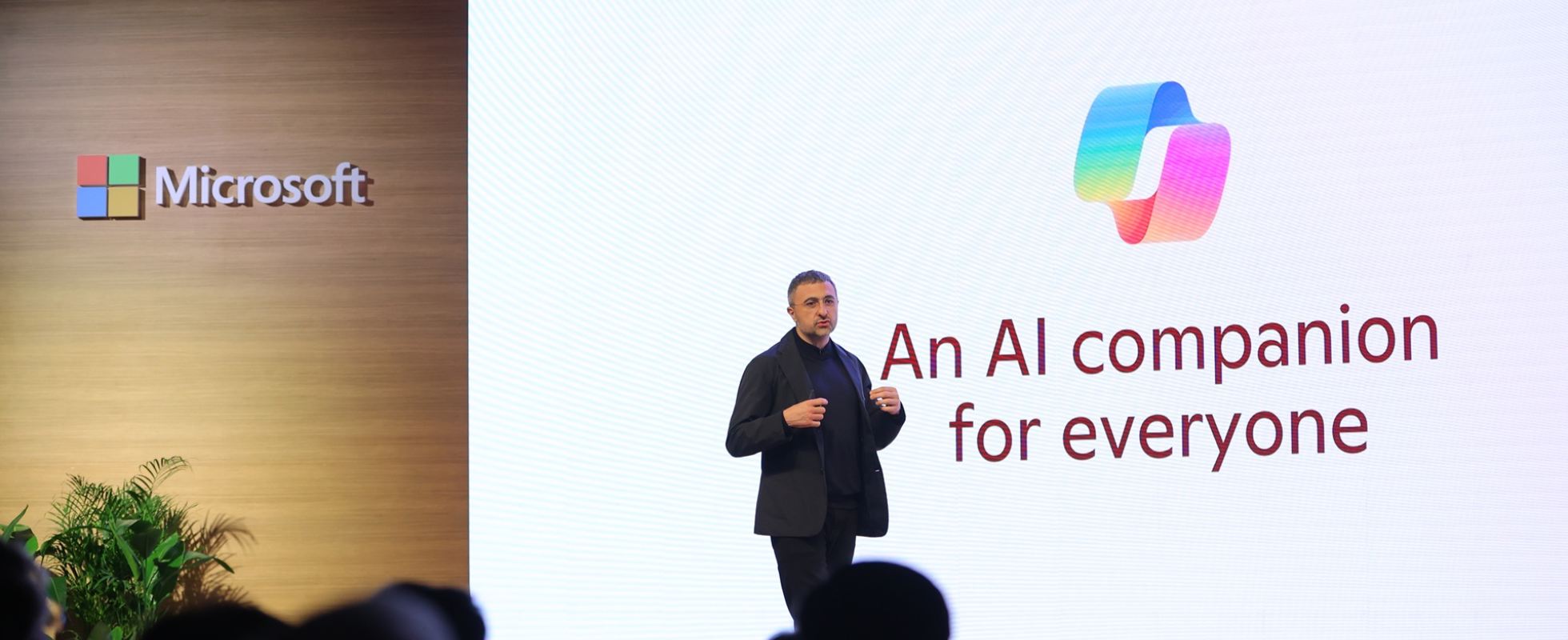
Mustafa Suleyman, CEO of Microsoft AI, recently declared that within five years, everyone will have their own AI companion that knows them intimately. But his promise of ever-present digital friends arrives just as his boss, Microsoft CEO Satya Nadella, warns that AI risks losing public support if it can’t justify its massive energy consumption.
“I think in five years time, everybody will have their own AI companion, which will know them so intimately and so personally that it will come to live life alongside you,” Suleyman said in a recent video. “It will see what you see, hear what you hear, understand your context, your preferences, your motivations, and it’ll feel like an ever-present aid or friend that is there to help you navigate life’s big challenges.”
The timing of these parallel messages raises questions about whether Microsoft is trying to shift the conversation away from AI’s environmental impact and toward its potential to become an indispensable personal presence.
Microsoft AI CEO, Mustafa Suleyman:
“in five years, everyone will have an AI companion that knows them deeply
what they see, hear, prefer, and feel”
It won’t just assist
It will live life alongside you, an ever-present friend helping you navigate life’s biggest challenges pic.twitter.com/OCXKa81NgR
— Haider. (@slow_developer) January 15, 2026
Speaking at the 56th World Economic Forum on January 20, 2026, Nadella acknowledged that public tolerance for AI depends entirely on whether it delivers tangible benefits rather than abstract promises. He framed the issue in stark terms.
“I think we as a global community have to get to a point where we are using this to do something useful that changes the outcomes of people, communities, countries, and industries. Otherwise, I don’t think this makes much sense,” Nadella said.
He then directly addressed the elephant in the data center: energy consumption.
“In fact, I would say we will quickly lose even the social permission to actually take something like energy, which is a scarce resource, and use it to generate these tokens if these tokens are not improving health outcomes, education outcomes, public sector efficiency, private sector competitiveness across all sectors, small and large, right?”
Nadella’s concerns aren’t theoretical. Microsoft has poured billions into OpenAI and is rapidly expanding its global data center infrastructure to support services like ChatGPT and Copilot. The company’s AI ambitions require enormous amounts of electricity, raising legitimate questions about sustainability and resource allocation.
Enter the personal AI companion narrative. If Microsoft can convince users that AI will become an intimate, constant presence understanding their every need and helping them through life’s challenges, the energy costs might seem more justifiable. After all, people are more likely to accept resource consumption for what they perceive as essential relationships rather than optional productivity tools.
Suleyman’s vision represents a shift already underway across the tech industry, where AI is increasingly positioned less as software and more as something resembling a relationship.
Last year, Elon Musk‘s xAI gained attention when Grok‘s anime-styled assistant went viral, while Razer unveiled an AI-powered desk companion featuring digital avatars designed to assist with gaming and everyday tasks.
The technology is already expanding beyond digital interfaces. AI now powers self-driving cars, automates various professional tasks, and assists patients in healthcare settings, progressively blurring boundaries between digital and physical worlds.
But the fundamental tension remains: can AI prove useful enough to warrant its environmental footprint? Nadella seems acutely aware that public patience isn’t infinite, and that the industry faces a credibility test.
By promoting deeply personal AI companions that “live life alongside you,” Microsoft may be attempting to preemptively answer critics who question whether generating text responses and automating emails justifies consuming scarce energy resources.
A companion that understands your motivations and helps navigate major life decisions sounds far more essential than a chatbot that summarizes meeting notes.


