
Free to use under the Unsplash License
The hosts of the podcast Decoding the Gurus recently criticized what they see as one of the defining contradictions of the current political moment: figures like Joe Rogan and Robert F. Kennedy Jr. being elevated as voices on health and science within the Trump administration while, at the same time, the administration cuts away at the very research infrastructure responsible for real medical advances.
One of the episode’s clearest examples centered on ibogaine, a psychedelic compound being explored as a possible treatment for opioid a**iction. Rogan previously claimed he personally contacted President Trump about the dr*g and received an immediate response.
“I sent him that information,” Rogan said. “The text message came back. Sounds great. Do you want FDA approval? Let’s do it. It was literally that quick.”
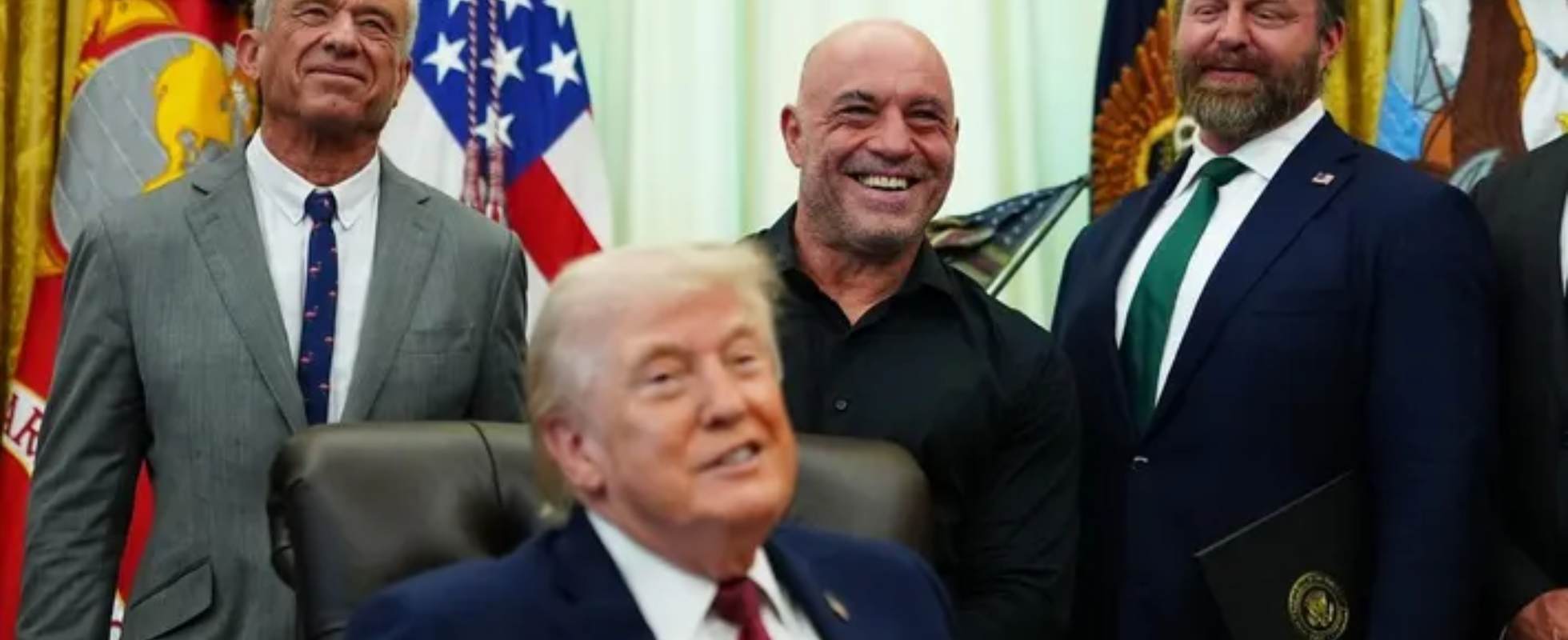
Rogan later appeared at a White House photo opportunity alongside Trump and RFK Jr., but the podcast hosts argued the moment highlighted a serious problem. In their view, the treatment had not undergone the proper approval process, and the supporting evidence behind it remained weak.
One of the hosts said the entire situation reflected the operating style of the administration.
“This is just a very specific case,” he said, “but it is basically, you know, what the Trump administration is all about. Trump will, you know, give people personal favors.”
The discussion then shifted to the wider consequences facing American scientific research. According to the hosts, NIH funding has “completely fallen off a cliff” due to Trump administration and DOGE-led efforts targeting research projects considered ideologically suspect.
They pointed to one especially absurd example involving a physics grant that was reportedly canceled simply because it used the word “polarization,” referring to light rather than politics. According to the hosts, an automated keyword search flagged the term and the funding was cut.
Against that backdrop, the hosts contrasted the administration’s political theater with what they described as genuinely groundbreaking scientific work continuing behind the scenes. They referenced recent mRNA-based pancreatic cancer trials, noting that after six years, the normal survival rate for that diagnosis is roughly 16%, while every participant in the treatment group remained alive.
“This is something that scientists are doing in the background,” one host said, “probably despite incredible funding cuts.”
For the hosts, the contrast between that research and the White House ibogaine photo-op captured the deeper issue at hand. As one of them concluded, “It’s just an incredibly unforced degree of self harm to the United States of America.”
The hosts ultimately argued that scientific progress itself will continue, but increasingly outside the United States, as America risks surrendering its long-standing leadership in biomedical research to countries like China and across Europe through repeated funding cuts and canceled grants.


