
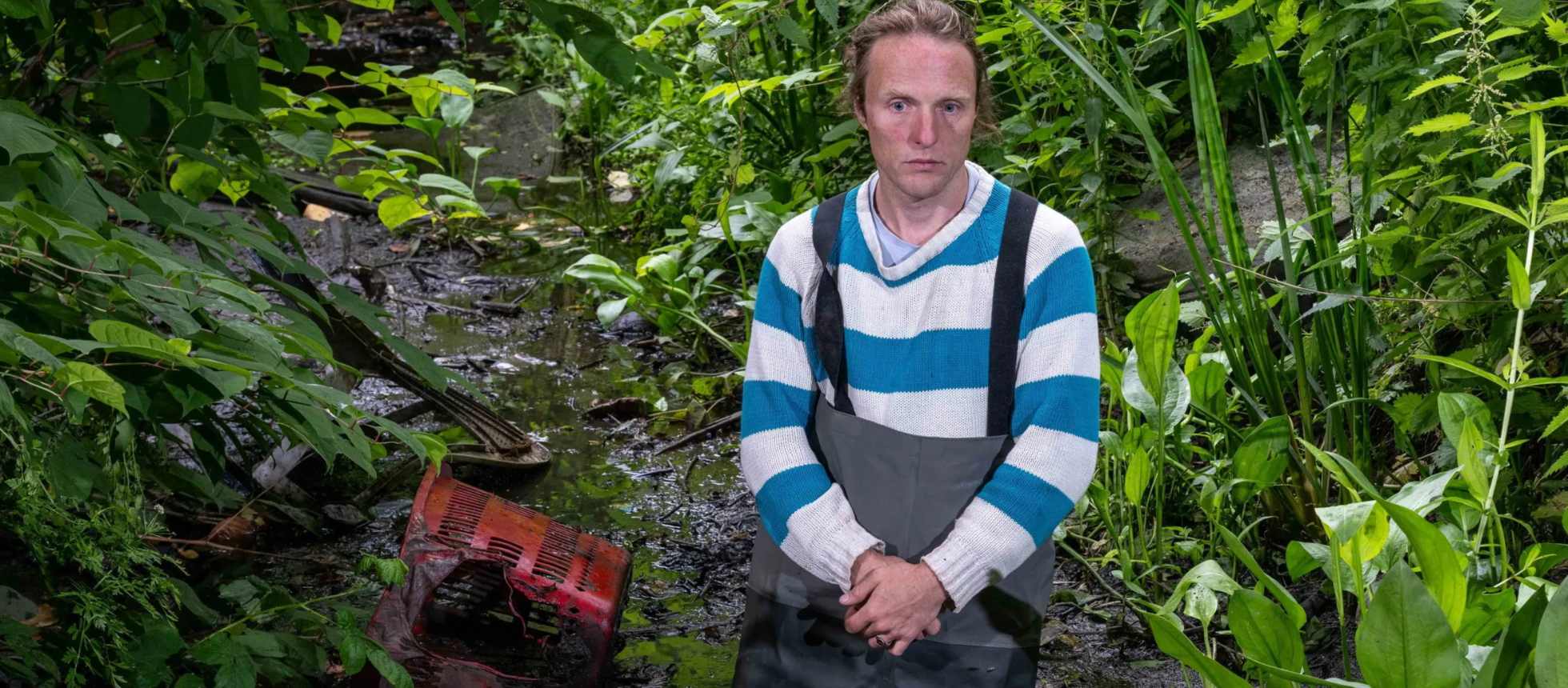
A British environmental lawyer and self-described “river guardian” is now facing an investigation and the possibility of two years in prison, not for polluting a waterway, but for cleaning one.
Paul Powlesland is a barrister who specializes in environmental law and lives on a narrowboat on the River Roding in East London. He also founded a group called Lawyers for Nature and campaigns for the rights of nature movement, which argues that rivers and ecosystems should have legal rights of their own. For four years, Paul repeatedly contacted authorities asking them to address the deteriorating condition of Alders Brook, a section of the River Roding in East London. According to him, those requests went nowhere.
So in February 2026, Paul and a group of volunteers decided to take matters into their own hands. Over the course of 10 days, they worked to restore a 250-meter stretch of Alders Brook. The volunteers removed more than 200 bags of trash, cleared invasive Japanese knotweed, pulled out discarded household appliances, used needles, and even abandoned weapons. At one point, the group hired an excavator to clear sections of the brook that had become heavily clogged with silt built up over years.
The results were dramatic. Where water had once sat still in sludge, it began flowing again. Native plants returned. Paul claimed fish came back to parts of the brook for the first time in decades, along with dragonflies, herons, and a nesting moorhen.
Within days of completing the cleanup, investigators arrived. The Environmental Agency informed Paul that it was looking into the project for possible violations of environmental permitting regulations. Officials raised concerns about the dredging activity, silt removal, and whether the physical changes made to the waterway could create flood risks.
Paul pushed back, arguing that the agency was going after what he called an easy target while the wider River Roding system continues to deal with sewage discharges and illegal dumping. Campaigners have claimed that one sewage outflow alone releases more than 750,000 liters of raw sewage into the river every year.
When heavy rains swept through the area shortly after the cleanup, Paul posted photos arguing the restored brook was now holding significantly more water than before, functioning more like a natural sponge by storing rainwater and gradually releasing it rather than sending it rushing downstream.
The Environmental Agency has not filed charges, and no court date has been set. However, the alleged offense carries penalties of up to two years in prison, unlimited fines, or both. For Paul, the stakes are even higher given that a cr*minal conviction could also affect his standing as a practicing barrister.
The situation has drawn attention online, with many questioning why the people who cleaned the river are being investigated while the sources of ongoing pollution face no such scrutiny.