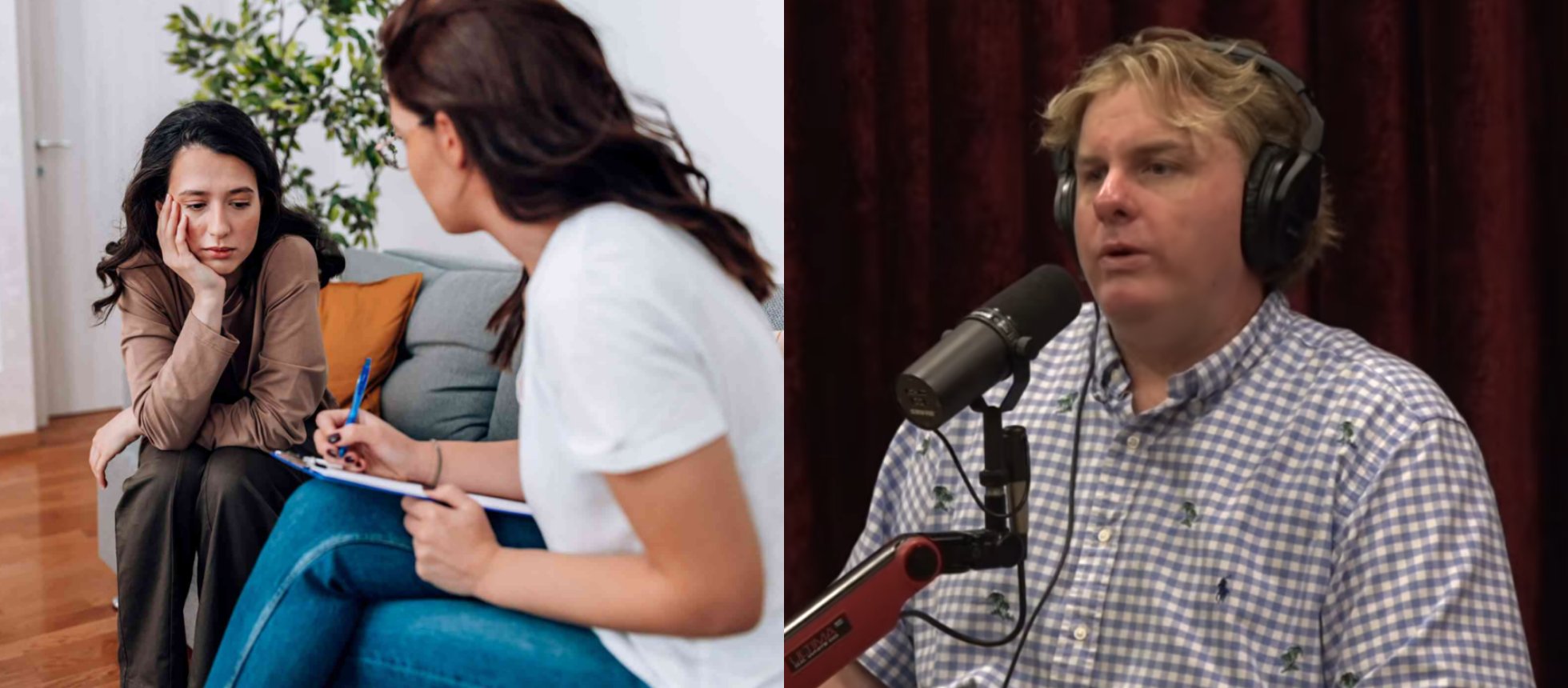
Dillon illustrated his point with a personal story about a political disagreement involving his father and stepmother. When he told his therapist that he was considering attending his cousin’s wedding, where they would also be present, he received advice that surprised him.
“My therapist goes, ‘Well, you don’t have to go,'” Dillon recalled. The therapist then added, “‘If you feel like it’s going to make you happy, go.'”
The exchange led Dillon to criticize what he sees as a broader trend in modern therapeutic culture.
“Therapy in our country has become a way to kind of enable like sick people to just become selfish psychopaths,” he said. According to Dillon, that mindset has contributed to the weakening of family bonds, adding, “Family in America means almost nothing.”
He contrasted the situation in the United States with what he has heard about other cultures. Dillon referenced a conversation with a comedian who had toured India and was struck by how strongly families remained connected, even under difficult circumstances.
Reflecting on that comparison, Dillon argued that Americans are often encouraged to cut ties too easily. “Family in America almost means nothing,” he said. “And it is reinforced how little family means because doctors will tell you, ‘Yeah, forget it. It’s your father. Who cares?'”
Dillon went on to describe what he believes is a deeper cultural shift toward individualism.
“America is about you,” he said. He argued that people are increasingly encouraged to sever relationships over disagreements, adding, “And it’s not about if you don’t agree with your sister, forget her. If your mother disagrees with you, block her.”
Dillon contrasted that attitude with what he sees in many other parts of the world. “That’s our country,” he said. “And in other countries, that’s unheard of.”
The comedian also suggested that traditional support systems have been replaced by larger institutions.
“What has replaced that?” Dillon asked. “It’s clearly the state and corporations and ideologies.” He concluded, “So, they’ve replaced families and communities.”