

Guitar YouTuber Rhett Shull recently discovered something deeply unsettling: an AI-generated channel called “Guitar Gems with Chase” had been ripping off his content, style, background, and even his wardrobe for over a month, racking up more than 600,000 views and 5,000 subscribers in the process.
Shull only became aware of the situation after being tagged in an Instagram story by the Bad Guitarists Podcast, which had covered the channel in a recent episode. When Shull investigated, he found that the AI channel had recreated his old filming setup in striking detail.
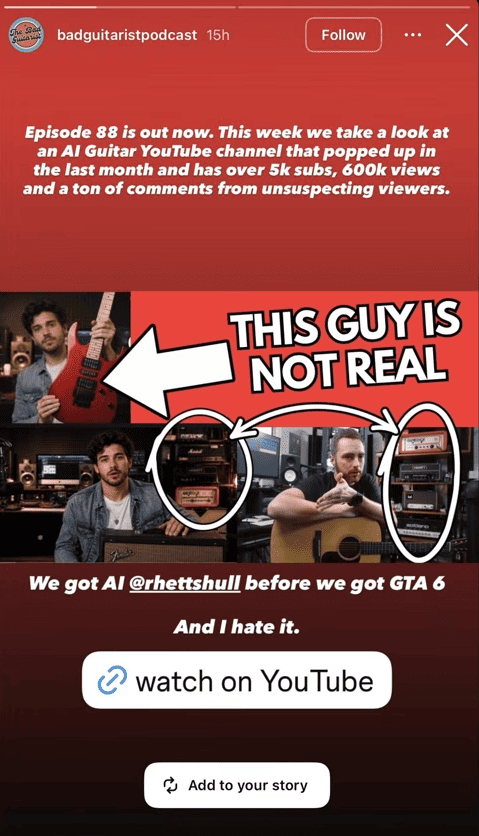
“This is the old set, the old background that I used to film in from about late 2018 until we bought this house in 2021,” he explained. “It’s not just the background. The jacket that this creator, Chase, is wearing is pretty clearly modeled after this jacket, which I used to wear in my videos all the time.”
The mimicry went further than aesthetics. The AI-generated videos featured the same speakers, audio interface, amp shelf, and desk equipment visible in Shull’s older footage.
His conclusion was clear: “There’s no question that this is someone, some content farm, or some person somewhere who’s feeding my videos to some sort of AI and having it spit out this content.”
The channel was not just copying Shull’s look. It was also publishing misleading and factually incorrect information about guitar brands. One video claimed that Gibson Les Paul Standards and Epiphone guitars are built on the same CNC machines in the same Chinese factory, essentially accusing major brands of fraud.
Shull pointed out the legal stakes: “If I said that stuff in a video, if I came out and made these claims that are just objectively false, I could be held liable for slander or defamation.”
But because the content is AI-generated and AI remains largely unregulated in the United States, the channel appears to operate without those same accountability standards.
Meanwhile, real viewers were falling for it. Comment sections showed genuine guitar enthusiasts engaging with the content as though it were legitimate. The channel was also monetized and selling a paid guide, with the listing ironically claiming it was “written by a real gear guy, not another AI-generated listicle.”
Shull traced the operation to what he believes is a content farm based in Brazil, though he held back from naming the company publicly until he could confirm it. He announced plans to file a takedown request with YouTube and urged viewers to report the channel themselves.
His frustration with the platform’s inaction was direct: “Why has this been allowed to go on for over a month, to generate hundreds and hundreds of thousands of views, to bring in 5,000 subscribers, and to monetize? YouTube doesn’t seem to really have our backs here, both from the creator perspective and from the viewer perspective.”
The situation raises real questions about platform responsibility as AI tools become increasingly capable of producing convincing, monetizable content at scale.
As Shull put it, “The better these AI tools get at making videos and creating this kind of content, the more prevalent these type of slop channels are going to be on the platform.”