
Free to use under the Unsplash License
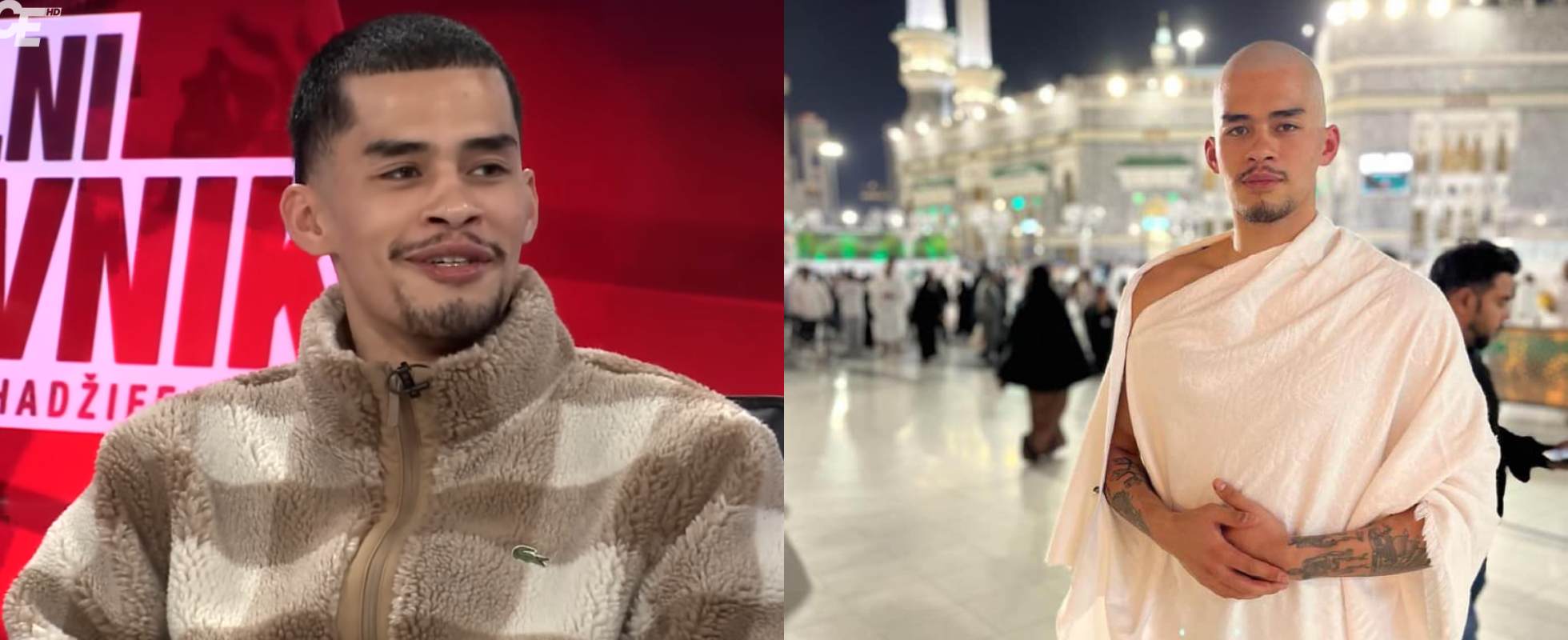
During his Eid Al-Fitr visit to Sarajevo, YouTube and Kick personality Sneako sat down with Face HD TV for an interview. The conversation quickly turned toward religion, American culture, and identity.
Throughout the interview, he repeatedly argued that many Americans misunderstand the historical roots of both Islam and Christianity, and that the United States presents itself as a Christian nation while increasingly drifting away from traditional religious values.
Sneako pushed back on the idea that Islam is an outsider religion in Western societies. He argued that the origins of Islam and Christianity are geographically and historically intertwined.
“They say stu pid things like it’s a sand religion,” he said. “Okay, where was Jesus from?” He continued by emphasizing the shared regional roots of the Abrahamic faiths. “They say that Islam is a brown religion,” he said. “It’s from the same region. It’s from the same place.”
Sneako also criticized what he sees as the racial framing of Christianity in modern American discourse. He pointed to the historical identity of Jesus to argue that the religion’s origins are not tied to any single race.
“A lot of people in America genuinely believe Christianity is a white religion,” he said. He then referenced the historical and religious background of Jesus. “Isa was a Jew,” he said. “He was a teacher, he was a rabbi, and he’s from Galilee, which is now modern-day Palestine.”
“There’s nothing white about this guy at all,” he added. “So they say that this is whiteness, and you’re a race traitor if you convert.”
A major theme of the interview was Sneako’s belief that the United States identifies as Christian culturally, but not in practice. He stressed that his criticism was not directed at Christians themselves, but at what he views as the country’s shifting values.
“The main pressure that I get now is because I’m Muslim in America, and they say it’s a Christian country,” he said. “I love Christians. All respect to them, but there’s hardly anything Christian about America anymore.”
He argued that critics should look at societal behavior rather than religious labels. “They don’t get mad at me for pointing it out,” he said. “Get mad at the people that have pushed Christianity away from the country.”
Sneako then pointed to holiday traditions as examples of what he considers cultural practices disconnected from religious origins. “What’s Christian about it?” he asked. “The Christmas tree? This is like pagan ritual stuff.”
He clarified that he still sees value in the holiday as a family tradition.
“No disrespect,” he said. “I think Christmas is good to spend time with your family. But Jesus didn’t have a Christmas tree.”
He also questioned the historical basis of certain celebrations. “Jesus’s birthday is not even in the Bible,” he said.
Turning to Easter traditions, he used humor to illustrate his point. “You run around the backyard looking for little eggs that a bunny poops out with chocolate in it,” he said. “What does this have to do with Jesus?”
He extended the argument to other widely celebrated holidays in the United States. “The biggest Christmas celebration in New York City is SantaCon, where they spend a week getting dru nk,” he said. “St. Patrick’s Day, is that another Christian holiday? What do they do? Get dru nk.”
Sneako also addressed what he described as a contradiction between America’s commitment to religious freedom and public reactions to visible expressions of faith.
“In America we have the idea of freedom of religion,” he said. “They get upset when we pray in Times Square.” He framed the issue as one of constitutional principle. “They say, ‘Oh, this is a Christian country. You can’t pray here,’” he said. “Well, no, we have freedom of religion. We’re allowed to do this.”
Another point he raised was the distinction between religious identity and religious practice. He argued that many people identify as Christian culturally rather than spiritually.
“Most Catholics in America, most Christians in America, they’re kind of socially, culturally Christian,” he said. He described this as a minimal level of engagement with faith traditions. “That means maybe you go to mass on Christmas,” he said. “Maybe you say ‘Christ is king’ in a YouTube comment. But other than that, you’re not really.”
Sneako closed this portion of the discussion with a moral observation about modern culture and public attitudes toward religion. “Isn’t it crazy that they are more accustomed and comfortable with sin than they are with somebody worshiping God?” he said.


