
Free to use under the Unsplash License
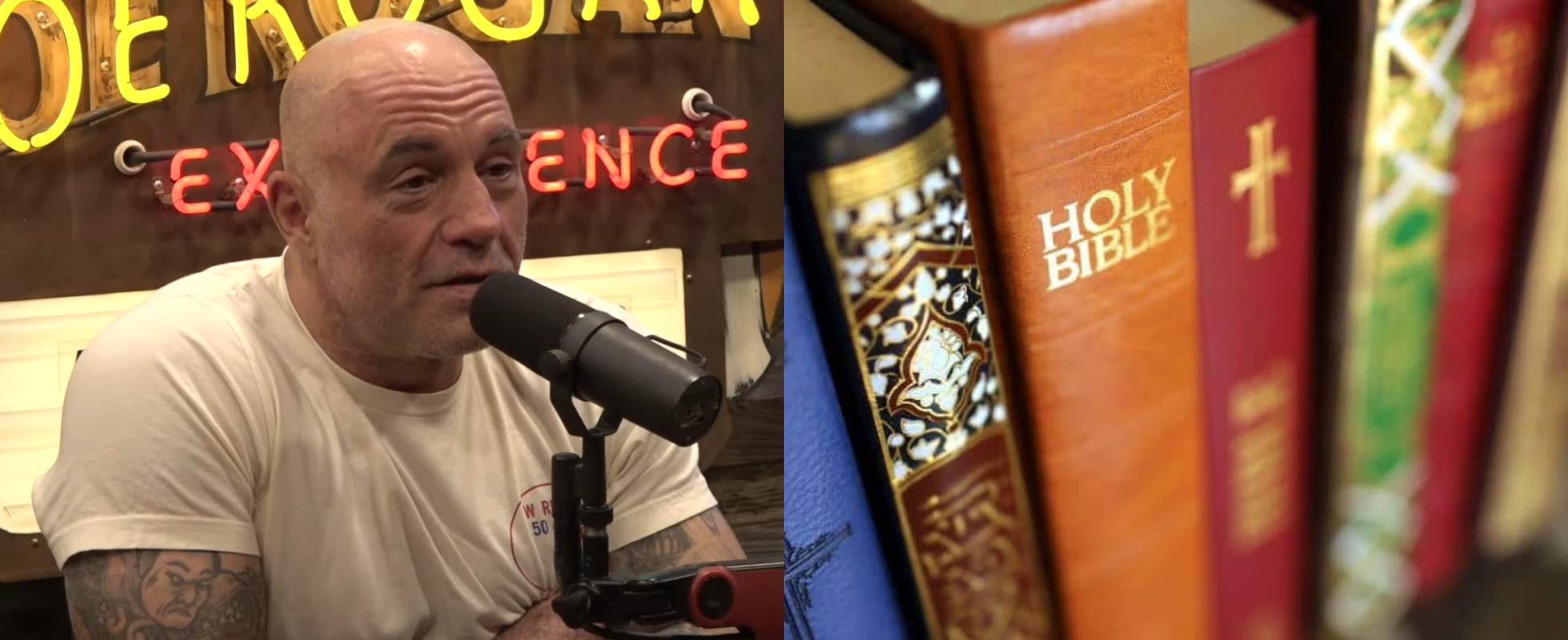
During an episode of The Joe Rogan Experience featuring musician John Fogerty, Rogan shared his own early experiences with religion and how they shaped his outlook over time.
Rogan explained that his first encounter with organized religion came during a brief stint in Catholic school as a child, an experience he said left a lasting negative impression.
“I went to Catholic school, too, for first grade only,” he said. “And that screwed me off of religion for a long time because I thought of God back when I was a little kid before I went to Catholic school as, you know, God is all knowing and God is love and God created the universe and God is looking out for you. He’s just got some rules you have to follow. Made sense to me.”
He contrasted that early, simple understanding of God with what he experienced once he entered the classroom.
“And then when I went to Catholic school there was a lady,” he continued. “I don’t remember anybody’s name from back then but I remember her, Sister Mary Josephine. She was so mean. She was just a mean lady.”
Rogan went on to describe what he characterized as harsh disciplinary methods that deeply affected him as a child.
“She did the whole thing,” he said. “The whacking people with rulers, tell you you’re going to have to stay overnight and you’re going to have to sleep on a nail in the closet. Just evil. Wanted you to cry.”
He added that the experience left him feeling alienated from religion at a very young age.
“When I would cry, she’d call me a crybaby,” Rogan said. “And I remember thinking after that, I don’t want to have nothing to do with religion ever again. Right when I left first grade. I ha ted it.”
Reflecting on that moment, he said it created a lasting disconnect between his idea of God and the people representing religion.
“And I was like, whatever God is, this is not God,” he said. “These people have nothing to do with God. This lady, there’s no way this lady is the messenger of God. This lady’s mean.”
Guest Fogerty then went on to provide distinction between belief in God and human religious institutions. “That took a whole lifetime to figure out,” he said. “To realize, well, this is just a man-made thing.”
He emphasized that, in his view, religious systems are created by humans rather than directly representing the divine.
“God’s there and some man-made thing over here, you know, they became Mormons and some man-made thing over there, they became Muslims, and it’s just all man-made,” Fogerty said. “It isn’t actually God. And man is fallible of course, he’s not infinite and he’s not infallible.”
The discussion then turned to religious texts, where Rogan suggested that scripture may contain truth but has been shaped by human decision-making over time. “I think all religious scriptures, they’re trying to document a real thing,” he said. “Especially Christianity, which is the one I’ve paid the most attention to.”
However, he argued that the involvement of people in compiling and preserving religious writings introduces complexity and uncertainty. “I think they’re trying to document a real thing, but the hand of man is clearly all over it,” Rogan said. “That’s the problem. The problem with anything that’s written down.”
He pointed to historical decisions about which texts were included in the Bible as an example.
“And we know that just in like the religious canon, the books that were included in the Bible, human beings had a decision on what goes in and what doesn’t go in,” he said. “There were rabbis that kept the Book of Enoch out of the Old Testament.”
Rogan said these kinds of choices raise fundamental questions about authority and authenticity. “There’s a lot of this weird stuff to it that you go, well, why do people have any say?” he continued. “Why does a human have any say in what the word of God is? That sounds crazy.”
He also noted the role of oral tradition in shaping religious narratives before they were written down.
“And when you read the scriptures, you’re like, somebody wrote that down and someone told that story for who knows how many years before it was ever written down,” Rogan said.
Despite his skepticism, he maintained that he believes there may be genuine truth at the core of religious teachings.
“But I think the origins of it, there’s truth to it,” he said. “It’s just you have to get through all these many layers of confusion to try to decipher what God’s original message was and how it was received.”
He concluded by questioning the reliability of how those messages were transmitted over time.
“Who got it? How did it get relayed? What was the original event that led to this oral tradition that led to it being written down?”
Rogan also addressed modern religious institutions, particularly large churches, arguing that some leaders exploit faith for financial gain. “In organized religion, especially when it gets to like these huge megachurches and preachers, that’s exactly what it is,” he said. “It’s someone taking advantage of this good thing and profiting off of it immensely.”
Despite his criticisms, Rogan emphasized that belief in God can still have positive practical effects on behavior and relationships. “If you live your life like God’s real, it’ll be a better life,” he said. “I agree with you. I think if you live your life like God exists, you’ll have a much better life.”


