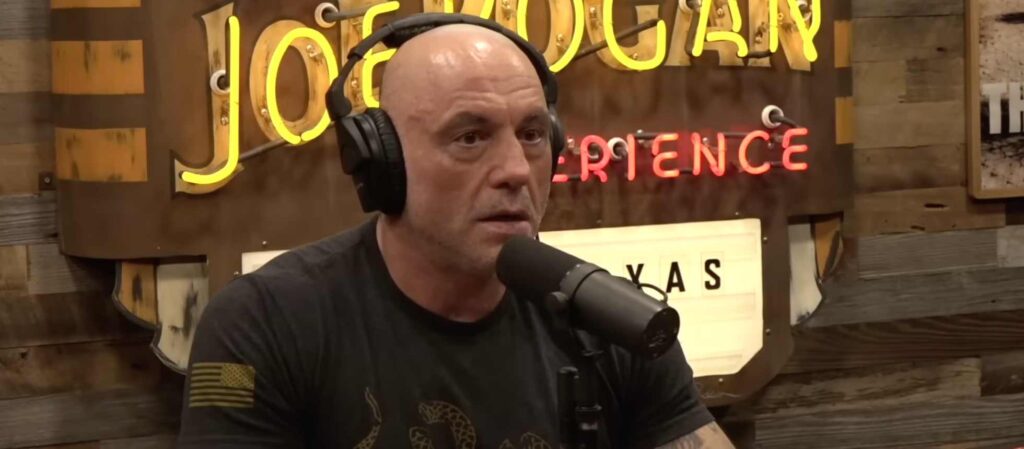
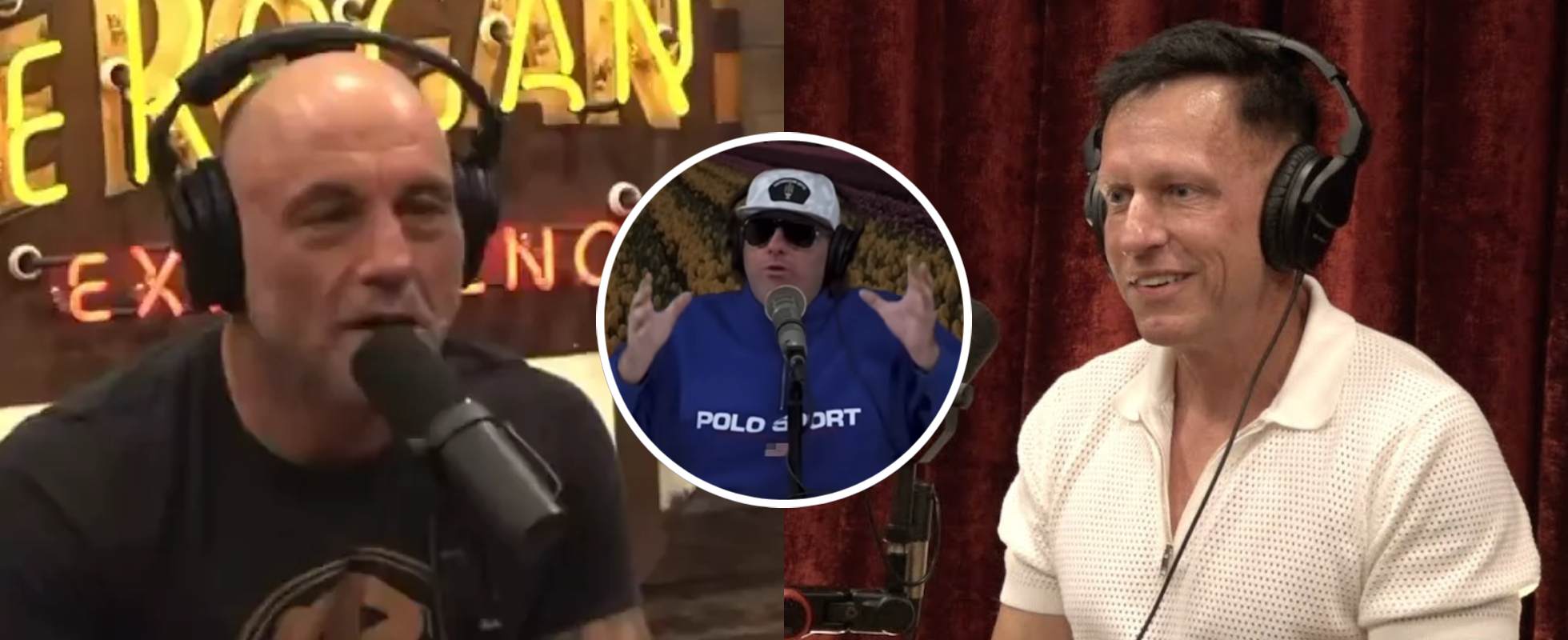
Comedian Tim Dillon has been taking aim at both Palantir and Joe Rogan in a recent episode of his show, and he is not holding back. The episode, which came right after Rogan’s visit to the White House to push for Ibogaine therapy for veterans, opens with Dillon interviewing a fictional veteran in a bit.
Dillon’s argument is straightforward. Ibogaine may genuinely help veterans dealing with trauma, but the real question is why those veterans are carrying that weight at all. As Dillon put it, if soldiers come back with shame, guilt, and PTSD, that is not necessarily a chemical imbalance. It may be the result of what their government put them through.
He then extends the bit further, suggesting the therapy could eventually be used to clear the conscience of anyone who has done something terrible, not just veterans, pointing to a friend who caused a fatal accident while driving under the influence.
The bulk of the episode, though, focuses on Palantir’s 22-point manifesto, which Dillon breaks down as a blueprint for a future where tech companies are the real government, war is a permanent condition, and military service becomes non-voluntary. He reads directly from the document: “National service should be a universal duty. We should, as a society, seriously consider moving away from an all-volunteer force and only have the next war if everyone shares in the risk and the cost.”
Dillon’s read on the manifesto is that Palantir is not making a suggestion. It is an announcement. As he says in the episode, “Whether you like it or not, we are the government. Us and companies like us are going to be making the decisions about the future. Your lives will be determined by us.”
He also calls out the contradiction of a company whose technology has been linked to military operations in Gaza wrapping its messaging in the language of Christianity and religious tolerance. The manifesto’s call to resist “the pervasive intolerance of religious belief” rings hollow, Dillon argues, coming from people who openly discuss the Antichrist and want to merge with artificial intelligence.
As for Rogan, Dillon points out that Joe has been to Peter Thiel’s home twice, and that Tim himself declined an invitation because he knew he needed to be able to criticize people without the social obligation that comes with sharing a dinner table.
The dynamic Dillon describes is one where proximity becomes a kind of soft capture, and once you are inside that circle, public criticism gets considerably harder. Tim can say what he says because he stayed outside of it.