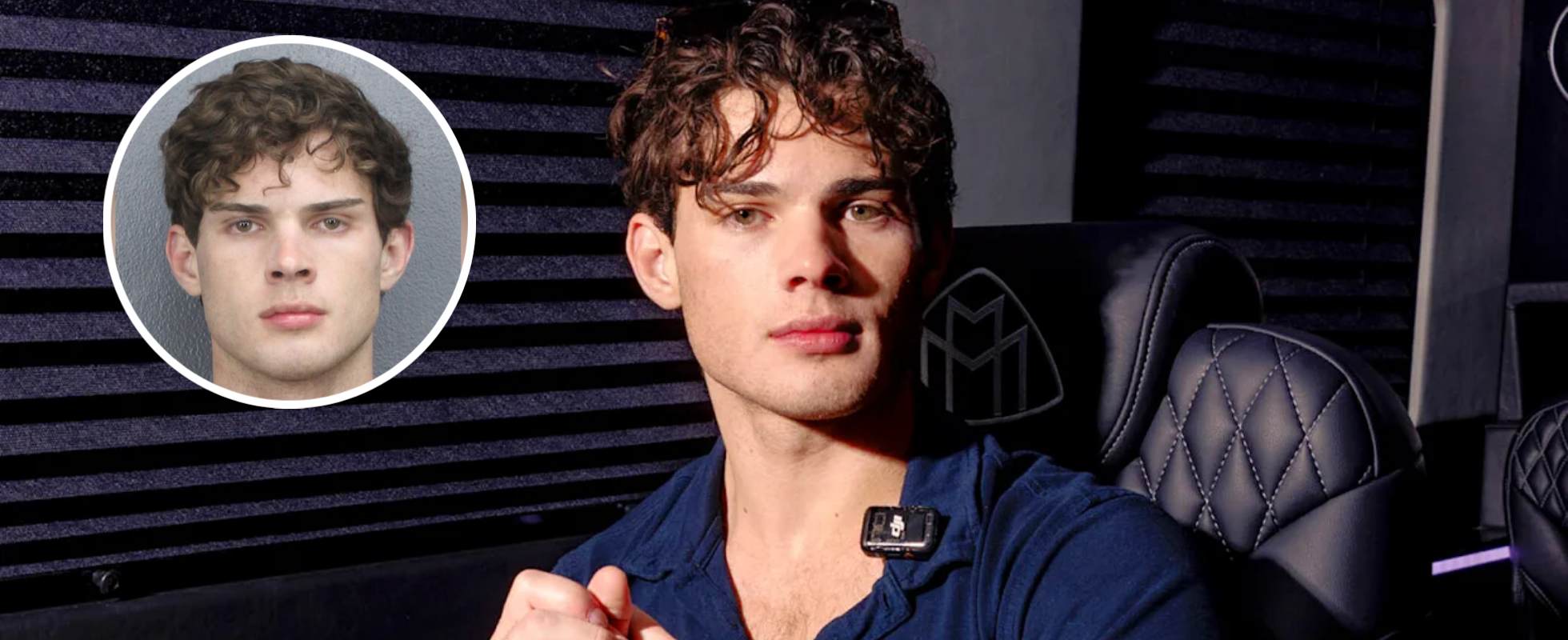
Braden Peters, known online as Clavicular, is now facing criminal charges in Miami-Dade County following an incident in the Everglades, adding to an already growing list of legal troubles for the social media personality.
Florida attorney Andrew Esquire, host of the Legal Mindset channel, broke down the new charges. In his recent video, he explained that Peters and two associates, identified as Andrew Morales and Yabidal, were charged with unlawful discharge of a firea*m in a public place under Florida statute 790.15.
“It is unlawful to knowingly discharge a firea*m in any public place, right of way, road or street, also over an occupied residence,” Esquire noted.
The charge stems from footage captured during a trip to the Everglades, where Peters was seen firing near what appeared to be an alligator. While many anticipated charges directly related to the animal, Esquire explained that Florida law may not support that angle.
“If it’s a dead alligator, there’s probably no charge there under Florida law,” he said. “But they look at other ways to charge and they say, ‘Okay, look, this behavior is reckless. We’re going to probably throw an unlawful discharge.'”
The base charge of unlawful discharge of a firearm is a first-degree misdemeanor, carrying a penalty of up to one year in jail or a $1,000 fine, along with possible probation and court fees.
The Miami-Dade charges carry implications for Peters beyond the misdemeanor itself. He is currently out on pre-trial release in an existing Osceola County case involving battery and conspiracy to commit battery. Under Florida law, defendants released on bond are required to obey all laws and refrain from committing new offenses.
“When you’re out on bond, you have to obey all laws and not commit new crimes,” Esquire said. “That’s a key there.”
With the new charges on record, the judge in the Osceola County case has grounds to revisit Peters’ release conditions. Possible outcomes include bond revocation, electronic monitoring via an ankle bracelet, increased bond amounts, firearm restrictions, or pretrial detention.
Esquire also noted that a conviction on the Miami-Dade charges could significantly affect the outcome of the Osceola County case. What may have previously resulted in a minor penalty or a plea arrangement could now draw a harsher response from prosecutors. Peters also faces a separate civil trial with a former girlfriend over battery and fraud claims in Miami-Dade County, further compounding his legal exposure.
Esquire, who has followed Peters’ case closely, pointed to the self-recorded nature of the footage as the central factor enabling prosecutors to act.
“When you are broadcasting these things, police, investigators, and particularly people that don’t like you are going to look for these reasons to charge you,” he said. “These things are going to come up when enough people complain.”