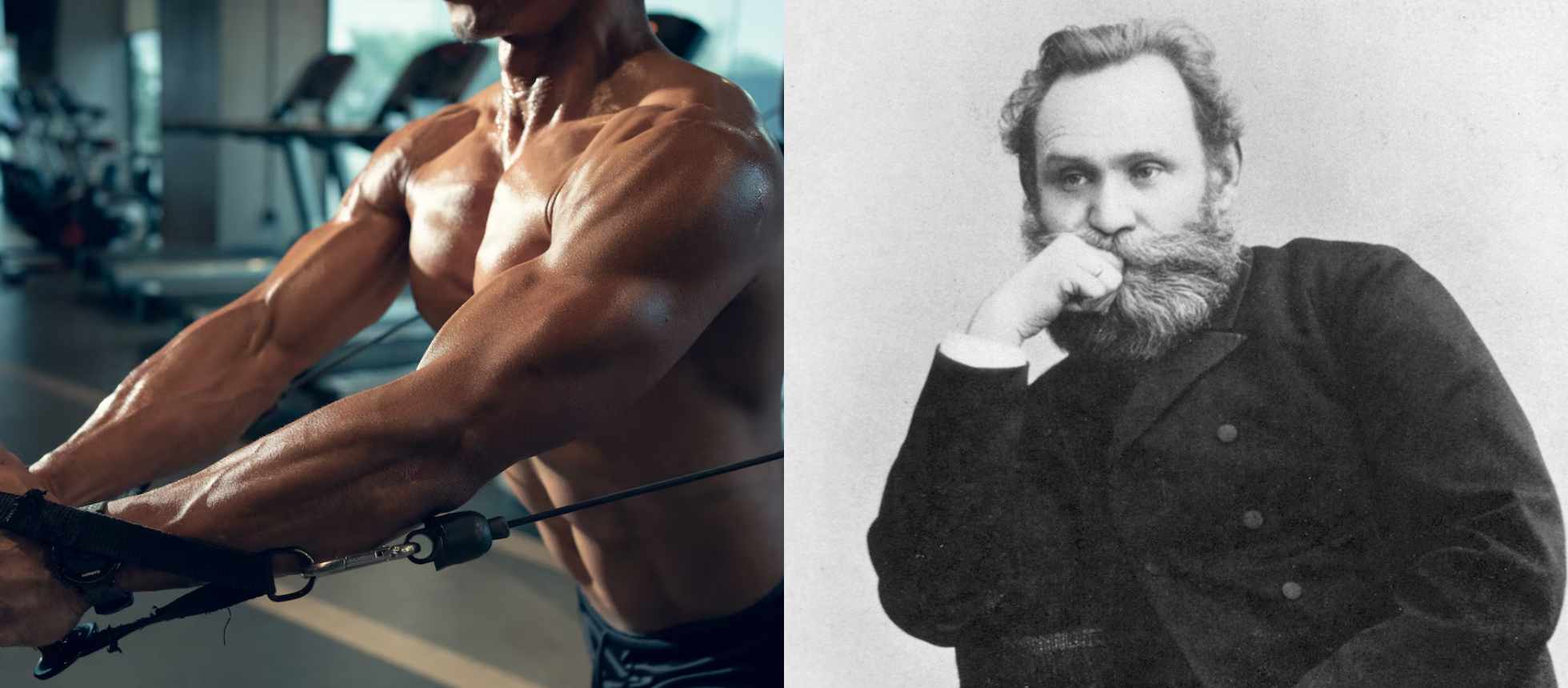
Long before biohackers were injecting themselves with BPC-157 in gym bathrooms, one of history’s most famous scientists was already in the peptide business. Ivan Pavlov, the Russian physiologist best known for training dogs to salivate at the sound of a bell, had a side hustle that rarely makes it into the textbooks: he sold dog gastric juices as a medical elixir.
According to Dr. Abud Bakri, an internal medicine physician who joined the Huberman Lab podcast to discuss the science of peptides, Pavlov’s famous work went far beyond the bell experiments.
“The other work he did was on gastric juices of dogs,” Bakri explained. “What he’d do is he’d put a hole in the dogs’ stomachs. He would feed them food and then get the gastric juices and sell that as a medicine.”
Bakri confirmed this was how Pavlov supported himself financially, adding, “That was part of his business.”
Huberman then joked about the commercial nature of the arrangement, asking whether Pavlov had a discount code for checkout, a nod to how normalized direct-to-consumer supplement marketing has become today. But the underlying science, as Bakri laid out, was surprisingly ahead of its time.
People in the early 1900s were drinking the gastric juices for issues like gastrointestinal distress and wound healing, decades before anyone understood what compounds were actually responsible for the effects.
That mystery ingredient took almost a century to identify. In the 1990s, a research group in Croatia isolated a large 40 kilodalton protein from gastric juice they named BPC. Within that larger molecule, they found a 15 amino acid fragment responsible for many of the biological effects, which became known as BPC-157, now one of the most talked about compounds in the peptide world.
Bakri connected the dots to another influential researcher, Hans Selye, who developed the stress adaptation theory around the same era and documented how stressed animals developed damaged gastric linings.
“There must be some kind of cytoprotective or organoprotective compound in the gut,” Bakri said, describing the reasoning that led the Croatian team to search for a protective peptide in the first place.