
Free to use under the Unsplash License
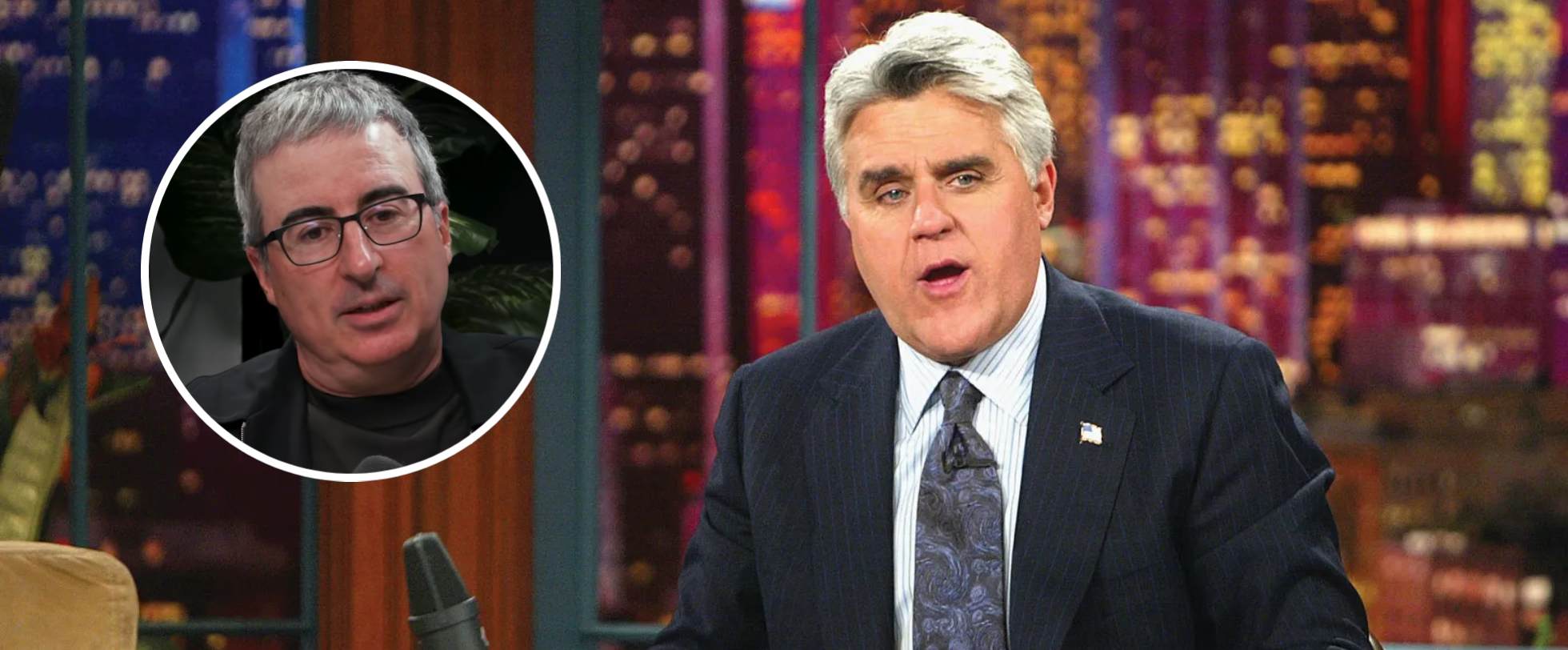
During a conversation on Reclaiming with Monica Lewinsky, John Oliver explained exactly why he publicly called out Jay Leno years ago, making it clear that his issue was never just about the jokes themselves.
Lewinsky brought up the moment directly, recalling the Dr. Seuss-inspired segment Oliver created to criticize the former late-night host.
“I think it was ‘Oh, the places you can go f*** yourself, Jay Leno, by John Oliver,'” she said.
Oliver confirmed that was indeed the segment and explained what had prompted it.
“I think my particular problem at that time was that he had just been, if I’m remembering this right, he had just been on TV calling for more civility in comedy,” Oliver said.
For him, the problem wasn’t simply that Leno had made jokes at other people’s expense. It was that he seemed to be positioning himself as an authority on the subject.
“And I guess that goes back to a little bit what I was talking about, that it felt like, well, let’s not pretend that we are blemishless here,” Oliver added.
The timing of Leno’s comments only amplified Oliver’s frustration. He felt Leno was taking a moral stance against other comedians without acknowledging his own history.
“I was also irritated that he had taken a moral position that week against the other late night shows,” Oliver said. “None of us are perfect, but I did not like being lectured by him.”
Lewinsky then explained why Oliver’s criticism of Leno had resonated with her on a personal level. She pointed to research conducted after Leno’s retirement that measured how often certain public figures had been the target of jokes on his show.
“When he finished his show, some organization did some research and the top ten targets of his from the span of his show, I was number nine or ten,” she said.
What stood out to her, however, was that she was fundamentally different from the other names on the list.
“But I was the only person on there who had not chosen to become a public person,” Lewinsky said.
Because of that distinction, Oliver’s decision to call out Leno carried real meaning for her and her family.
“When you sort of called him out that way, it felt meaningful,” she said. “It felt meaningful to me and to my family.”
Oliver acknowledged that comedians inevitably tell jokes about people, including himself. The key, he argued, is being willing to think critically about where the line is.
Oliver said, “So everybody does [makes jokes], right? It’s just we all tell jokes privately.”
He added that his team spends more time evaluating the impact of jokes than many viewers might realize.
“I think we at the show probably spend more time than people might imagine thinking about how a joke sounds,” he said.
The discussion also turned to the role audiences play in shaping how a joke feels in the moment. Oliver explained that crowd reactions can sometimes reveal that a joke is landing in a way the comedian never intended.
“Sometimes when you’re doing standup, you’re often trying material and sometimes you can think, ‘I’m not sure you took that joke the way that I intended,'” Oliver said.
When that happens, he pays close attention to the tone of the response.
“‘That sounds a little like the roar of the mob to me. I don’t know if I like that,'” he continued. “So you might calibrate the joke accordingly.”
For Oliver, the real issue with Leno was never simply that he made jokes at Monica Lewinsky’s expense. What bothered him was the apparent unwillingness to acknowledge any responsibility for those jokes while simultaneously urging others to be more civil.


