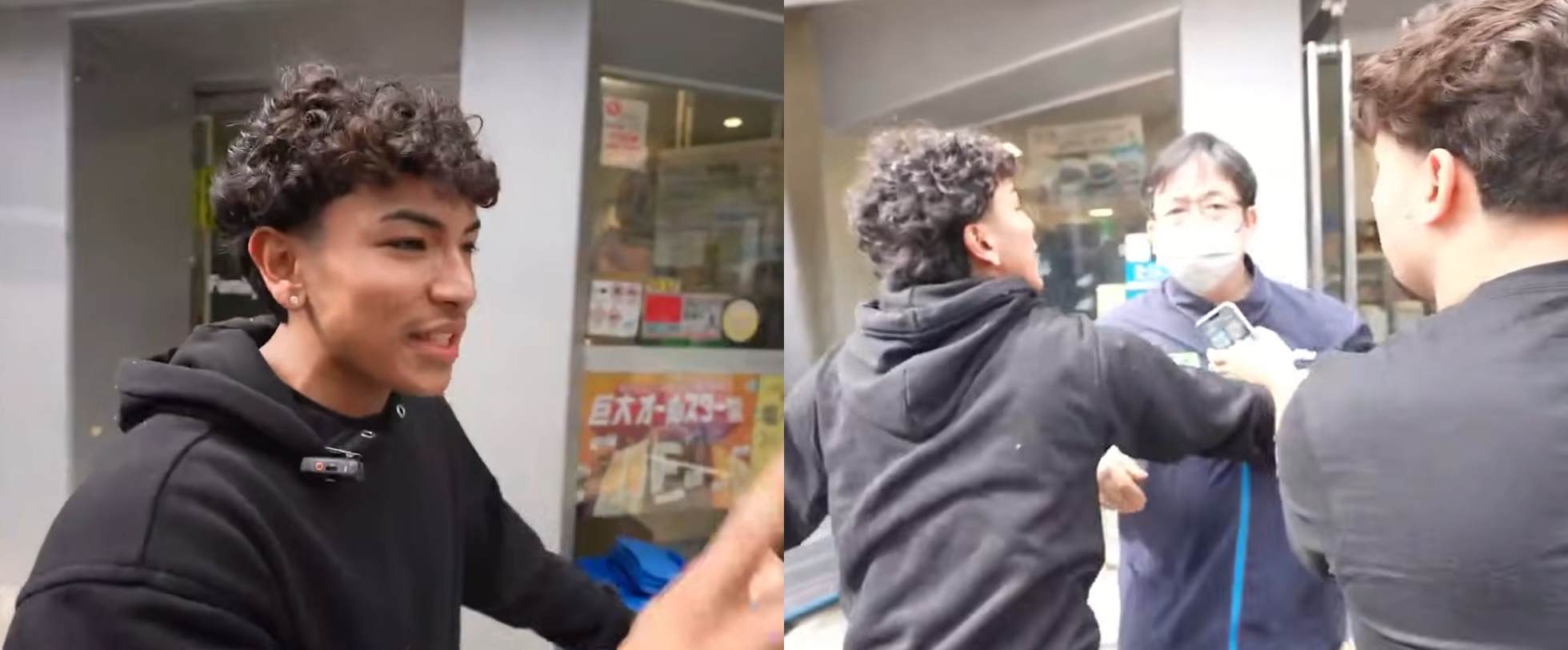
Japan’s patience with disrespectful IRL content creators appears to be running thin, and a recent incident involving a young American broadcaster known as Oblivion has illustrated exactly why.
Oblivion, who is not yet 20 years old, built his following across TikTok, Kick, and YouTube through a mix of self-deprecating humor, boxing appearances, and increasingly controversial public behavior. With over 300,000 followers on Kick and more than a million on TikTok, he had already made headlines for speeding on camera, getting swatted, and being removed from Disney property before the Japan situation arose.
While visiting Japan alongside boxer Ryan Garcia, Oblivion walked into a convenience store near a Chrome Hearts location and began filming, despite a visible no-filming sign posted at the entrance.
The shopkeeper wasted no time, physically blocking the camera and forcing Oblivion and his cameraman out almost immediately. A language barrier made the situation more tense, with Oblivion repeatedly shouting “chill” while the shopkeeper demanded they stop filming and delete the footage.
Rather than simply leaving, the shopkeeper called the police and kept a close watch on the group. When officers arrived, they asked Oblivion to show that no footage had been saved to the camera. What the police did not fully grasp was that the entire encounter was being broadcast live, meaning nothing was stored locally on the device. Oblivion confirmed no clips were saved, which was technically true, yet the full incident remained viewable on his Kick channel long after the fact.
The confrontation drew widespread comparisons to Johnny Somali, another IRL broadcaster currently appealing a prison labor sentence in South Korea following a pattern of disrespectful behavior abroad. Oblivion’s own community then flagged another concern from the same trip: gambling, in most forms, is illegal in Japan.
Screenshots circulated in his Discord warning him not to gamble on camera during his next broadcast. When confronted about it online, Oblivion told his audience to be quiet and insisted he was in Miami, only to go live again from Japan later that same day.
“Bro, you already ruined my day. What… what did I do? Bro, what did I do? In addition, bro, I’m in damn Miami right now. I mean… yeah, I’m in Miami, bro,” he said.
Japan has firm cultural expectations around privacy and public conduct, and foreign content creators are increasingly testing those boundaries, sometimes with serious legal consequences waiting on the other side.