A weight loss community on TikTok is pushing a concept called the “three bite rule,” and content creators are increasingly pushing back.
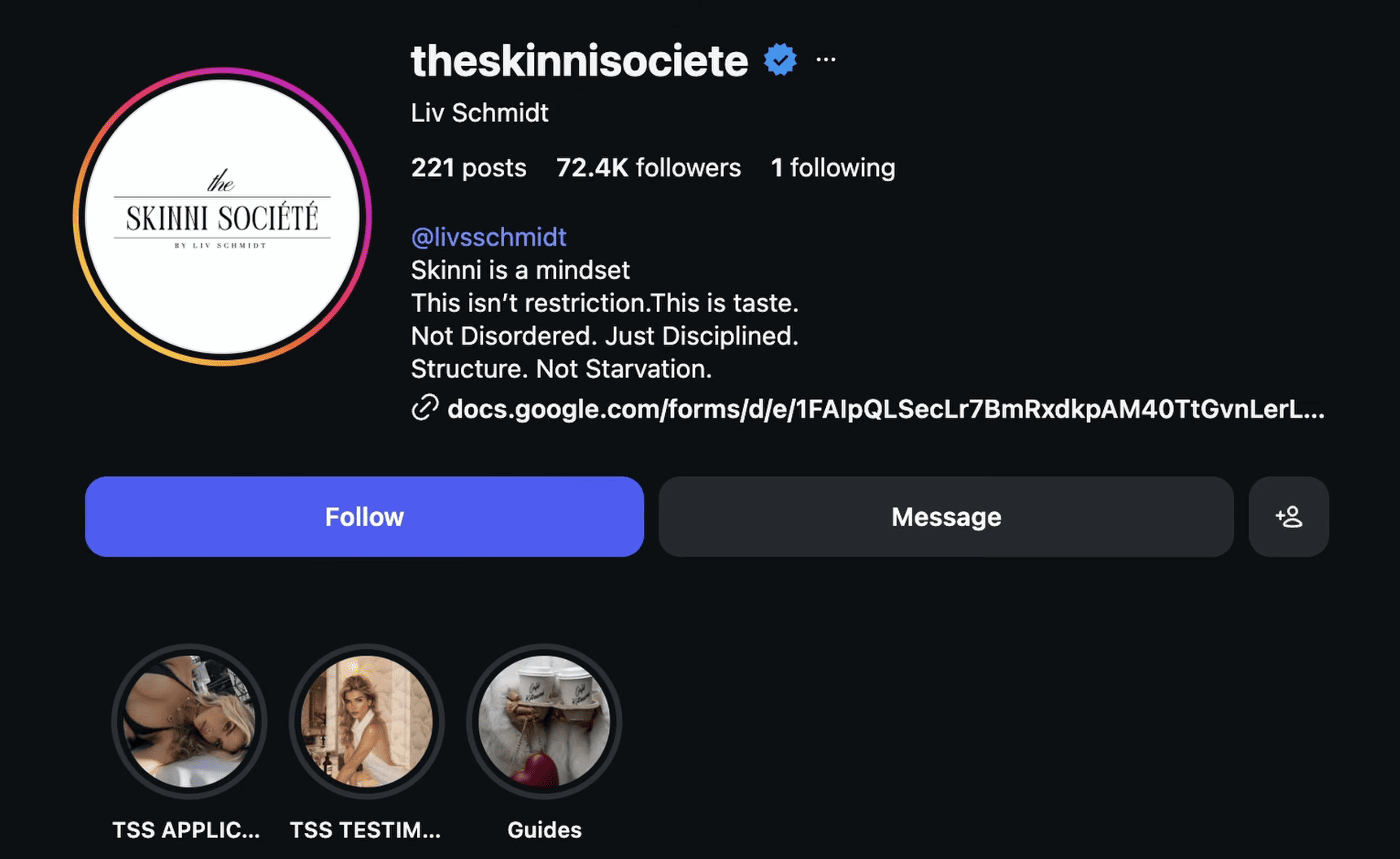
The rule comes from Liv Schmidt, a former Goldman Sachs employee who runs an online group called Skinni Societe, spelled “skinni” on TikTok because, as creator RayLikeSunshine points out, the word “skinny” is a banned search term on the platform. The community charges $80 a month with a required four-month commitment, totaling $320 upfront.
Schmidt frames the three bite rule as the backbone of her approach to eating: “The three bite rule is the backbone of portion control. I want to preface this. This is just a number. You can take one bite, you can take two bites, you can take five bites. It’s just bites, not scoops, not spoonfuls, not big gulps.”
The first bite is meant to satisfy a craving, the second to enjoy it, and the third to top it all off.
RayLikeSunshine questioned the logic almost immediately. “Isn’t a spoonful considered a bite? How big is this spoon? Are we just talking about nibbles here?”
He went on to describe the mental energy the rule demands as draining. “Spending so much effort just thinking about your food must be so exhausting,” he said.
He also flagged a pattern in Schmidt’s content. In one clip, a member of her community is shown taking what appears to be a single fork-full of pasta.
Ray responded directly: “That was like one fork full of pasta. That is actually one bite. What is she doing with the rest of the pasta?” He then referenced the community’s own branding: “Not disordered. It’s discipline. Keep telling yourself that, Liv.”
Skinni Societe’s Instagram bio reads, “Skinni is a mindset. This isn’t restriction. This is taste.” Other slogans from the page include “Not disordered, just disciplined” and “Structure, not starvation.”
Ray described this as “somehow rebranding eating disorders into something positive.”
Ray has spoken openly about his own history with disordered eating. At one point he was 6’1″ and weighed 144 lbs, and he still did not see himself as underweight.
“When this picture was taken, I thought I was fat,” he said. He added that people currently experiencing disordered eating often do not recognize it as such, and that content glamorizing thinness makes the problem worse.
“This glamorization of being skinny is actively making everyone’s eating disorders even worse,” he said, “because suddenly it’s now chic to be this skinny.”
The three bite rule may read like basic portion awareness, but Ray argues it represents something more concerning: a rigid framework of food rules dressed up as a high-end lifestyle, one that encourages obsessive thinking while insisting it is simply taste.