
If you’ve spent any time scrolling through Utah-based influencer content, you may have noticed something: the tans. Not just golden, sun-kissed tans, but deep, orange, and sometimes blotchy tans that prompt double takes.
The term ‘tan blindness’ refers to a perceived inability among some Utah influencers to recognize just how far their tanning has gone. Influencer Reagan is as one of the most frequently viral examples. A recent video of Spencer lifting weights attracted nearly 300,000 likes alongside a flood of comments about her tan.
One read, “Respectfully, this is not a natural tan from the sun and that’s okay,” to which Spencer replied, “Respectfully, it is. And you actually have no idea what you’re talking about and that’s okay.”

This new trend shows influencers insisting their tans are natural while their early content tells a very different story.
Tanning is just one item on what is called the “Generic Utah Girl Starter Pack,” alongside veneers, lip filler, fake lashes, bleach blonde hair, Stanley cups, and matching yoga sets.
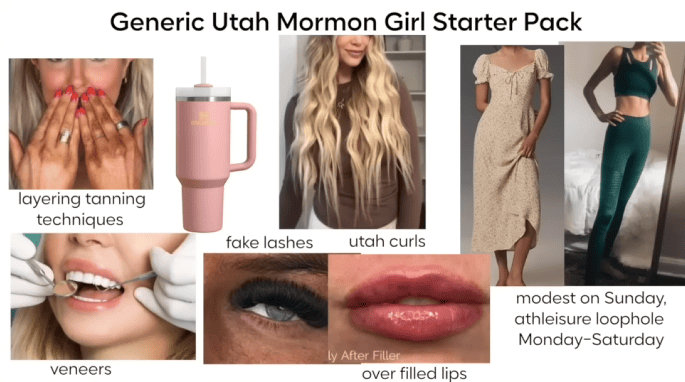
However, tanning stands apart because of its potential health and cultural implications. Utah has some of the highest skin cancer rates in the country, roughly double the national average. A 2020 bill that would have prevented minors from using tanning beds even with parental permission failed to pass.
There is also a racial dimension that is impossible to ignore. Comments on Spencer’s videos include observations like, “Only idolized when on a white person, though.” This behavior is similar to blackfishing, a term coined by writer Wana Thompson for when white women online present themselves as ethnically ambiguous to appear more interesting or exotic. These women collect the cultural cache of appearing “sun-kissed” and wealthy without ever facing what it has historically meant to have darker skin.
The obsessionis a product of Mormon loophole culture and patriarchal beauty standards. In a church where men hold power at every level, women compete for status through appearance.
A deep tan signals wealth, particularly in winter when it implies recent travel. The process itself, combining tanning beds, self-tanners, outdoor sun exposure, and increasingly peptide injections known as the “Barbie peptide,” can run $500 to $1,000 a month.
What strikes outside observers most is the underlying contradiction. In a church where dark skin has historically been described in scripture as a curse, white women are spending thousands to darken their skin.