
Free to use under the Unsplash License
Hollywood actress Reese Witherspoon‘s recent push to get more women engaged with artificial intelligence has stirred up a notable backlash online. Recently, a major tech CEO had publicly warned that AI could strip economic and political power from the very demographic the actress is trying to reach.
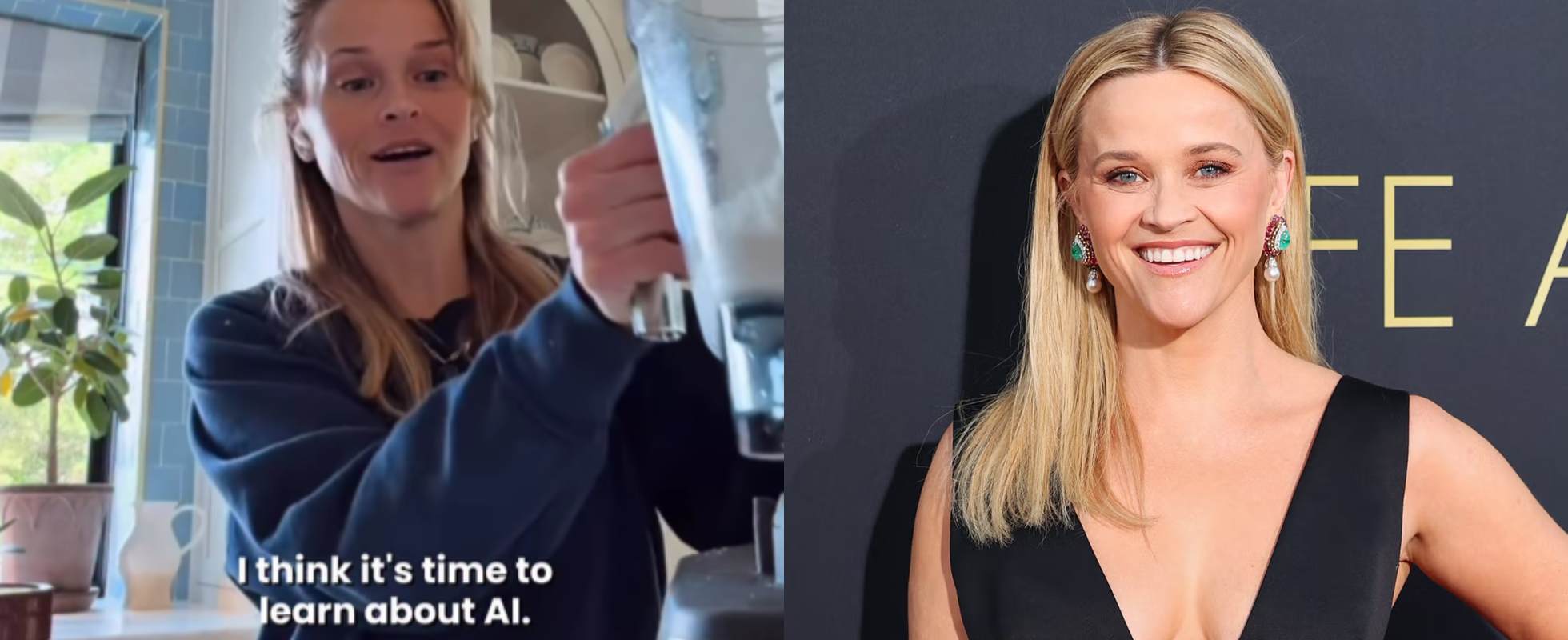
The Oscar-winning actress, producer, and founder of Reese’s Book Club posted a nearly one-minute Instagram Reel this week after a conversation with members of her book club revealed a telling gap in adoption.
“I said to the 10 of them, ‘How many of you guys use AI?’ And only three of them used AI. And then I said, ‘How many of the three of you feel like you really know what you’re doing or they’re using it the right way?’ And that was only one person,” Witherspoon explained in the clip. “So, if three out of 10 women are the only ones using AI, that means 70 percent of that group is not keeping up. The thing I’ve learned about technology is if you don’t get a little bit of understanding from the very beginning, it just speeds past you. So you have to have little bits of learning just to keep up.”
She followed that up with a rallying cry: “Let’s get real, our kids are using this every single day,” and encouraged her followers to “learn the basics together” to “make our everyday lives easier and better,” closing with a now-viral sign-off: “It’s time. It’s time, people.”
The Reel has since been viewed more than three million times. Prominent figures quickly rallied behind her, including actress Kerry Washington, who simply commented “THIS,” and CAA power agent Maha Dakhil, who wrote, “So very true.” But many others were far less welcoming of the message.
Journalist Christina Binkley pushed back on Threads, writing, “Dear Reese Witherspoon, now might be a good time to note that men doing something does not make it a good or smart thing to do.” On Instagram, another commenter directed Witherspoon to do her homework first: “Please start your education with data centers. Where they’re being built, the amount of electricity they use, and the dire effects on communities where they are.”
Some online critics went further, raising questions about Witherspoon’s financial interests. “She’s in the arts. AI is stealing and profiting off actual artists’ work. It’s also destroying the planet. She’s heavily invested monetarily in AI and this is where she is coming from,” wrote one user on Threads.
That accusation struck a particular nerve given Witherspoon’s long history championing authors through her book club and producing screen adaptations of literary works. Authors were among the most vocal opponents when it emerged that companies like OpenAI had used published books to train their datasets, a practice that sparked widespread lawsuits.
Recently, Palantir CEO Alex Karp made remarks about what he believes AI will actually do to society’s balance of power.
“This technology disrupts humanity’s train, largely Democratic voters, and makes their economic power less, and increases the economic power of vocationally trained, working class, often male voters,” Karp said. “These disruptions are going to disrupt every aspect of our society.”
In Karp’s view, the tech sector’s cheerful enthusiasm for AI adoption is dangerously disconnected from the reality of who will be left behind. His argument targets the professional class specifically: college-educated workers, a group that skews heavily female and Democratic, who have historically benefited from the kind of knowledge-based labor that AI is now positioned to automate or devalue. Meanwhile, he contends, workers with vocational or trade training could see their relative standing rise.
“If you are going to disrupt the economic and therefore political power significantly of one party space, highly educated, often female voters who vote mostly Democrat, and military and working class people who do not feel supported, and you feel like that’s going to work out politically, you’re in an asylum,” Karp said.
For Karp, whose company builds data analytics platforms for government and defense clients, the only coherent justification for pressing forward with disruptive technology lies in national security.
“The only justification you could possibly have would be that if we don’t do it, our adversaries will do it, and we will be subject to their rule of law,” he said. “So, if you decouple this from the support of the military, you’re going to have an enormous problem explaining to the American people why is it that we’re absorbing the risk of disrupting the very fabric of our society, including the most powerful parts of our society, if it’s not because it’s about maintaining our ability to be American and to be a better person.”
Karp also challenged the tendency within the technology industry to treat AI as a manageable evolution rather than a seismic societal shift. “The one thing that I think even now is underestimated by all actors in industry, and including in Silicon Valley, is how disruptive these technologies are,” he said.


