
Free to use under the Unsplash License
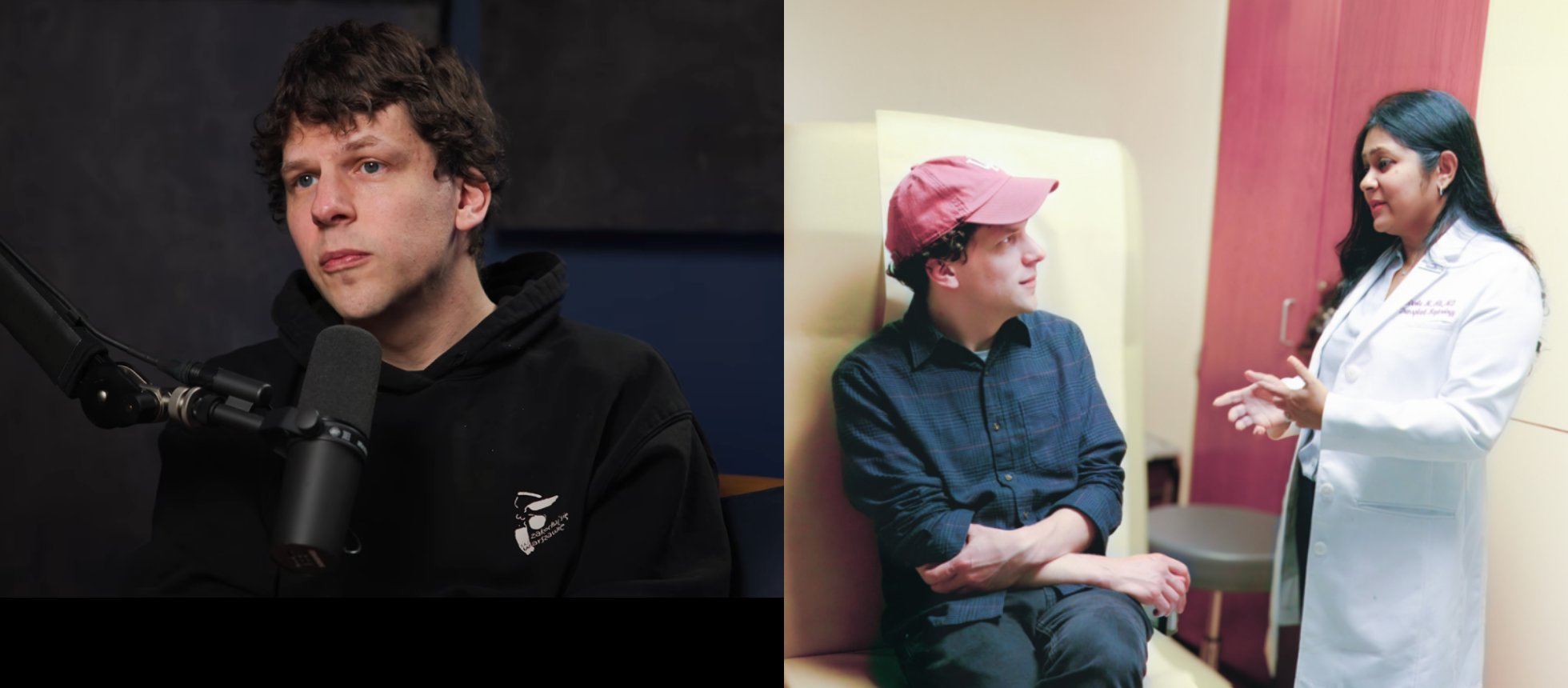
Jesse Eisenberg, widely known for his roles in The Social Network and his Oscar-winning film A Real Pain, recently made headlines not for a performance but for a deeply personal act: quietly donating a kidney to a stranger. He declined multiple interview requests about the experience before finally discussing it publicly during a conversation with Dr. Mike Varshavski on The Checkup podcast.
Reflecting on how the idea first took hold, Eisenberg explained that the concept of kidney donation had initially seemed far less daunting than most people assume. “I had heard about it on a podcast and they were talking about effective altruism,” he said. “It was an interview with somebody who was part of that movement and they talked about donating a kidney not being like a big deal.”
For years, Eisenberg had been registered with Be The Match, a bone marrow registry, and mistakenly believed that participation there prevented him from donating a kidney. The turning point came unexpectedly while he was traveling for research.
“I’m trying to write a movie about doctors in Guatemala…” he said, recalling a conversation with a medical professional during the trip. “And I told her, you know, I really do want to donate a kidney. And she said, ‘Oh, yeah. You know, you could do that.’ I said, ‘I’ve been waiting for 10 years. I haven’t heard back from this thing.’ And she goes, ‘Don’t you live in New York?’ Said, ‘Yeah.’ She goes, ‘Go to NYU.'”
Once he decided to move forward, the process turned out to be surprisingly straightforward. “I called the kidney donation whatever,” he said. “Or I sent an email saying, ‘I would like to do this or whatever.’ You check a box. I don’t know. Everything’s so easy now.”
Within just five days of reaching out, he was already undergoing medical testing.
Describing the speed and efficiency of the transplant itself, Eisenberg kept the explanation simple. “My kidney was out by, I don’t know, 10 in the morning and was in somebody at 3,” he said.
When discussing recovery, he emphasized how uneventful the experience had been from a medical standpoint. “I have experienced zero negative consequences. Zero,” he said.
The only discomfort he recalled came shortly after the procedure. “Day and a half after the surgery, I started feeling real pain in my shoulders for about two or three days,” he said.
He clarified that the pain was not related to the incision or organ removal but rather to gas used during the minimally invasive laparoscopic surgery. “My biggest pain out of this entire process, getting cut open, organ removed, none of that bothered me,” he explained. “The biggest inconvenience was that I felt almost like a pain in your muscles like after you haven’t thrown a football in a while or sleep on it wrong. That was my biggest pain.”
Eisenberg also spoke about the personal motivation behind his decision, framing it as an opportunity for growth beyond his own routine and concerns. “Part of the reason I was attracted to kidney donation was a little bit of like, this is another opportunity for me to kind of get outside myself,” he said.
Additionally, he highlighted the scale of the need for organ donors, pointing to the thousands of people still waiting for life-saving transplants. “There are 90,000 people on the wait list for a kidney that are in various stages of real real suffering,” he said.
He closed his thoughts by saying, “I would donate a kidney every single day if I had them, if I regenerated them.”


