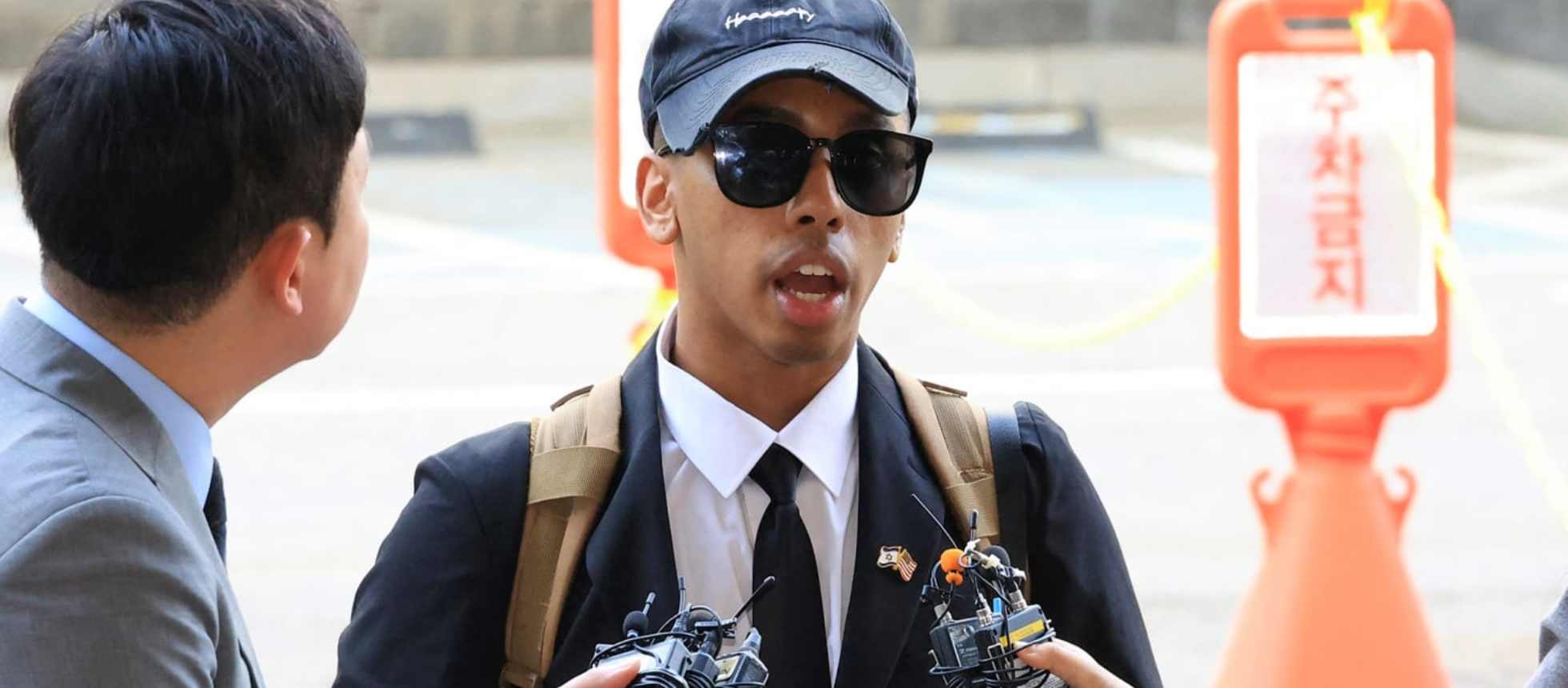
Ramsey Khalid Ismael, better known online as Johnny Somali, will remain behind bars after a South Korean appeals court upheld his original six-month sentence, rejecting arguments from both the prosecution and the defense.
Sources confirmed that the three-judge panel declined to extend the sentence to the three years prosecutors had sought, but equally refused the defense’s push to release Isma’il and send him home. The original ruling stands.
The only notable modification from the appeal was a finding that the permanent confiscation of Somali’s iPhone could not be legally justified. As a result, he will receive the device back upon his release, which is expected to coincide with his deportation from South Korea.
Somali does retain one remaining legal option. He has a 10-day window to file a written appeal to the Korean Supreme Court. No oral arguments or witness testimony would be involved at that stage, and a ruling would likely come within a few months.
The verdict has drawn criticism from both Korean and international observers, with many feeling the sentence falls well short of what the behavior warranted. Central to the court’s reasoning, however, appears to be the roughly two years Somali spent in South Korea under a travel ban while the legal process played out. The judges seem to have treated that period as a form of informal punishment, effectively framing the total consequence as two years and six months combined.
Critics have pushed back on that logic. During that same two-year stretch, Somali was not confined. He was, by most accounts, continuing to engage in the same disruptive behavior that landed him in trouble in the first place. Treating a period of relative freedom as equivalent to incarceration is a comparison many find difficult to accept.
The concern now is what this outcome signals going forward. If a prolonged travel ban with minimal restrictions is the primary deterrent facing foreign content creators who come to South Korea and cause serious disruptions, critics argue it may not be enough to discourage others from doing the same. Both Korean residents and international observers have raised the question of whether this sets a troubling precedent for dealing with future nuisance cases.