
Free to use under the Unsplash License
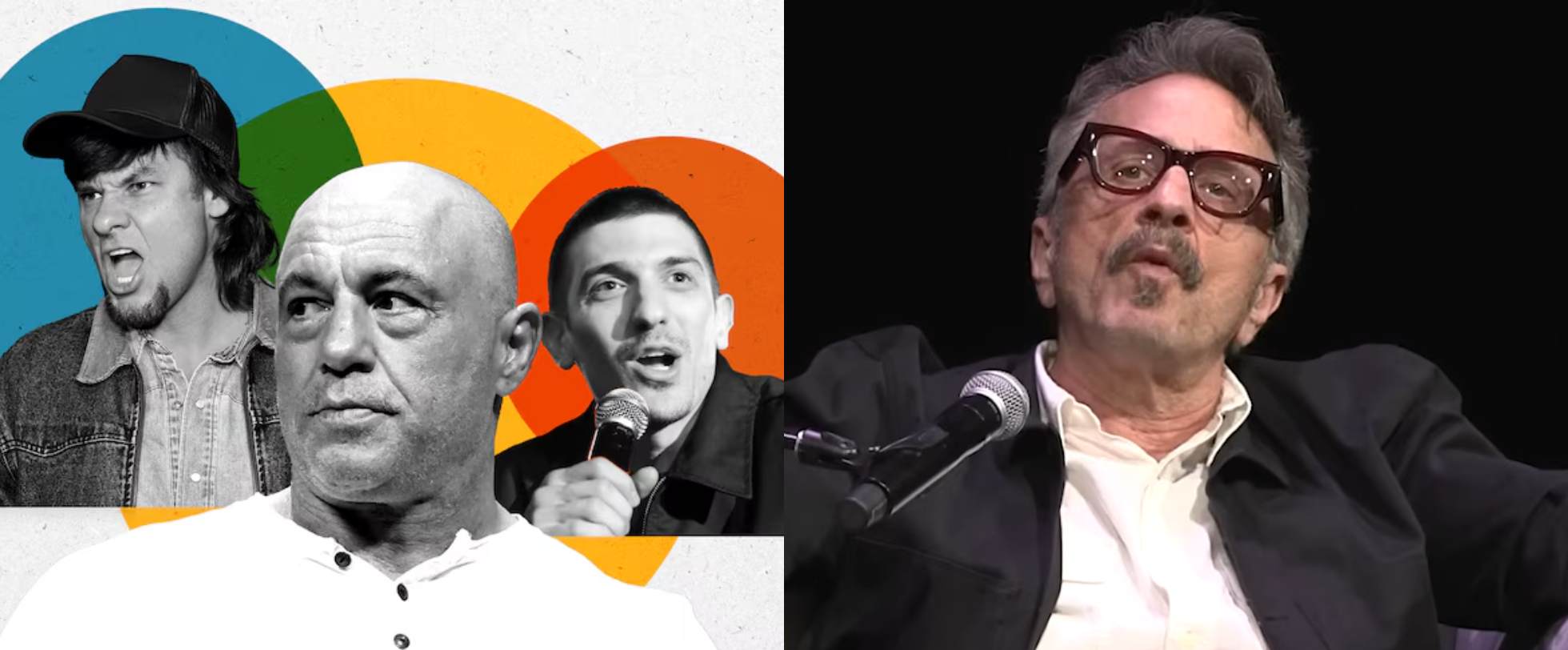
Marc Maron has never been one to hold back, and his recent conversation with Kara Swisher made that abundantly clear. He called out the current podcast culture and took direct aim at Joe Rogan, Theo Von, and what he sees as the collapse of comedy’s moral compass.
Discussing the current state of podcasting, Maron argued that audiences have become more interested in personalities than meaningful content.
“The bar has been lowered to such a degree that people prefer parasocial relationships with mildly charismatic, fundamentally usually untalented people than being engaged by anything provocative or truly interesting that someone made out of their imagination and heart,” he said.
He then mocked the visual and conversational style of many popular podcasts.
“People will sit at home and watch people on Zoom with half their face covered up by a Shure SM7,” Maron said.
“What is wrong with people?” he continued. “Like do they not have any friends? Do they not use their brain anymore? They can’t think.”
Maron went on to compare much of podcasting to low-effort radio entertainment.
“They got to have three idiots who are talking about the last time they messed themselves as adults, entertain them,” he said. “It’s like a world of drivetime radio.”
When Swisher asked why he believed the format had become so popular, Maron pointed to a combination of loneliness and low standards.
“Because people are lazy and they’ll adapt to anything and they’re lonely and they want to have parasocial relationships with people they feel they’re like,” he said, before adding, “which means usually amateurs.”
The conversation then shifted to his HBO special ‘Panic’ and the now widely discussed joke about Theo Von. Maron explained that the bit wasn’t written casually and required careful consideration because of his personal history with the people involved.
“I had to really think about that bit because I know these guys,” Maron said. “I’ve known them my whole life. I knew them before there was a manosphere. I knew them as comics. I knew Rogan when he started in Boston.”
Asked about his criticism of Rogan and others, Maron stressed that his issue was primarily political rather than personal.
“My problem with those guys is that they were sucking up to fascists and they were promoting the end of liberal democracy and the beginning of authoritarianism,” he said. “That was plain and clear to see.”
Because of that, Maron said his criticism was rooted in what he viewed as the broader consequences of their platforms.
“So my issue with them was because of that,” he said. “It was political and it was like they were bootlickers and they were pawns.”
He didn’t stop there, adding that he believed some had been manipulated while others were acting in bad faith.
“But I also think they were suckers,” Maron said. “And I also think that some of them are grifters.”
He also argued that comedians had been drawn into a larger political narrative under the guise of defending free speech.
“When comics get duped into this idea that because they can’t say certain words that somehow the left is infringing upon their freedom of speech, it’s so shallow and st*pid,” Maron said.
“They just became part of the party line of dismantling liberal democracy.”
As for where Rogan, Theo Von, and others stand now, Maron suggested some are beginning to realize they may have been used.
“Dillon and Schulz and Rogan have become seeing what’s happening,” he said.


