
Free to use under the Unsplash License
A quiet but growing corner of the internet is giving people a full shopping and food delivery experience without any actual spending or physical delivery taking place. The trend revolves around so-called dopamine sites, digital environments designed to replicate the emotional rhythm of online consumption rather than the consumption itself.
At the center of the concept is a simple simulation loop. Users can browse menus or product listings, add items to a cart, and even watch a fake delivery process unfold on screen. In some cases, food orders can be placed in full detail, including preparation and rider tracking visuals, but nothing is ever fulfilled. The appeal is not tied to ownership or consumption, but to anticipation and the psychological satisfaction of going through the motions.
The behavior is often described as a form of engineered window shopping taken to its far side. Many users already maintain full carts across multiple platforms or endlessly scroll through delivery apps without completing purchases. These simulation tools remove the financial barrier entirely while preserving the structure of choice, delay, and expectation that typically produces engagement.
In discussions around the trend, observers have pointed out that younger users appear especially drawn to the experience in parts of Asia, where digital consumption habits are deeply integrated into daily life. The format is also tied to earlier open-source experiments shared online, where developers distributed simple code allowing others to recreate similar simulated shopping environments.
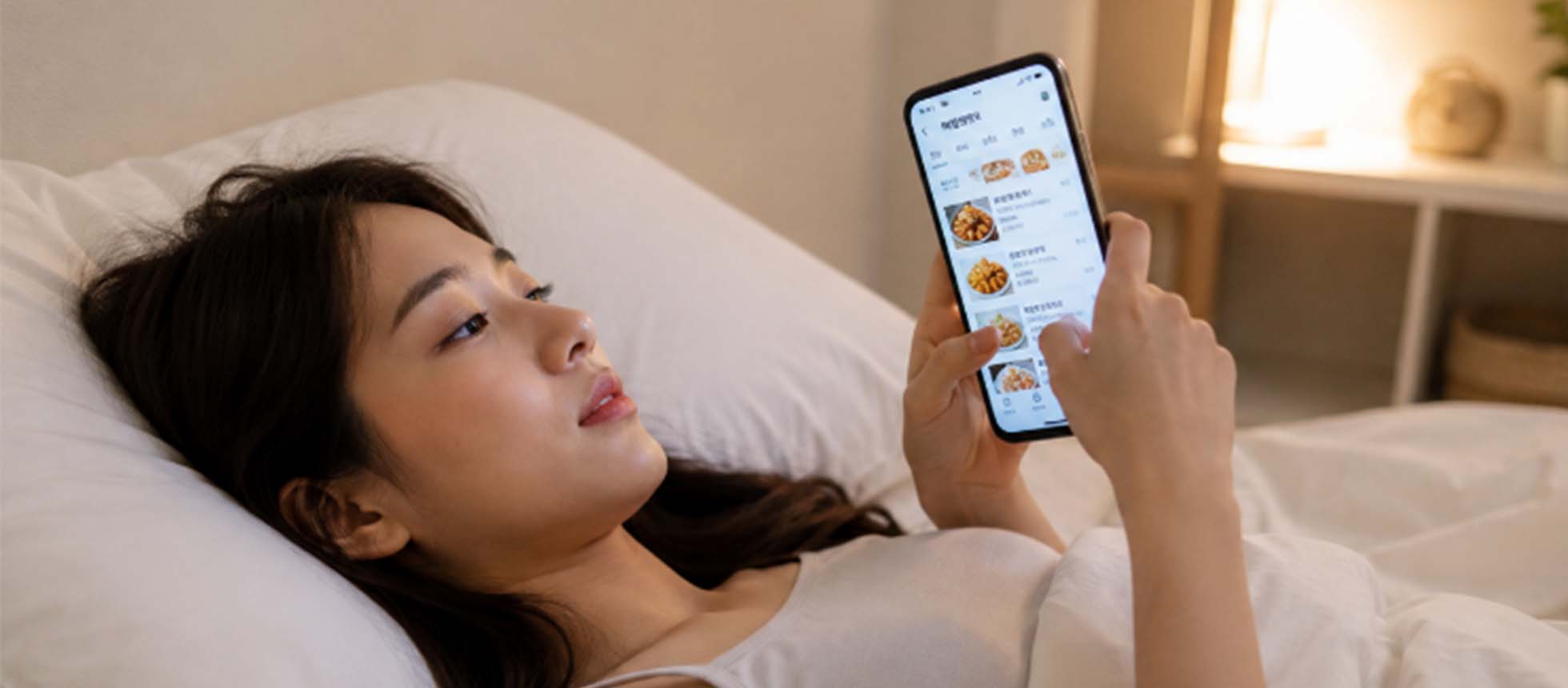
Some users describe the appeal in straightforward terms: the browsing itself is satisfying, and the illusion of a pending delivery creates a sense of comfort or routine even when no transaction occurs. The experience mirrors familiar habits like late-night food scrolling or casual browsing of delivery apps without intent to buy.
The broader interpretation connects the trend to changing economic and social conditions. With rising youth unemployment, shrinking entry-level opportunities, and increasing pressure around housing affordability in many regions, low-cost digital rituals that replicate consumption may feel more accessible than real-world spending. In that context, simulated shopping becomes less of a novelty and more of a coping mechanism tied to everyday uncertainty.
Commentators have also framed the phenomenon as part of a wider pattern in consumer behavior, where engagement itself becomes the product. The act of selecting, anticipating, and imagining ownership is treated as a reward loop, independent of any final purchase. This aligns with long-standing habits of digital window shopping, but extends them into fully interactive simulations that remove the endpoint entirely.
While still relatively niche, the trend points toward a broader shift in how online platforms can monetize attention and behavior. It raises the possibility that future versions could expand beyond food delivery into other categories such as travel planning or retail shopping, where the experience of planning and choosing is decoupled even further from real-world outcomes.


