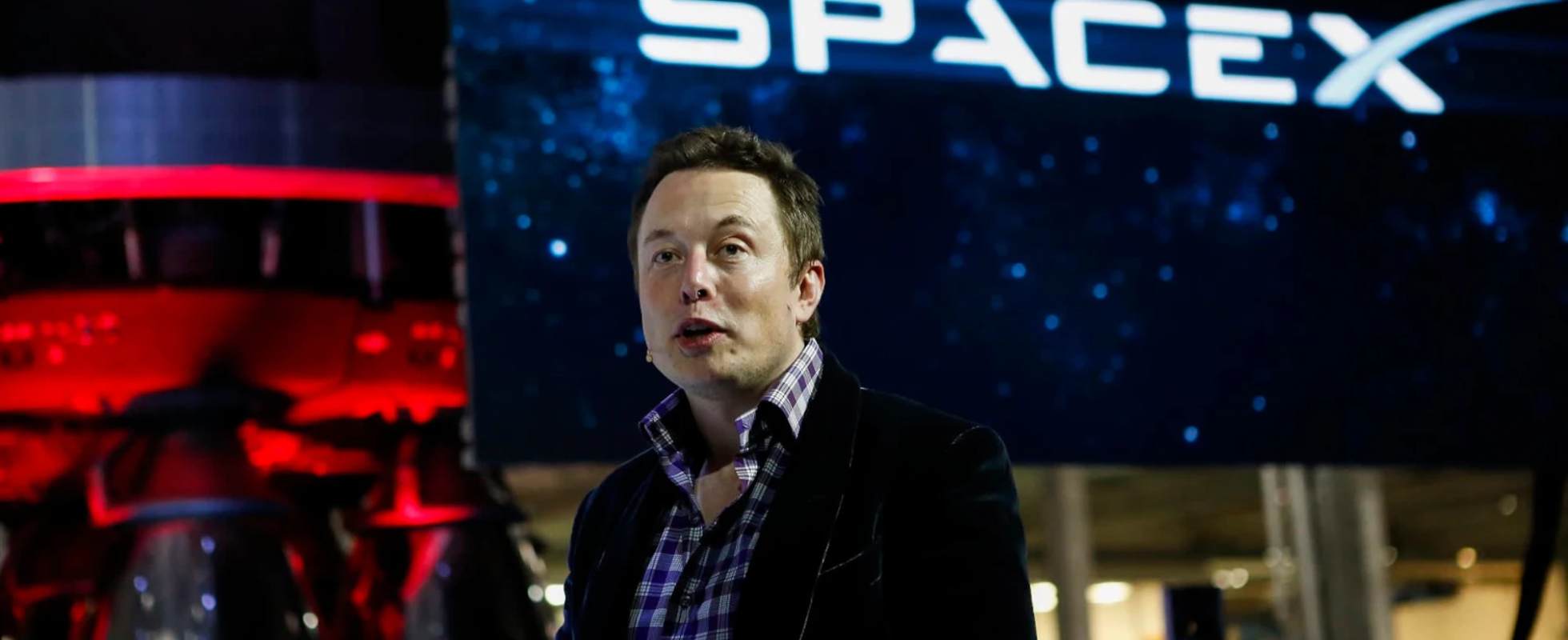
SpaceX’s IPO filing has raised eyebrows on Wall Street, and not entirely for the right reasons. The company’s S1 prospectus, submitted to the Securities and Exchange Commission, opens with 14 pages of rocket photographs and declares that its primary objective is “to extend the light of consciousness to the stars,” a phrase that appears 10 separate times in the filing.
What the document reveals, beneath the lofty language, is a company asking public investors to value it at $1.75 trillion based largely on businesses that do not yet exist. SpaceX generated $18.7 billion in revenue in 2025, which would rank it outside the top 200 companies in the S&P 500 by revenue, yet the proposed valuation would make it the seventh largest company in the index by market cap.
The financial reality is far less impressive. In the first quarter of 2026, the space division lost $662 million. The AI division lost $2.5 billion in just three months. The only profitable segment is Starlink, the satellite internet business, which posted $4.4 billion in operating profit last year.
Yet that profit was more than consumed by losses elsewhere, leaving SpaceX with a net loss of $4.94 billion for the year. Since its founding, the company has accumulated over $37 billion in losses, more than any other company that has ever gone public in history.
Despite this, the prospectus frames SpaceX as primarily an AI company, with 93% of its claimed $28.5 trillion total addressable market attributed to AI. That market is larger than the entire GDP of the United States and almost entirely built on future ventures that currently generate little to no revenue. Grok, SpaceX’s AI product, holds roughly 3.4% market share in a field dominated by OpenAI, Anthropic, and Google.
According to Bloomberg, SpaceX’s own engineers have been slow to adopt Grok for technical work because it underperforms rival tools.
The related party transactions buried in the filing also raise questions. SpaceX purchased $650 million in goods from Tesla last year, including $131 million spent on Cybertrucks at full retail price, with no volume discount. At one point in the fourth quarter of 2025, SpaceX single-handedly accounted for 18% of all Cybertruck registrations in the United States.
The corporate structure offers little comfort to incoming investors. Musk will control more than 85% of the votes through a dual-class share arrangement while owning around 41% of the company.
As Bloomberg’s Matt Levine summarized the investment case: “If you’re buying SpaceX stock because you like Elon Musk and want to go along for the ride with him, yes, that’s correct. That’s the investment thesis here.”
With $29 billion in debt, a $20 billion bridge loan taken out just weeks before the IPO filing, and capital expenditure needs that dwarf the funds being raised, the IPO looks less like a triumphant market debut and more like the beginning of a very expensive ask.