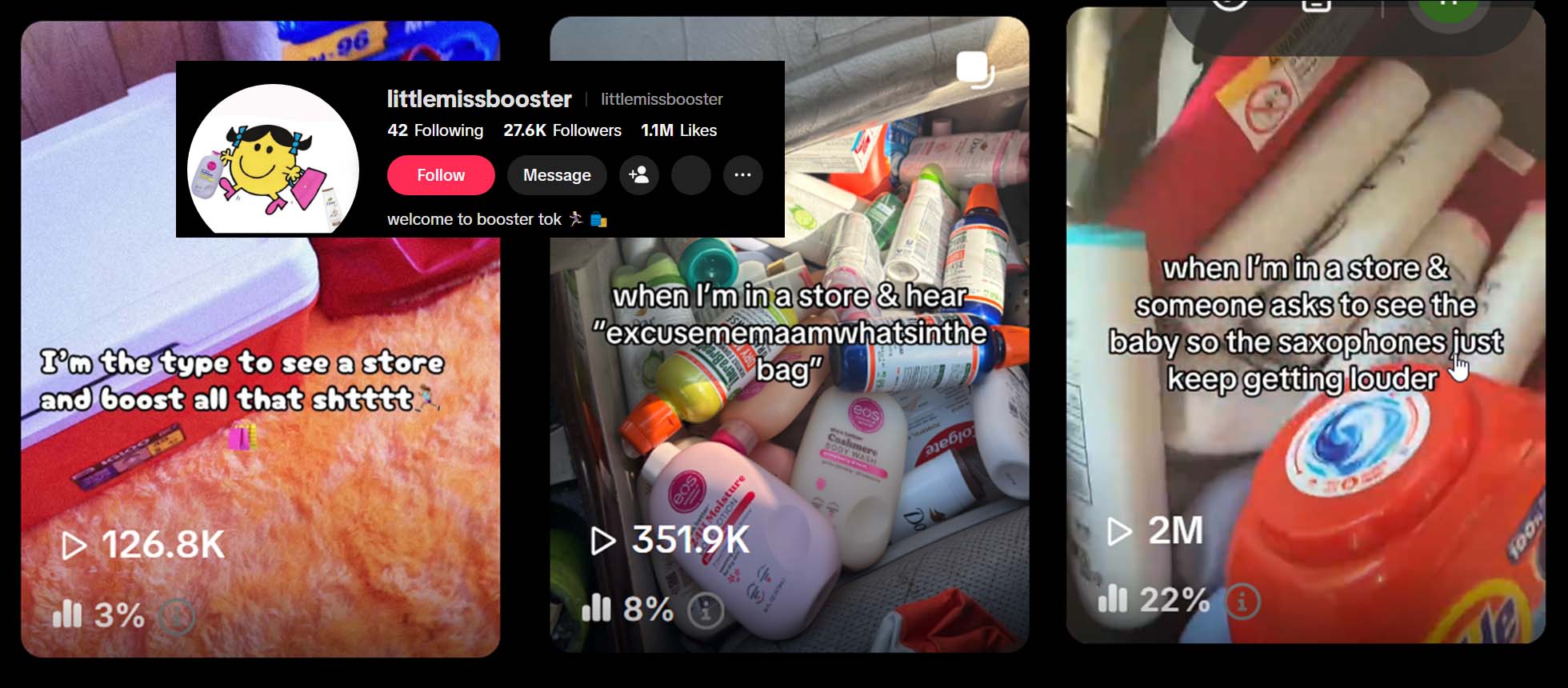
A TikToker going by the name Little Miss Booster has built a following of around 26000 by posting videos of herself taking merchandise from retail stores and reselling the goods.
Little Miss Booster’s videos follow a consistent format. She loads goods into a car seat covered with a blanket to conceal them then films herself clearing store shelves of items like EOS products and Dove before documenting the resale process. In one video she tells viewers:
I’m here for my girlies on a budget. This is what a 40 dollar bundle looks like.
She also claims to be “taking from the rich to the poor” while keeping the profits for herself.
Youtube commentator AugustTheDuck raises an immediate question about why any of this is being posted publicly. Sharing content that clearly shows store locations methods and products creates a direct trail for enforcement authorities. As he puts it:
It must be really easy to be a cop these days. People just advertise every single thing that they’re committing on TikTok for fun.
Beyond the self-incrimination angle Little Miss Booster also offers legal guidance to viewers but much of it is inaccurate. In one video she states:
Word of the day is double jeopardy. Double jeopardy means if you already been convicted of an offense they cannot come and do anything else.
AugustTheDuck clarifies that this interpretation is incorrect. Double jeopardy refers to the protection against being tried twice for the same specific incident not immunity from future separate allegations of wrongdoing.
One of the more debated points raised in the commentary is the idea that taking goods from large corporations benefits local communities. AugustTheDuck strongly disagrees. While acknowledging a difficult upbringing he argues that corporate executives do not personally absorb losses at store level. He explains:
Whether the company loses 3 billion in losses in a year or 6 billion in losses in a year the CEO and anybody close to the CEO is still going to get their salary.
Instead he notes that the impact is more likely felt by store managers and hourly employees who face increased pressure and potential disciplinary consequences.
He also draws from personal experience:
When I was in high school I worked at Sonic and one time I accidentally accepted a fake 20. My manager told me it comes out of my pocket or I’m fired.
Viewers who engage with or purchase goods they know are taken without permission are also not without risk. AugustTheDuck notes that buying such items can expose individuals to receiving stolen property allegations meaning the idea of community benefit becomes far more complicated.