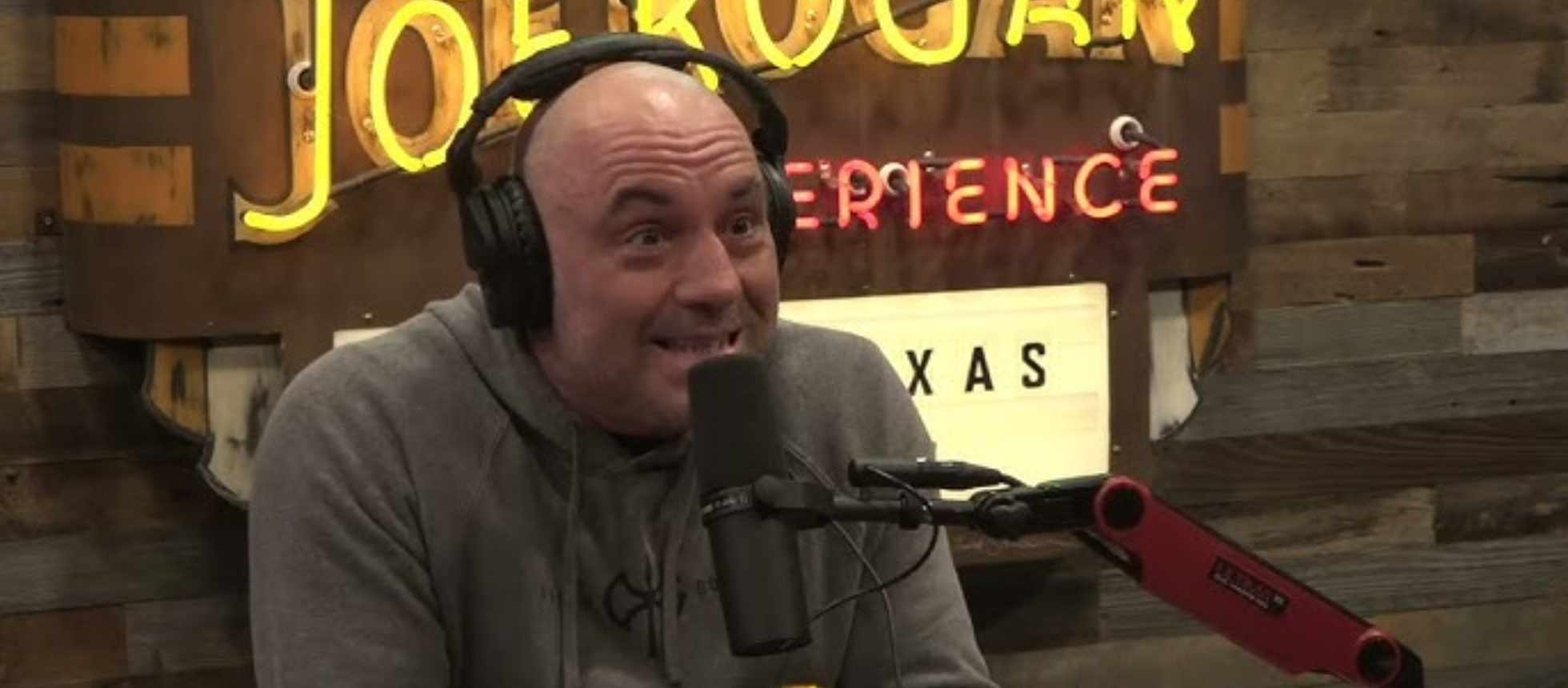
When Kyle Kulinski of Secular Talk turned his attention to Ben Bankas, a newly announced headliner at the New York City Comedy Festival, his reaction was pointed: this is what the Joe Rogan era has produced. For Kulinski, the clip was less a stand-up set and more a window into how a particular brand of provocateur has gone from the fringes to the main stage of American comedy.
The act Kulinski analyzed leaned heavily on targeting minorities, immigrants, and LGBTQ+ communities, with very little in the way of actual joke construction.
His critique was: “The goal is not actually to make people laugh. The goal is to make people go [surprised], he’s more of a sh*ck jock than a comedian. You’re just trying to get go for the sh*ck value. Oh, uh, did I offend you? Are you going to be a little snowflake?”
According to Kulinski, what passes for punchlines in this style of performance amounts to little more than recycled resentment.
“I listen to you for a minute and 20 seconds. I already know your whole world view. I already know everything about it,” he said.
The Rogan connection, as Kulinski frames it, is not about Rogan himself endorsing this type of content outright. Rather, it is about the cultural door Rogan opened. By platforming a certain politics-adjacent style of comedy and building a massive audience around it, Rogan created conditions in which performers like Tony Hinchcliffe and, now, Bankas could find not just an audience but institutional legitimacy.
“This is what Joe Rogan has unleashed,” Kulinski said.
What bothers Kulinski most is the absence of originality. Conservative-coded comedy, as he sees it, keeps returning to the same well: distrust of immigrants, mockery of marginalized groups, and a studied avoidance of the wealthy and powerful.
“None of the ideas are original. None of the thoughts are original. It all stems from the same thing, hatred of the other,” he argued.
The result is a comedy landscape where a performer can headline a major festival not because of craft, but because of a willingness to provoke and monetize the backlash that follows.
Kulinski also noted a particular irony in Rogan’s own positioning. Despite endorsing Donald Trump and repeatedly offering platforms to far-right figures, Rogan often retreats from the consequences of that alignment.
Kulinski stated, “Whenever it gets a little too hot in that kitchen, he always runs out and goes, ‘Who me, bro? I’m an independent. I’m like a centrist, bro.'”
The comedians who take their cues from the Rogansphere, however, tend not to hedge in the same way.