
Free to use under the Unsplash License
LG has found itself at the center of a growing privacy firestorm after tech outlet Gamers Nexus revealed a troubling pattern of data collection practices embedded in both its smart TVs and Ultra Gear monitors.
What started as a flood of user complaints about adware appearing on a $1,200 LG Ultra Gear monitor quickly expanded into a much larger conversation about surveillance, consent, and what exactly you are agreeing to when you bring an LG product into your home.
After purchasing the 34GX900A-B Ultra Gear monitor to verify user reports, the Gamers Nexus team confirmed that simply plugging the monitor into a Windows 11 PC triggered Windows Update to silently install LG’s Monitor app installer without any consent prompt at any stage in the process. The app’s sole purpose, it turned out, was to advertise McAfee Scam Detector, displaying the McAfee popup on 31 out of 32 consecutive boot tests.
According to LG’s own app store listing, the Monitor app installer is permitted to use “all system resources” and may collect geolocation, device data, online activity, contacts, user credentials, and transactions.
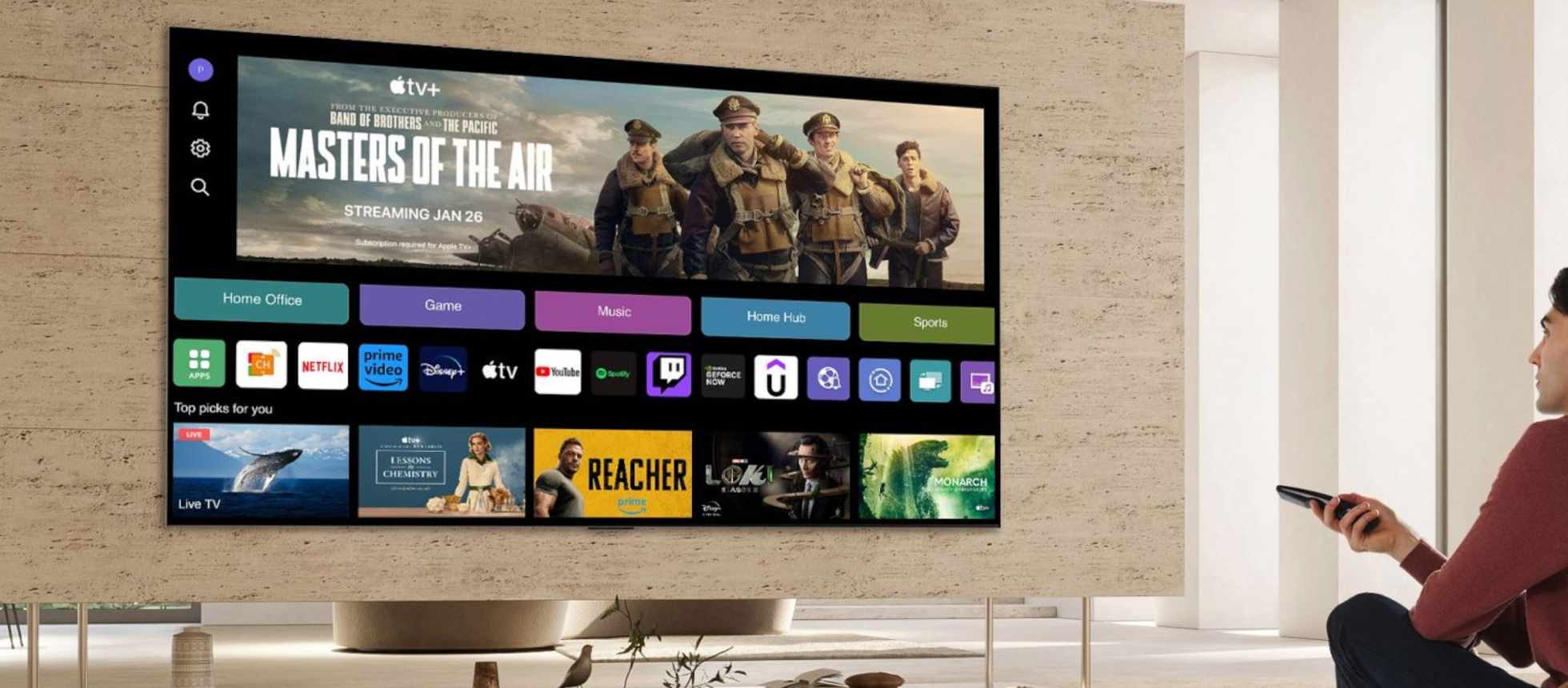
The TV side of LG’s business raised even more serious concerns. A recent webOS update introduced what LG called “AI based service terms,” buried within a lengthy terms of use document. Hidden in that document is a clause stating that users acknowledge and agree “that it is your sole responsibility to obtain all necessary consents from any third parties whose voices may be captured by the product and to notify household members and guests that their voices may be captured and processed in compliance with applicable wiretapping, eavesdropping, and privacy laws.”
In practical terms, this means that by accepting the update, LG TV owners become personally responsible for informing every guest who enters their home that their voice may be recorded and processed. The same clause also acknowledges that “due to the tactical nature of generative AI, output could potentially lead to physical injury, property damage, or other harm to life, body, or property.”
LG’s history of data collection issues stretches back over a decade. In 2013, IT consultant Dr. Beat discovered his LG TV was transmitting channel names, device IDs, and viewing data to LG servers unencrypted, and continued to do so even after he turned off the data sharing setting.
LG later confirmed this but claimed the data was not being retained. In 2024, LG quietly added advertisements to its smart TV screen savers, announcing the feature to advertisers rather than consumers. In 2025, Texas Attorney General Ken Paxton filed a petition alleging that LG “secretly monitors what consumers watch across apps, cable, and even connected devices like gaming consoles or Blu-ray players. This isn’t a glitch or side effect. It’s deliberate. LG harvests this data, builds profiles of consumers behavior, and sells it for profit.”
The investigation ultimately led Gamers Nexus to recommend against purchasing any LG displays and to advise current LG smart TV and monitor owners to disconnect those devices from the internet where possible.


